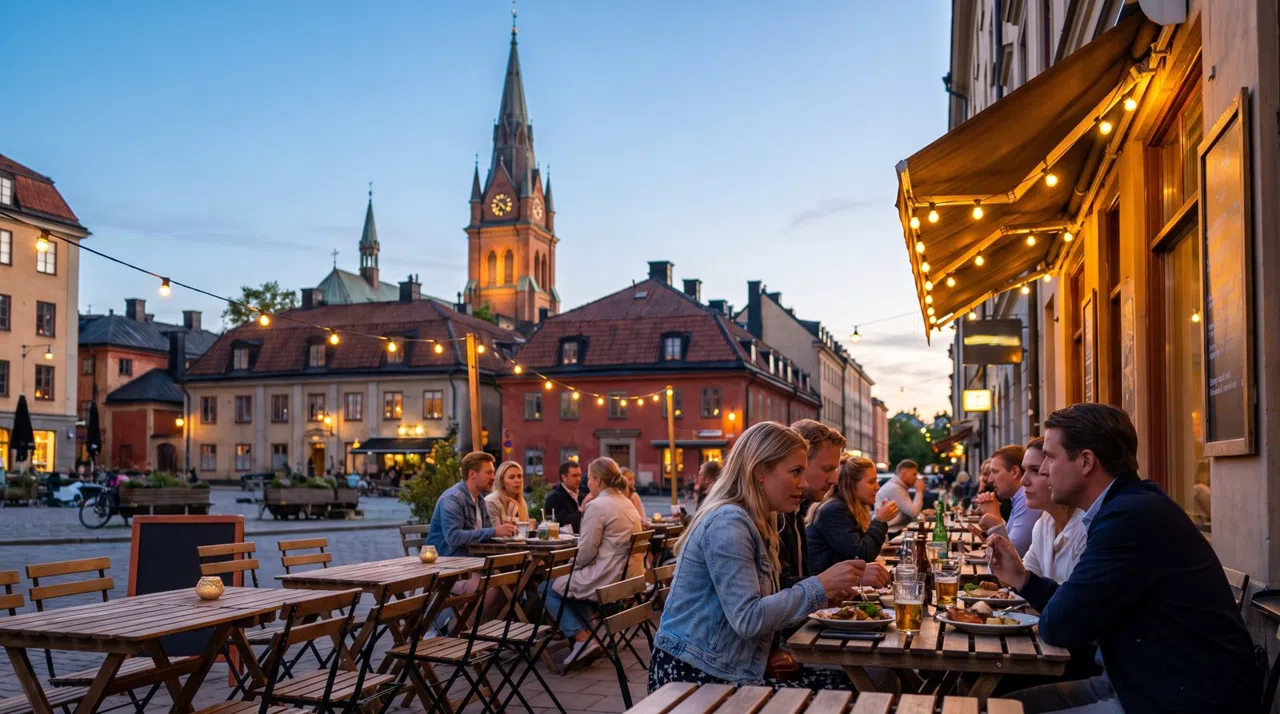
On a weeknight at Nytorget, teenagers skateboard past the church steps while the terrace outside Urban Deli fills with people splitting a bottle of orange wine. Södermalm is Stockholm's steepest island, cut with cliffs and a grid of 18th-century workers' streets, and it has run the city's most opinionated food and nightlife scene since the district gentrified out of its dockworker past.
What Södermalm is known for
Södermalm announces itself by angle as much as by address. It is a granite outcrop tipped up out of the water, a place where flatness gives way to stairwells, cliff paths and the kind of uphill walks that make you notice your own pace. That geography shaped the island when it was still working-class and industrial — dockers, printers, small factories — and it still shows in the fabric of the streets. Narrow wooden workers' cottages are wedged between tenements. Old names remember tar works and rope walks. Even the buildings that now hold the district’s cultural capital carry the memory of labour in their bones.
The island’s reputation, though, is not just about scenery. Södermalm is where Stockholm learned to be hungry on purpose. Around Nytorget, SoFo and Hornstull, the food scene has become so dense that a week here can feel like sampling the city’s entire temperament: one night in a beer hall founded in 1733, another at a natural-wine bar with three tables, another in a room where the cocktails are as carefully considered as the menu. The point is not a single destination but the sheer concentration of good places — the feeling that almost any turn can lead to a meal worth remembering.
SoFo, the blocks south of Folkungagatan, is the clearest expression of that change. Its name is a deliberate echo of SoHo, and it grew from the same 1990s moment when cheap workshop spaces began filling with young designers and secondhand dealers. Today it remains the island’s shopping and vintage-culture engine, a district of racks, small studios and late-opening shops that still feels social rather than polished. On the last Thursday of every month, the whole thing extends into the evening, with stores staying open until 9pm and the streets feeling briefly like a party with good lighting.
The social map of Södermalm still has edges. Around Nytorget and SoFo the crowd skews young, style-conscious and connected to the restaurant and design trades. West around Hornstull and Zinkensdamm it gets scrappier and more studenty, with Tjoget drawing drinkers from across the city. Up on the cliffs above Slussen and along Fjällgatan, the mood is quieter and older, with tourists arriving at sunset for the Gamla Stan view. Yet all of it remains walkable, and that may be the island’s quietest luxury: you can cross Södermalm end to end in under forty minutes and never need to think about a taxi.
Where to eat and drink
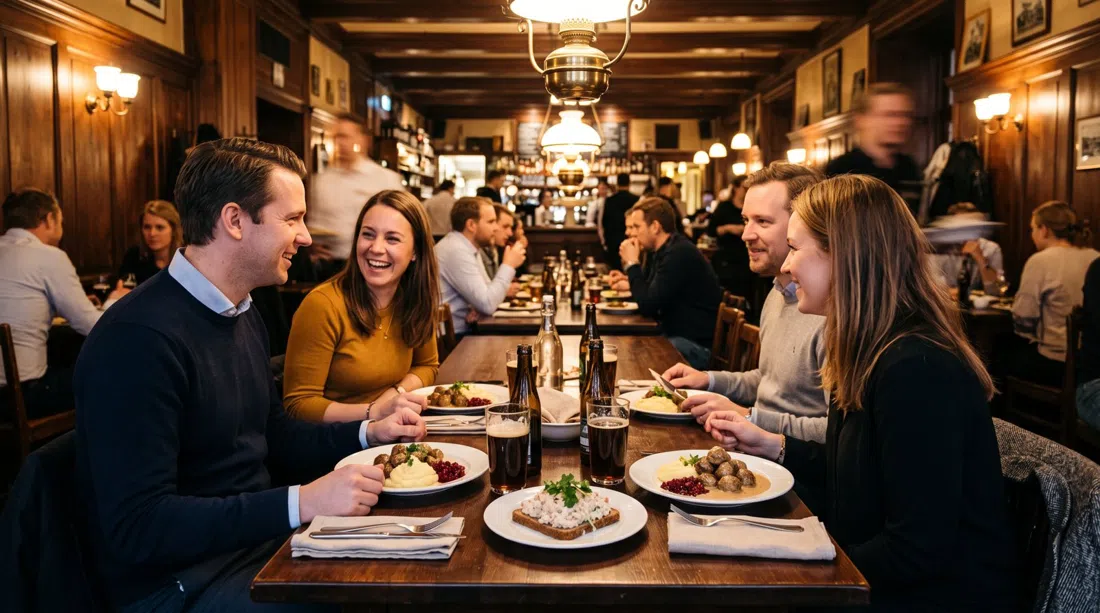
If you want Södermalm’s old soul, start at Pelikan on Blekingegatan. Founded in 1733 and on this site since 1931, it is the island’s great beer hall, all wood panelling, late-running bar and the kind of menu that makes Swedish home cooking feel sturdy and specific rather than nostalgic. Order gubbröra — whipped anchovy and egg — and meatballs with cream sauce, and you understand why this place is still the reference point whenever someone asks what the old Söder tastes like.
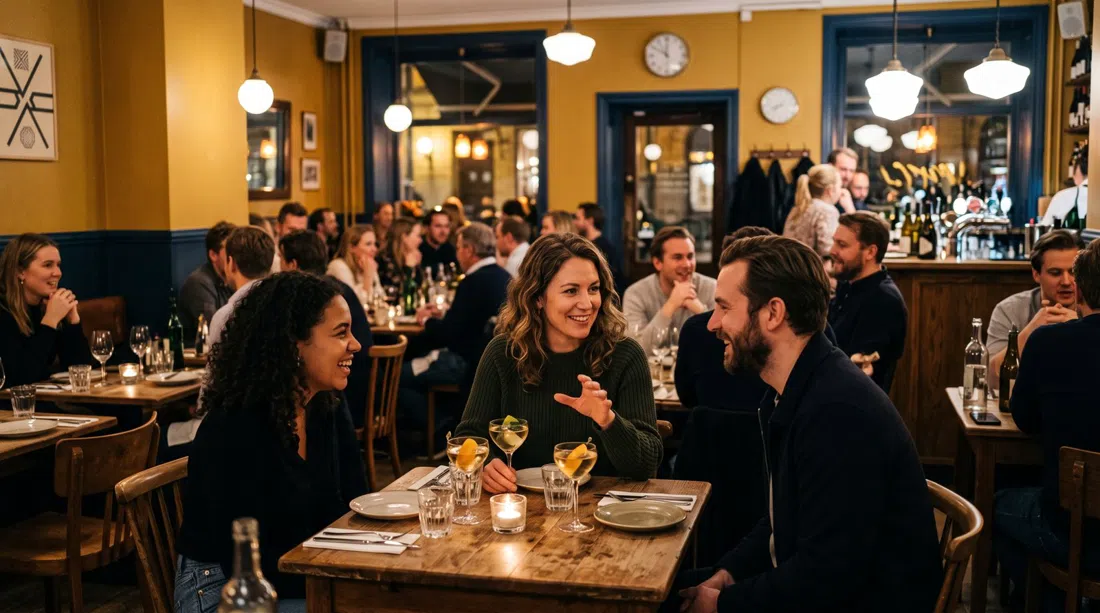
Around Nytorget, the rhythm changes. Ponti at Nytorget 13D is a bistro that folds Florence and Los Angeles into one room, with a mustard-and-blue dining room split into livelier and quieter zones. It comes with vermouth and amaro cocktails, a couple of pizzas and a proper three-course menu, which makes it feel less like a theme and more like a cosmopolitan mood translated into dinner. A few doors away on Skånegatan, Ottocento is the kind of walk-in wine bar that rewards drifting rather than planning. Attached to 800 Grader Slice, it has a natural-wine list and small plates that can be ordered until they add up to dinner, typically for about 650–850 kronor a head with a couple of glasses.
Bar Agrikultur, also on Skånegatan, is one of the places that keeps Södermalm’s reputation for eating well from becoming mere hype. It holds a Michelin Bib Gourmand for vegetable-forward Swedish small plates — salt-brined cucumber with sour cream and honey, paksoi with crab — and the room is close-set and intimate under a wall of hunting trophies, with three tanks of house-distilled gin behind the bar. It is the sort of place that reminds you the district’s dining culture is not just casual; it is technically ambitious, but without the stiffness that often comes with that ambition.
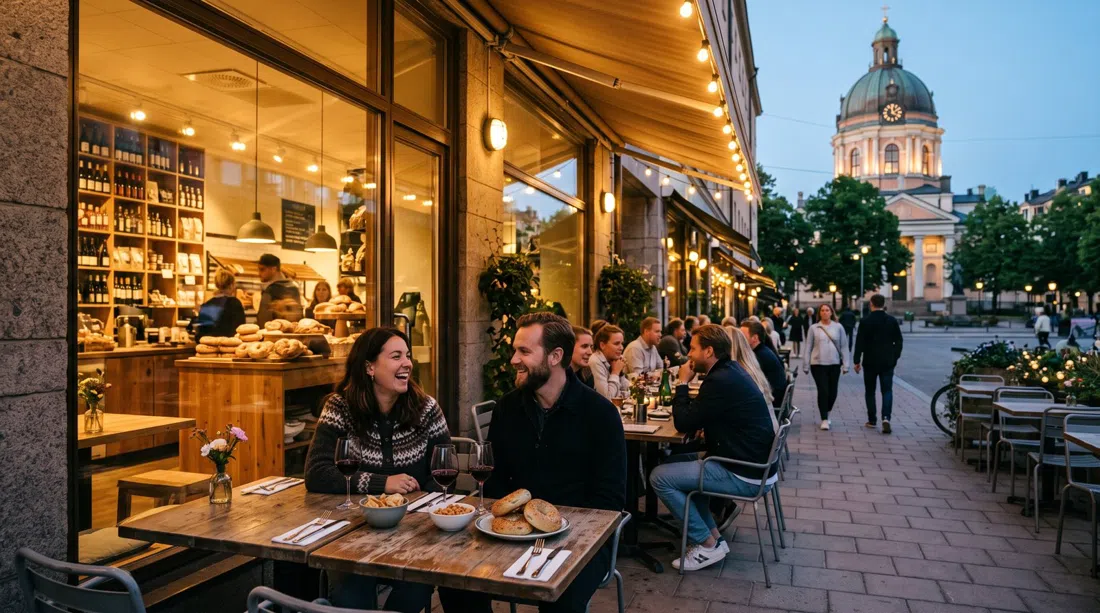
For a meal that works at any hour, Urban Deli’s Nytorget branch is the most useful address on the island. It combines a restaurant, deli and shop with one menu served from morning to 1am, a sidewalk terrace looking straight at Sofia Church, and New York-deli bagels alongside Nordic grocery shelves. It is both a practical stop and a scene, which is a very Södermalm combination.
Nightlife and bars
At night, Södermalm becomes less a neighbourhood than a circuit. Tjoget, on Hornsbruksgatan in Hornstull, is the destination bar of the island and one of the reasons people cross the whole city to drink here. It sits about 50 metres from Hornstull metro and spreads itself across five sections under one roof: dining room, private chambre séparée, wine bodega, beer café and cocktail bar. The drinks list is split into classics, house classics and seasonal drinks, while the food leans Mediterranean. Its place on the World's 50 Best Bars extended list for 2026 only confirms what regulars already know: this is where Södermalm’s nightlife ambitions become citywide.
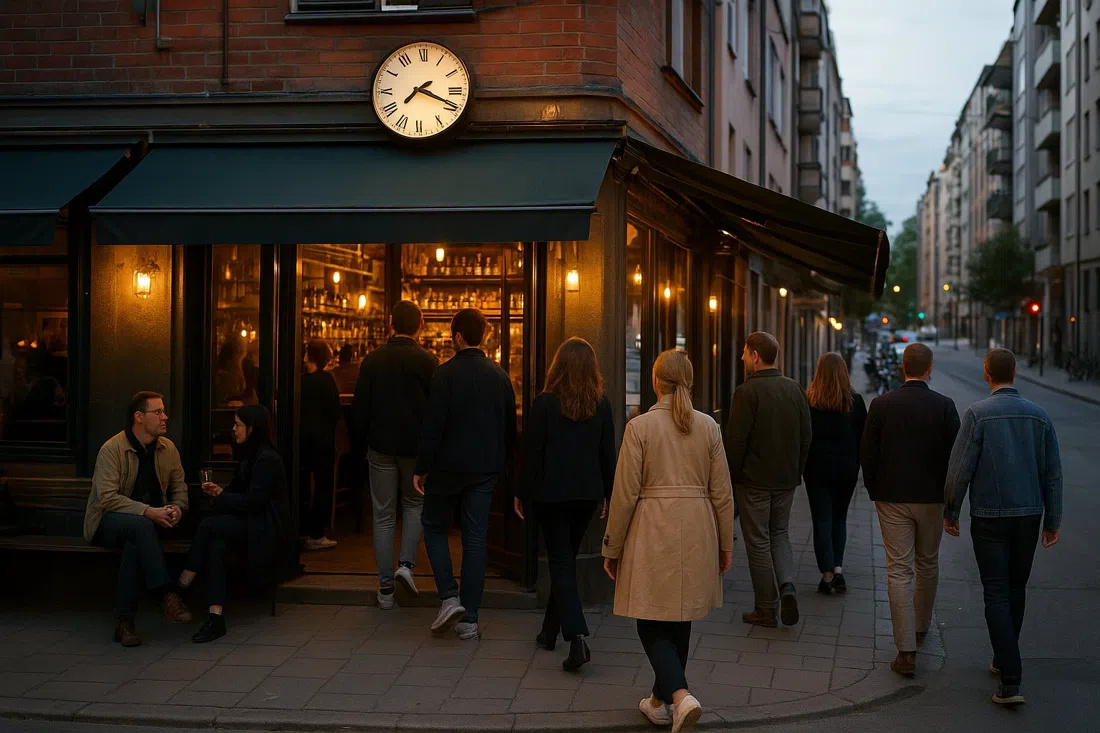
Folii, on Erstagatan, offers a different kind of evening — quieter, more intimate, and built around the slow pleasure of wine. Since 2017, sommelier owners Jonas Sandberg and Beatrice Becher have curated a half-glass-to-full-bottle list in a room with red sofas and a record player spinning vinyl. There is a New York Times mention in its story, but the real appeal is more local than that: it feels like a place where the conversation is allowed to stretch, and next door Voisine is there if the wine leads to dinner.
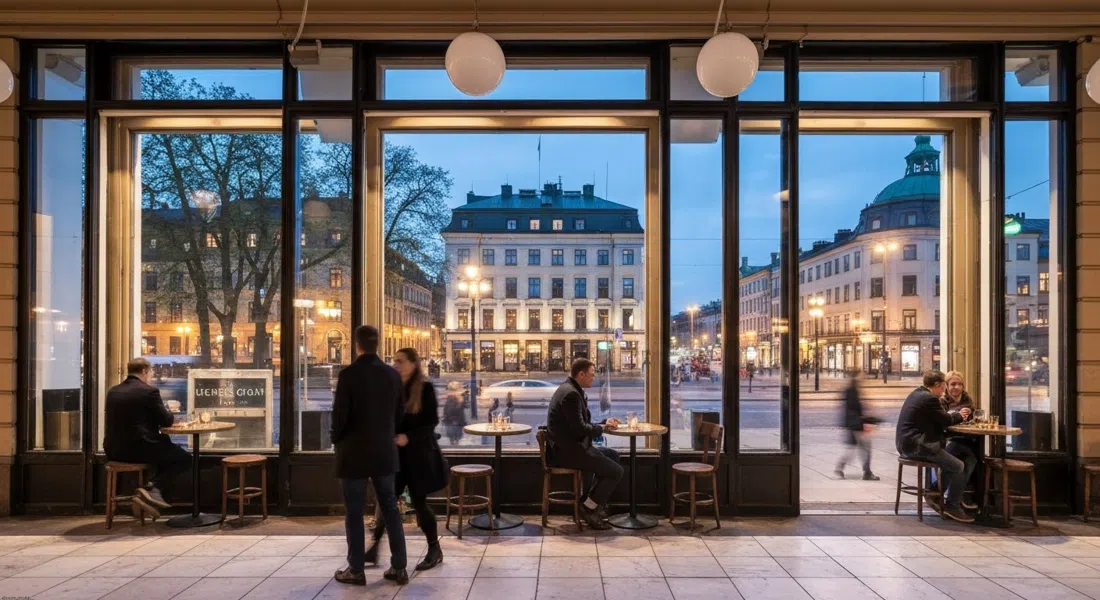
For cocktails with a view, Hernö Gin Bar occupies the corner where Götgatan meets Hornsgatan, in a two-floor century-old building with marble floors and tall windows looking toward Slussen. The bar is built entirely around Hernö Gin, from signature drinks to twists on classics, and regulars call its G&T the best in the city. If you want the full pitch, gin tastings are bookable; if you just want one drink with a view, this is still the right corner.
Things to do and what to see
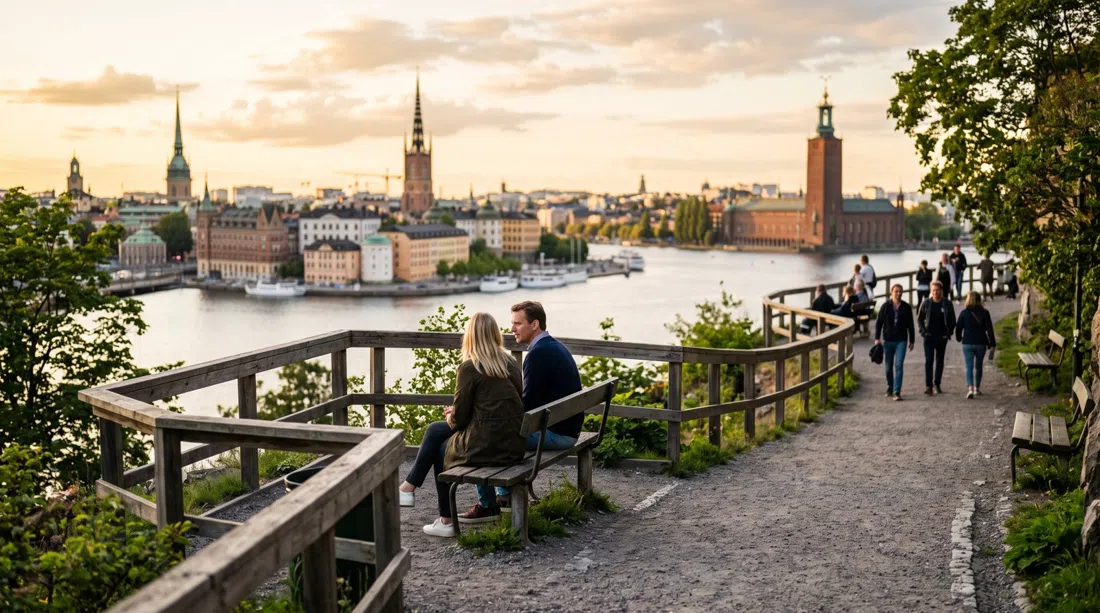
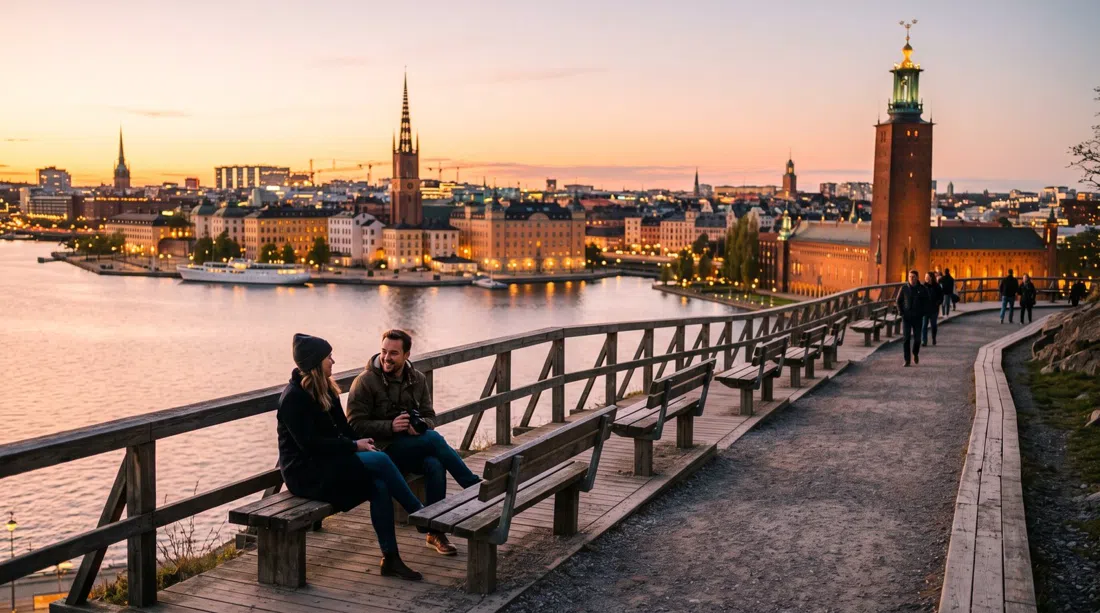
Södermalm’s scenic argument is strongest at sunset, when the island’s height finally pays rent. Monteliusvägen is a 400-metre footpath along the northern edge, lined with benches and small green pockets like Ivar Los Park, and it gives what may be the city’s best free view of Gamla Stan and City Hall. It is the kind of walk that makes you slow down without trying. From there, it is an easy continuation to the Katarinahissen viewing platform near Slussen, where the historic 1883 lift no longer runs as a working elevator but the platform remains open and the outlook over the water still feels like one of Stockholm’s essential panoramas.
Fotografiska, in the former Stora Tullhuset customs house on Stadsgårdshamnen, brings a different kind of elevation. The building’s raw Art Nouveau exterior gives way to a museum that is one of the world’s better-known photography institutions, with exhibitions changing roughly monthly and names like Annie Leibovitz, Robert Mapplethorpe and Anders Petersen among the artists it has shown. Because it stays open until 11pm daily and includes restaurant and bar space, it works as an evening stop rather than a purely daytime museum. That matters here, on an island where the best hours often begin after dark.
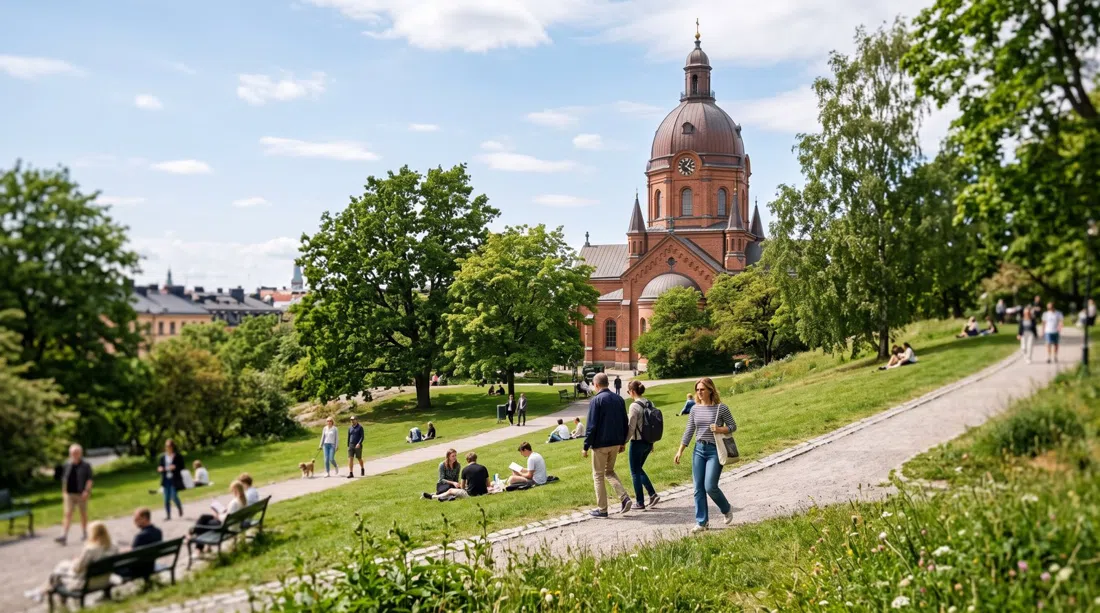
Vitabergsparken, on the eastern side of Södermalm, is the park locals actually picnic in. Built in stages between 1888 and 1924 around Sofia Church, it is hilly and tree-heavy, with an open-air theatre, a music pavilion and a dog run on the more natural eastern hill. On the west side, grassy slopes roll around the church, and the whole place carries a softer, more domestic version of the island’s topography. If Monteliusvägen is Södermalm as a viewpoint, Vitabergsparken is Södermalm as a place to linger.
Shopping in SoFo
Shopping in Södermalm is not about grand retail statements; it is about the pleasure of discovery in a neighbourhood that still understands the value of a good secondhand find. SoFo — South of Folkungagatan — is the island’s shopping identity, a former working-class pocket that turned into a dense run of independent fashion, design and vintage stores over roughly two decades. It is deliberately named after SoHo in New York, but the mood is more Scandinavian than borrowed: practical, clever, lightly ironic.
Lisa Larsson is the go-to for reasonably priced secondhand designer clothing, the sort of shop where the thrill is in the edit. Beyond Retro, the Swedish outpost of the British chain, covers the broader vintage field, while Sivletto specialises in 1940s and 50s rockabilly, tiki and hot-rod pieces. Grandpa, meanwhile, feels like raiding a stylish grandparent’s attic, with midcentury glassware, retro furniture and textiles packed into every corner. Together they make SoFo less a shopping district than a way of reading the neighbourhood’s personality through objects.
The best time to see it all at its most social is the last Thursday of the month, when many stores stay open until 9pm with events and offers. That late-opening habit matters because Södermalm is at its best when the day spills into evening and the browsing becomes part of the night out.
Where to stay in Södermalm
Around Mariatorget, at the quieter western end of the island, Hotel Rival is the design landmark. Owned by ABBA’s Benny Andersson and built into a restored 1937 Art Déco cinema, it has 99 rooms, an in-house bistro and bar, and a 735-seat theatre. It sits a few minutes’ walk from Zinkensdamm and Mariatorget metro stations, which makes it a good base if you want easy access to Hornstull’s nightlife and the calmer streets toward Slussen without sacrificing style.
Down in SoFo itself, NOFO Hotel sits just off Folkungagatan in a listed 1780 building, with individually decorated rooms taking cues from New York, London, Paris, Rome and Scandinavia. It also has a courtyard wine bar terrace and Medborgarplatsen metro about 900 metres away. If your trip is built around the district’s shops, restaurants and late-night bars, this is the more immersed choice.
Either pocket suits a younger, local-feeling stay over the postcard version of Stockholm. Expect narrower rooms and more stairs than the grand hotels around Norrmalm and Gamla Stan, but in exchange you get to sleep inside the city’s best-fed neighbourhood.
Getting around
Södermalm is threaded by both metro lines, which is a large part of why it feels so easy to use despite the hills. The green line runs along the island’s northern edge through Slussen, Medborgarplatsen and Skanstull. Slussen and Medborgarplatsen are both original 1933 stations, among the oldest in the network, and they put you within a few minutes’ walk of Nytorget, SoFo and Fotografiska. The red line crosses the western half through Mariatorget and Zinkensdamm, both a short walk from Hornstull’s restaurant and bar strip.
Slussen is also the main bus interchange for the island, and it is the fastest way across to Gamla Stan and the city centre — one stop on the green or red line, or a 10–15 minute walk over the Slussen locks. The island itself is compact enough to walk end to end, from Slussen to Skanstull, in well under 40 minutes, though the terrain is genuinely hilly and the stairs up to Fjällgatan and Monteliusvägen add real effort. For Arlanda Airport, the quickest route is the Arlanda Express train from Stockholm Central, reached from Södermalm by a short metro or bus ride into the centre; door to gate is realistically 45–60 minutes from most of Söder.
Practical notes
Södermalm is best for food, wine bars, vintage and design shopping, and walkable nightlife within one district. It is one of Stockholm’s safer, more walkable central neighbourhoods day and night, but the cliff paths — especially Monteliusvägen and Fjällgatan — have no barriers in places and can get slippery in rain or ice. The steep stairs throughout the island are a real consideration for anyone with mobility limits.
It is also a district of trade-offs, and that is part of its appeal. You come here for the density: the restaurant scene, the bars, the shops, the views. You give up a little ease in return for character, and on Södermalm that bargain feels like the whole point. This is Stockholm with its collar open, its routes improvised, its best tables often just a short walk from a cliff edge.