The Stockholm issue
Under an Hour From Stockholm, a Different Country Begins
Board a ferry at Strandvägen and within the hour the city dissolves into granite, pine and open water — here is how to plan the Stockholm archipelago without wasting a single crossing.

By Anneke VisserNeighbourhood by neighbourhood through Stockholm
Board a ferry at Strandvägen and, within the hour, the city dissolves. The mainland thins to bare granite, pine and open water; the traffic noise is replaced by a wake slapping against a wooden jetty. Stockholm sits at the head of some 30,000 islands, and you do not need a week or a boat licence to reach the good ones — you need the right departure and a plan for the tide of summer crowds.
What follows is a route-planner rather than a wish-list. Every place named here is one I have walked to from a jetty myself, with the ferry it connects to and the walk from the quay. Read it as a set of day-trips you can stitch together, not a checklist to exhaust in one go.
The crossing is half the point
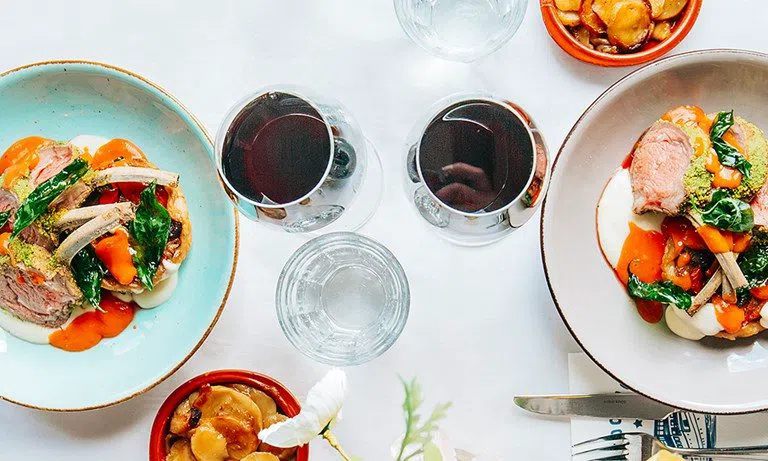
Start with how you get out there, because the boat shapes the day. Cinderellabåtarna (departing central Stockholm, mainly from Strandvägen and Strömkajen) is the backbone of any archipelago trip: large scheduled vessels, fast, and — crucially in July — pre-bookable online so a group of ten is not left standing on the quay watching a full boat pull away. Single fares run roughly 150–350 SEK depending on how far out you go, and a day pass pays off the moment you plan more than one hop. There is a café-bar aboard, so the 50-minute run to Grinda or the longer haul to Sandhamn becomes part of the outing rather than dead time. For groups this is the obvious choice; there is no door policy, only a timetable, and the timetable is the thing to respect.
If you would rather feel the water than watch it, RIB Stockholm (Strandvägen dock) runs the inner archipelago hard and fast in a rigid inflatable — an hour or two of spray, granite skerries and full-throttle open stretches. Expect around 1,000 SEK per person and up, which is a different budget entirely from the scheduled ferry, and book the whole boat per party; larger groups are split across several boats. It suits stag and hen parties, corporate away-days and anyone short on time who wants the geography explained at speed. It is not a way to reach a specific island for lunch — treat it as the activity itself, then come back to shore.
Plan your Stockholm trip
Live prices from our booking partners.
Free cancellation on many rooms. We may earn a commission when you book.
Fjäderholmarna: the archipelago in twenty-five minutes
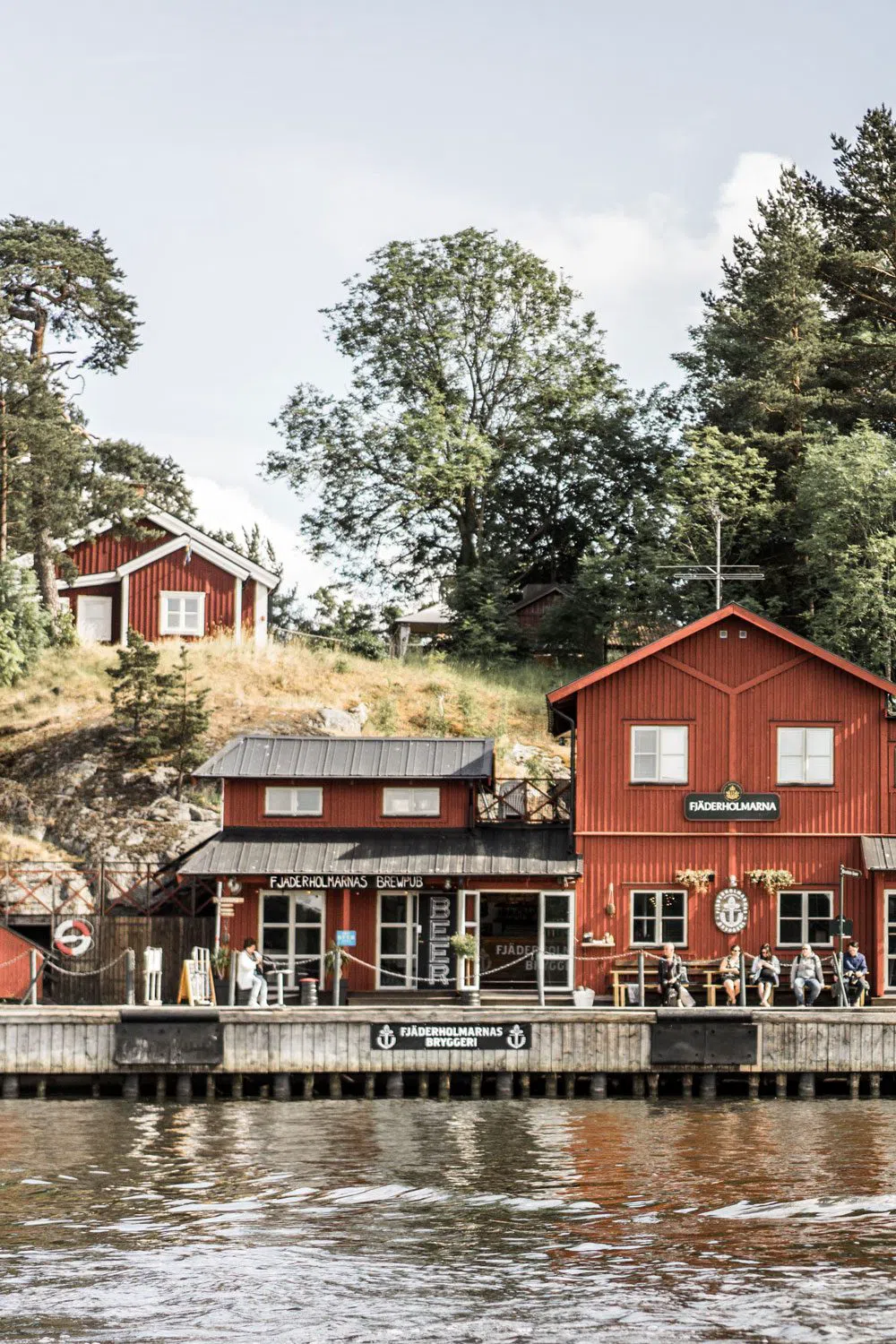
If you have only an afternoon, do not fight for the outer islands. The nearest real 'out there' feeling is twenty-five minutes away on Fjäderholmarna, the cluster of islets just past the city's eastern edge. Fjäderholmarnas Bryggeri (Stora Fjäderholmen) is a summer brewpub a short, signed walk up from the ferry landing — tasting trays and pints at mid-range prices, open May to September. The brewing itself has moved to the mainland, but the island bar remains, and on a warm evening the terrace over the water is reason enough to come. It is walk-in and relaxed, no strict door policy, and a tasting flight splits well across a party. Come here when you want the crossing, a drink and the light on the water, and to be back in town for dinner.
Vaxholm: the gateway island
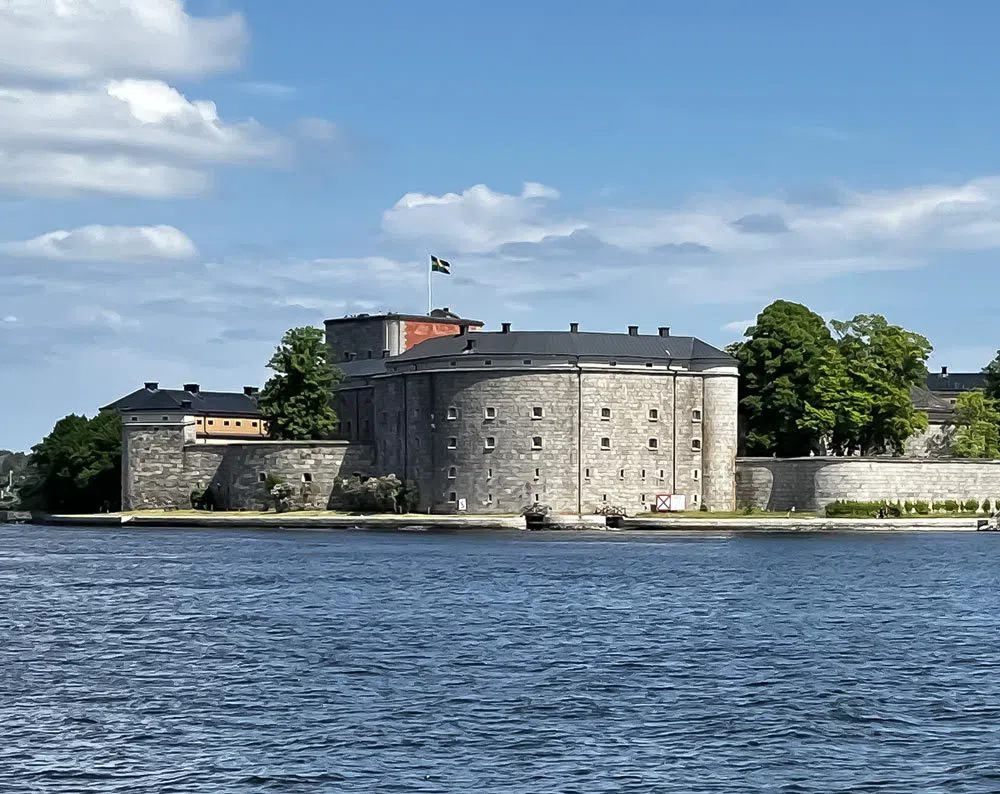
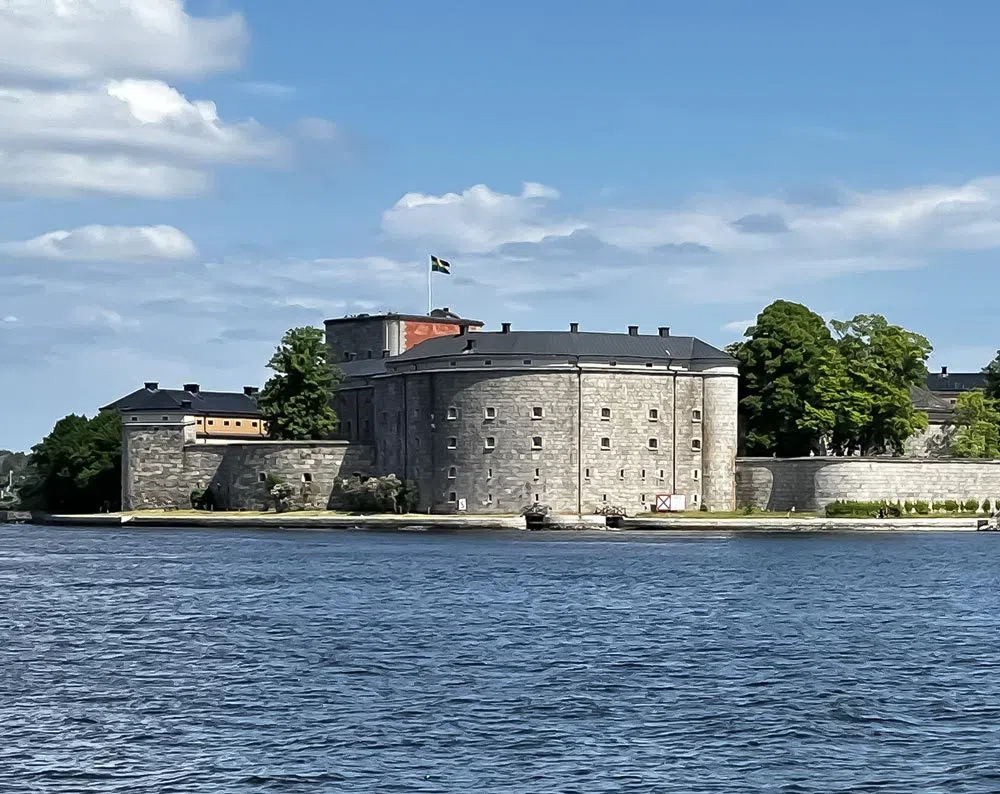
Vaxholm is where the archipelago has always been guarded, and it is the easiest 'proper' island town to reach — regular ferries, about an hour out, and everything within a flat walk of the quay. Vaxholm Fortress Museum (Kastellet, on its own islet a two-minute shuttle-boat from Vaxholm's waterfront) has watched the main sea approach to Stockholm since the 16th century. Entry is gentle — 120 SEK for adults, 100 SEK for seniors, under-12s free — and the museum runs roughly late June to late August with English guided tours in summer. Groups can book year-round, even off-season when the museum itself is shut, which makes it a rare wet-weather fallback. It earns the visit; this is a genuine fortification, not a gift-shop reconstruction.
From the same town you can get onto the water under your own power. Skärgårdens Kanotcenter (two bases around Vaxholm) rents kayaks and stand-up paddleboards, runs guided day tours, and has a sauna and dedicated set-up for group and corporate bookings. Rentals and guided outings sit in the mid-range, and the guided small-group tours cap around eight paddlers, which keeps the pace calm and the fika stop unhurried. It is built for groups but works just as well for a couple wanting a quiet morning among the near islands before the day-trippers arrive. Book the guide if you are new to a kayak; the channels here have real boat traffic.
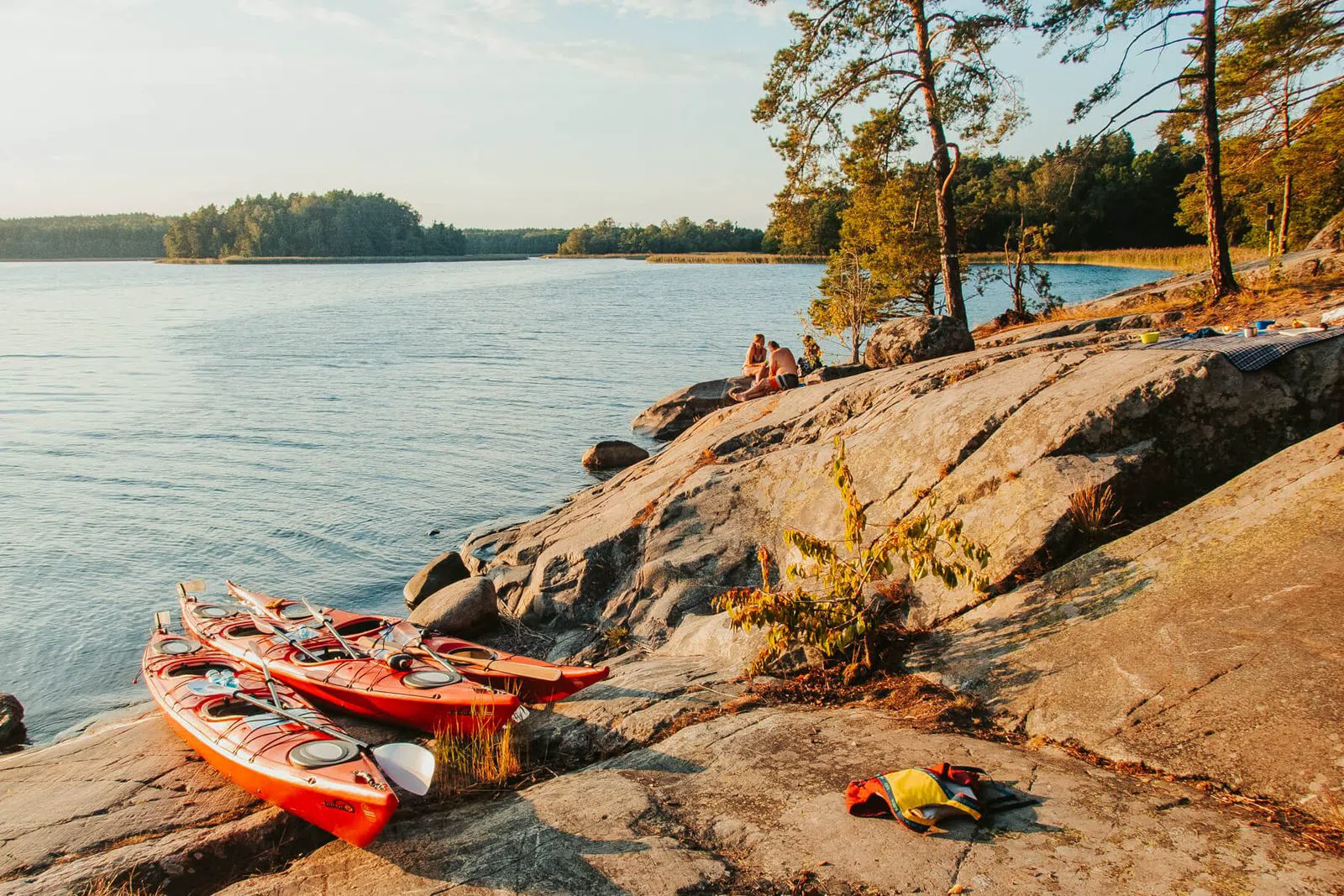
Grinda: the classic day trip
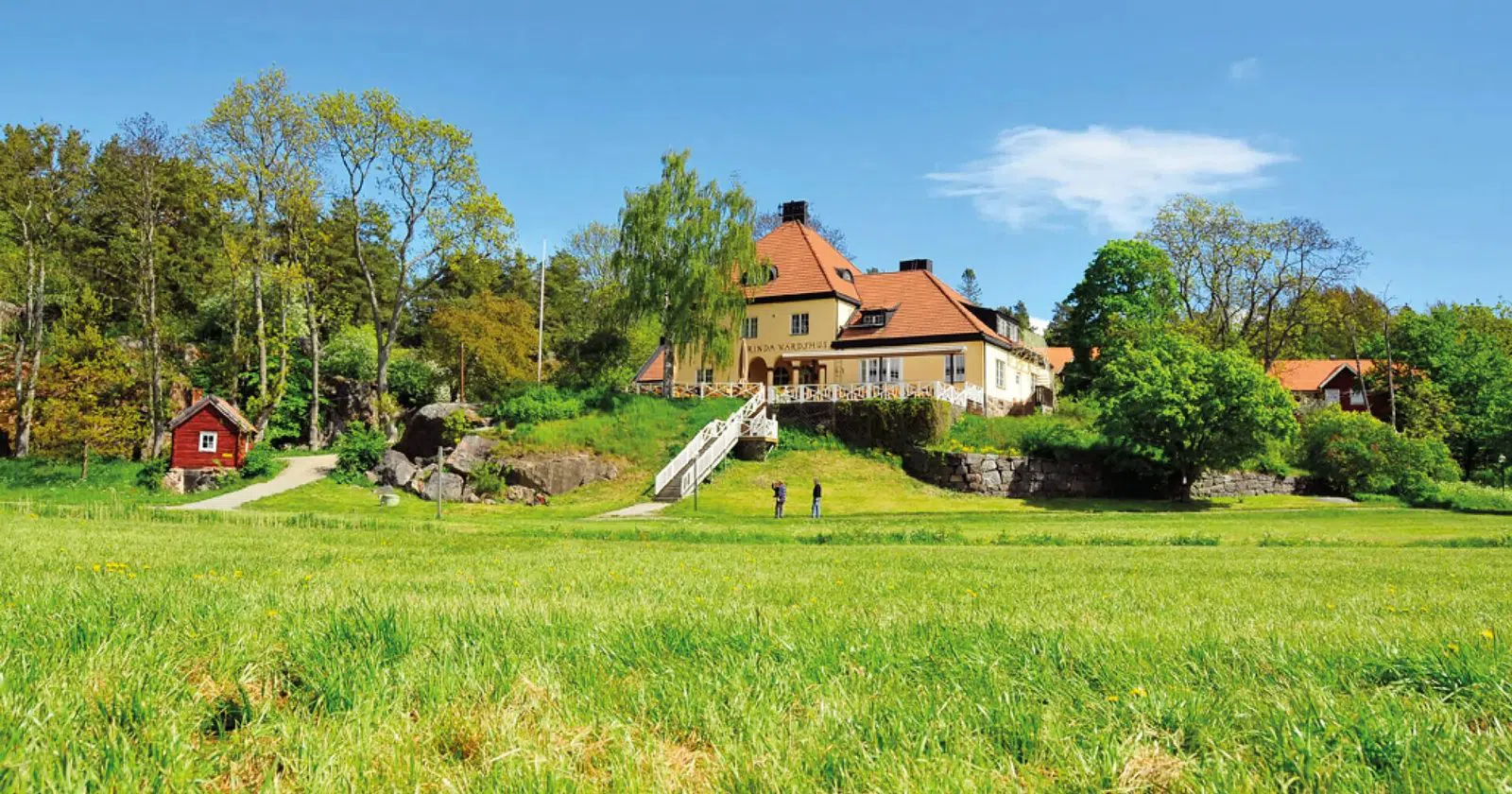
Grinda is the island most Stockholmers picture when they say 'the archipelago' — close enough for a day, wild enough to feel earned, with swimming rocks a fifteen-minute walk across the island from the ferry. The anchor is Grinda Wärdshus (a signed uphill walk from the Cinderella jetty at Södra Bryggan), an inn serving Swedish archipelago food since 1906 and still among the better kitchens out here. This is destination dining at the higher end — book the restaurant ahead in summer, when the waterfront bistro fills — though it also handles walk-in parties and events. Come for a long lunch between swims rather than a quick bite: the point of Grinda is the unhurried middle of the day, and the kitchen is built around that rhythm.
Sandhamn: sails, saunas and a kitchen that never closes
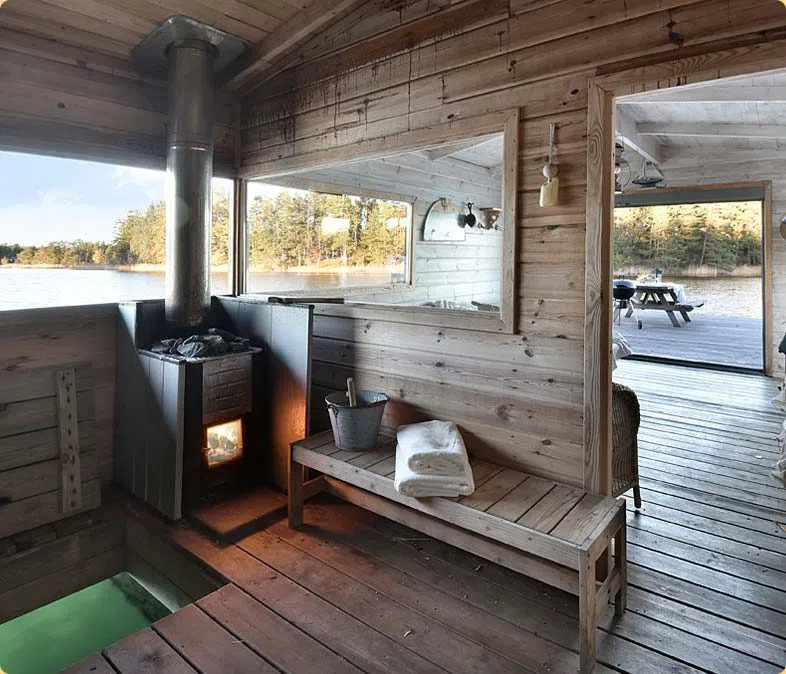
Further out, at the mouth of the archipelago, Sandhamn is Sweden's sailing capital and the busiest of the outer islands in season. The crossing is longer — plan on the better part of two hours by Cinderella ferry — so this is a full day or, better, an overnight. Sandhamn Seglarhotell (right at the guest harbour, a two-minute walk from the ferry) is the social heart of it: a hotel and spa whose wood-fired floating saunas are the thing to book. The sauna rafts take parties of one to six and are bookable year-round; rooms and rafts start around 2,600 SEK, and the plunge into the Baltic between sessions is the whole ritual. Dine afterwards at the Seglarrestaurangen on site. This is a group-oriented place by nature — it is where crews gather — so solo travellers and couples will find it lively rather than quiet.
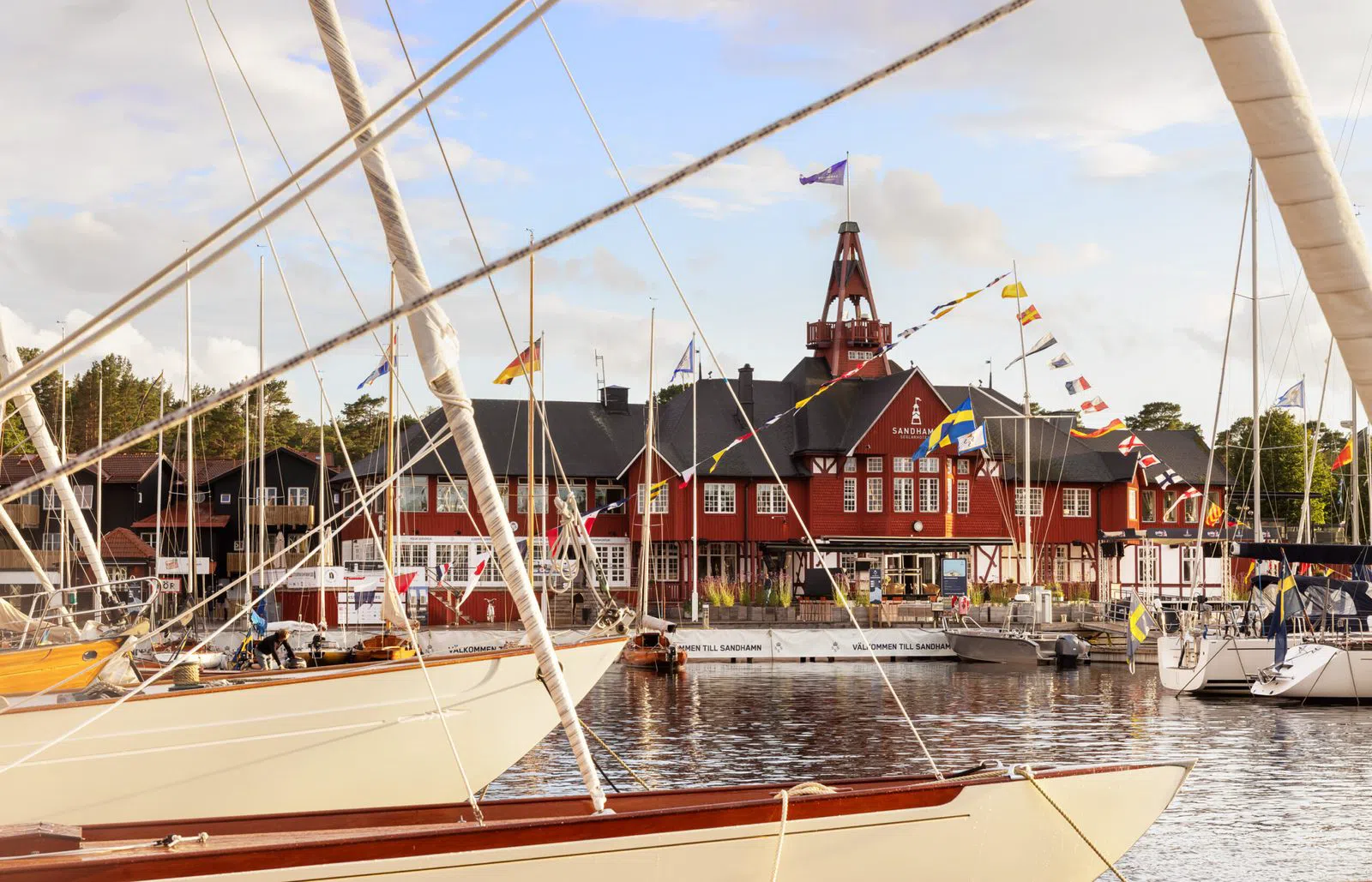
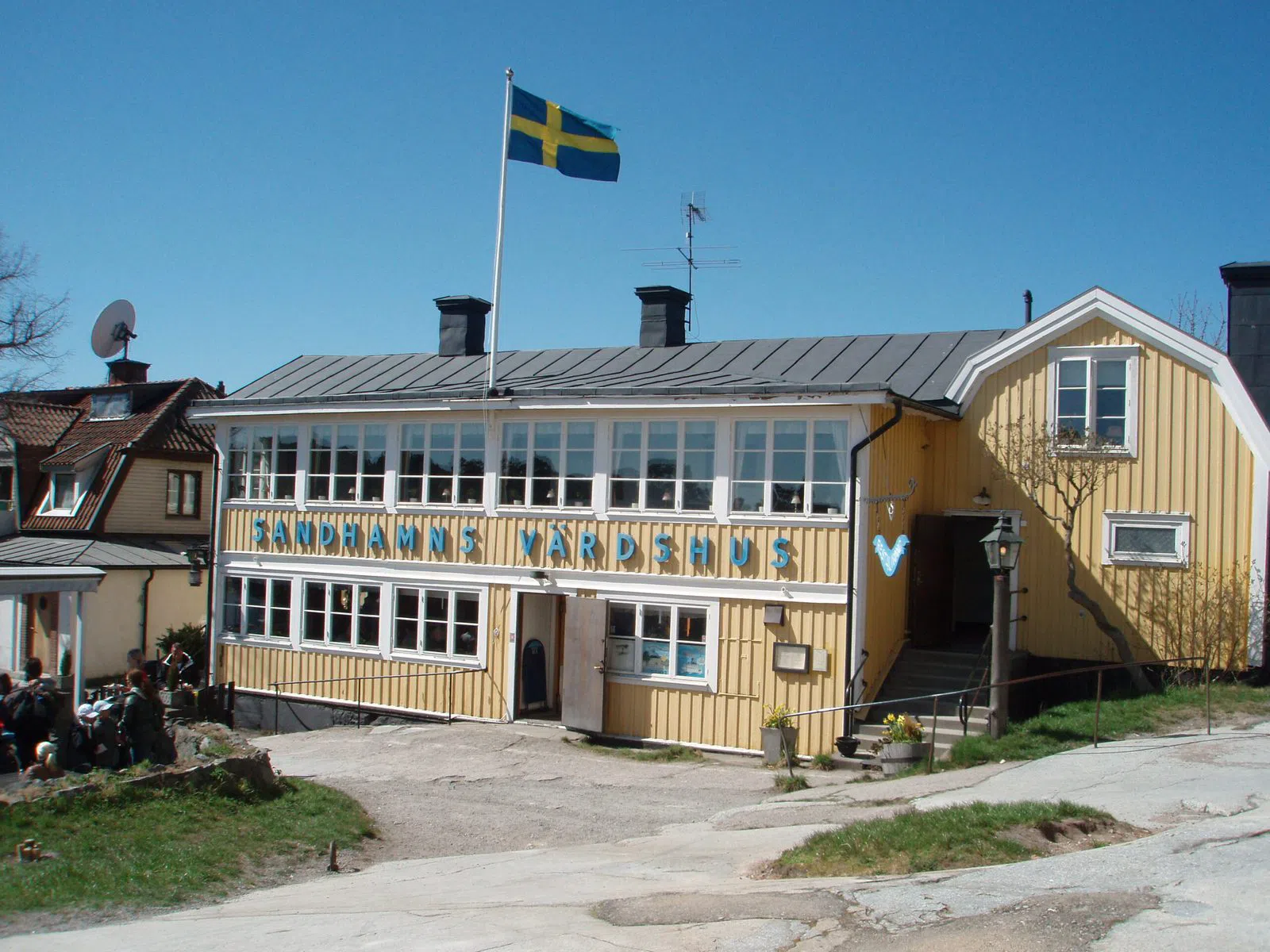
A few minutes' walk into the village, Sandhamns Värdshus (in the old harbour lanes) is the rarer thing out here: a kitchen open daily from 11:00, and open even in winter when almost everything else has shut for the season. It is a historic inn with a walk-in pub, no door policy, classic Swedish mains at mid-range prices, and generations of sailors' tradition in the walls. If you come to Sandhamn out of season, this is very likely where you will eat. In summer it takes groups happily; in January it may be the only warm room with a plate of food on the island, and that is exactly its charm.
Utö: the cycling island in the south
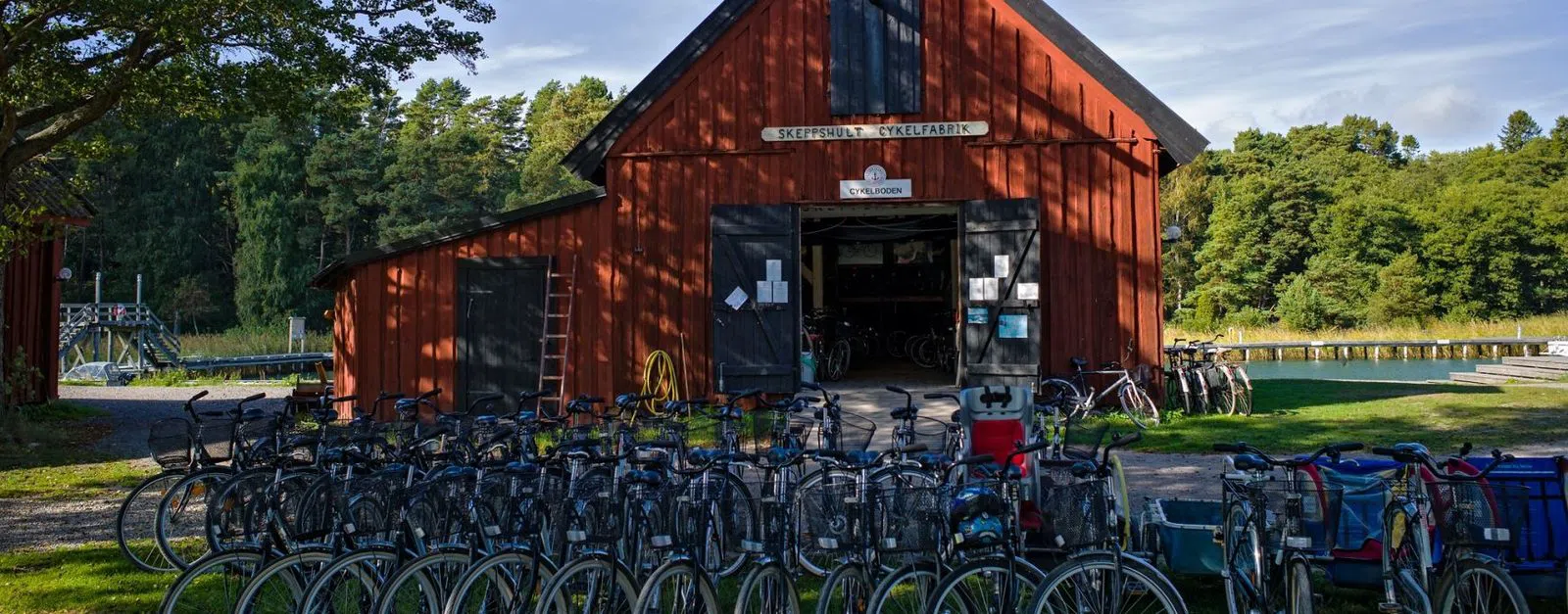
Most visitors point their ferries east or north-east; the southern archipelago is quieter, and Utö is its best day out — an island made for bicycles, with gravel lanes running down to swimming beaches and the remains of Sweden's oldest iron mines. Sort the wheels first. Utö Rent (at Gruvbryggan, the harbour reception a short walk from the ferry) keeps a fleet of around 300 bikes in every size, plus mopeds, on walk-up hire. Day bike hire is genuinely budget; mopeds cost more. This is how you actually cover the island — families and groups are well served, and there is no need to book weeks ahead in the way you would a restaurant table.
Ride out and circle back to Utö Wärdshus (above the harbour at Gruvbryggan) for the meal. The inn runs a restaurant, hotel and hostel, handles cycling groups and parties, and prices sit from the mid to the upper range depending on whether you are eating or staying. Pair a lunch here with a loop past the mine dwellings and a swim; the island rewards a slow, self-powered day rather than a dash, and the ferry timetable south is sparser than the eastern routes, so check your return before you order dessert.
Two for the unusual: art and a night in a fortress
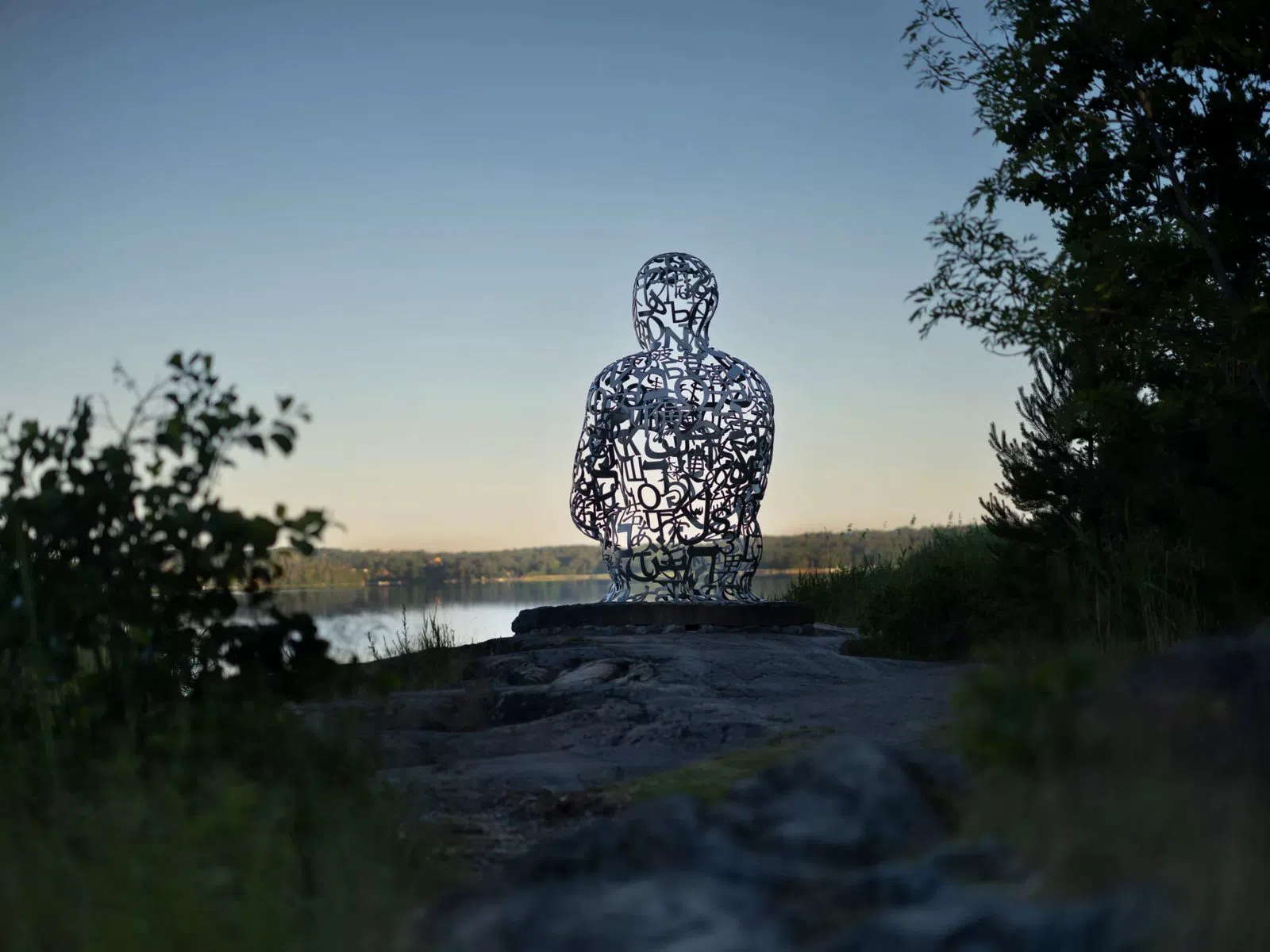
Not every archipelago day has to be swimming and herring. Artipelag (Hålludden, on Värmdö, 20 km from the city with its own boat and coach access) is a large waterside art museum set in pine forest and bare rock. Entry covers a rotating exhibition — there is no permanent collection, so check what is showing before you commit the day — plus a café and restaurant that make it easy to linger. 'Sculpture in Nature' runs from March to August 2026 across the grounds. Groups are well handled, and the building itself, low and dark against the water, is worth the trip even between shows. Take the dedicated Artipelag boat from the city in summer; it is timed to the exhibitions.
For something genuinely offbeat, spend a night inside a fort. STF Siaröfortet (on Kyrkogårdsön, between Vaxholm and Furusund) is a restored island fortress turned hostel — beds for up to 42 inside the fort, plus two ten-bed army tents in high summer, guided tours of the gun emplacements, and casual krog dining in the old barracks. Beds and meals are budget to mid-range, and it is the kind of place a group remembers longer than a smart hotel. Note the season: the kitchen may run café-only in the low months, so this is a summer plan. Reach it by the Vaxholmsbolaget/Cinderella routes heading north; the jetty is the fort.
Practical notes
Getting out: Nearly everything here leaves from central Stockholm — Strandvägen, Strömkajen or Nybrokajen — within a short walk of Djurgården. Cinderellabåtarna covers the eastern and northern islands (Fjäderholmarna, Vaxholm, Grinda, Sandhamn); the southern run to Utö goes via the Nynäshamn area, so allow extra time to reach the departure point. Check the timetable the night before and pre-book in July and August, when boats to Grinda and Sandhamn sell out.
Timing: Fjäderholmarna is a half-day; Vaxholm, Grinda and Utö are comfortable full days; Sandhamn is a long day or a night away. The archipelago season peaks June to August — many island kitchens, the Vaxholm fortress museum and the Fjäderholmarna brewpub keep to summer hours, while Sandhamns Värdshus is the reliable year-round exception. Always confirm the last ferry back before you settle in for a second course; missing it on an outer island means an unplanned overnight.
Cash and cards: Sweden is effectively cashless — cards and phone payments work everywhere named here, and you rarely need SEK in hand. Prices are in Swedish kronor: reckon on 150–350 SEK for a scheduled single fare, upward of 1,000 SEK per person for a RIB tour, 120 SEK for the fortress museum, budget day-rates for a Utö bike, and 2,600 SEK and up for a room or a floating sauna at Sandhamn.
Where to stay: Most people base in the city and day-trip out; compare rooms on the Stockholm hotel search and read the wider Stockholm guide for neighbourhoods and the boat quays before you book. If you would rather wake up on the water, the Sandhamn hotel and the Siaröfortet hostel let you do exactly that — just pick your season, and pick your ferry.
Before you go
How do I get to the Stockholm archipelago without my own boat?
Scheduled ferries do all the work. Cinderellabåtarna runs fast, pre-bookable vessels from central Stockholm (Strandvägen and Strömkajen) to Fjäderholmarna, Vaxholm, Grinda and Sandhamn, with single fares around 150–350 SEK. For the southern island of Utö you depart via the Nynäshamn area, so allow extra travel time to the quay.
Which archipelago island is closest to Stockholm for a short visit?
Fjäderholmarna, at about 25 minutes by ferry, is the nearest real 'out there' feeling. Fjäderholmarnas Bryggeri is a walk-in summer brewpub on the island (open May–September), ideal if you only have an afternoon and want to be back in town for dinner.
When is the archipelago season, and what stays open in winter?
The season peaks June to August, when island kitchens, the Vaxholm Fortress Museum and the Fjäderholmarna brewpub keep summer hours. The reliable year-round exception is Sandhamns Värdshus on Sandhamn, whose kitchen is open daily from 11:00 even in winter.
Can large groups visit, and are any places hard to get into?
Most venues here are group-friendly with no door policy — Cinderella ferries take group tickets, and Sandhamn Seglarhotell, RIB Stockholm and Utö Rent are built around parties. The one thing to book ahead is dining: reserve Grinda Wärdshus in summer, and pre-book ferries to Grinda and Sandhamn in July and August.
Do I need cash, and what currency are prices in?
Sweden is effectively cashless, so cards and phone payments work at every venue named here and you rarely need cash. All prices are in Swedish kronor (SEK): expect roughly 150–350 SEK for a ferry single, 120 SEK for the Vaxholm fortress museum, and from 2,600 SEK for a room or floating sauna at Sandhamn.