
Start on the roofs, because that's where the effect is easiest to feel. Below is the finished body.
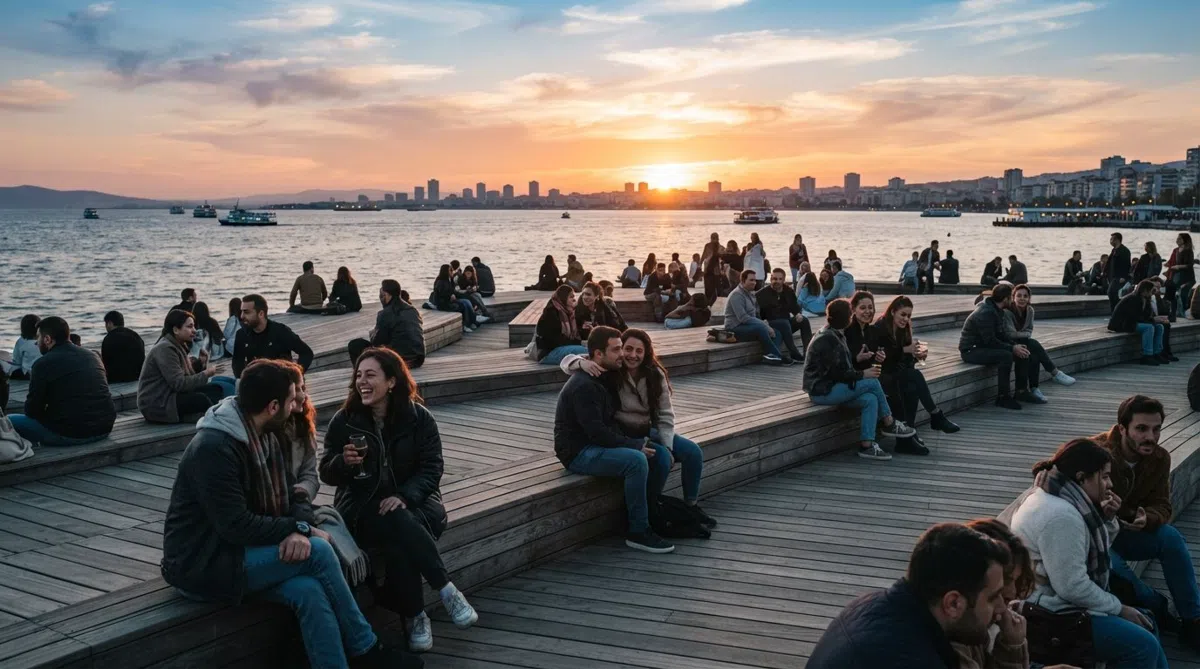
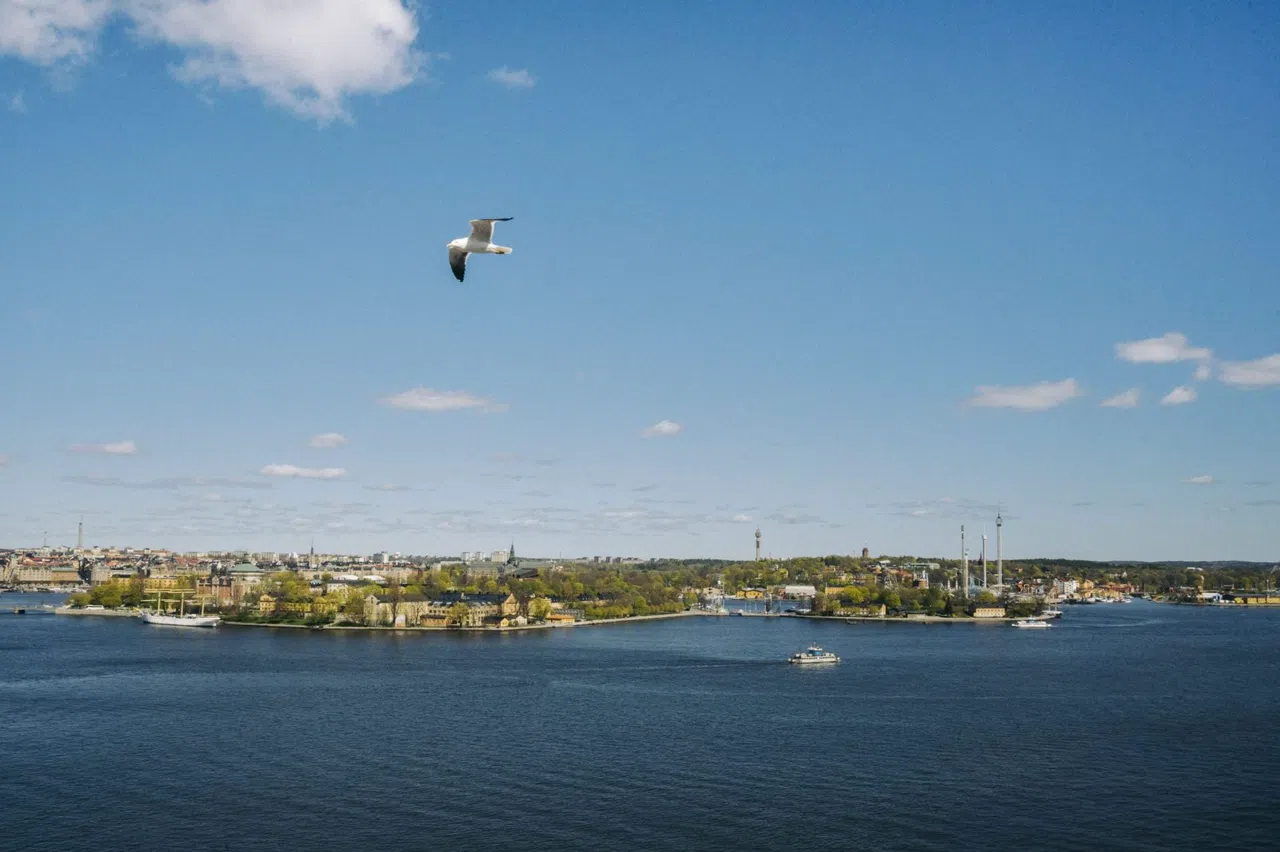
By nine in the evening in late June, Stockholm still looks like four in the afternoon, and you'll notice the city has rearranged itself around that fact: restaurants push their busiest tables back to 9pm, ferries add extra summer crossings, and a hill above Södermalm fills with people who've brought their own wine because the sun isn't doing anyone the favour of setting. Stockholm sits far enough south that the sun does dip below the horizon even at midsummer (this isn't the true midnight sun you'd find above the Arctic Circle), but the dusk stretches so long it barely qualifies as night. What follows is less a list of things to do than a map of where the city goes when it stops waiting for dark.
Where Stockholm's rooftops stay bright past ten
Start on the roofs, because that's where the effect is easiest to feel. Pelago, at Slussen, is the newest and largest of them, a pergola-covered terrace built for evenings that refuse to end. It takes walk-in groups and larger bookings without a strict door policy, but it fills fast on a clear night; get there before 7pm if you want a table without queuing, and budget 300-500 SEK a head for food and cocktails. It only runs May to September, which tells you most of what you need to know about why it exists.
Ten minutes' walk away, inside the Skrapan tower, Himlen (Södermalm) is Stockholm's oldest and highest skybar, reopened in 2024 with a warmer, less clinical redesign than its old version. It handles both small groups and larger parties, and has a private dining room (a chambre séparée) bookable for events. Dinner runs 600-700 SEK per person with bar drinks charged separately; go for the view across Söder's rooftops rather than expecting a destination-restaurant meal, though the kitchen has improved since the reopening.
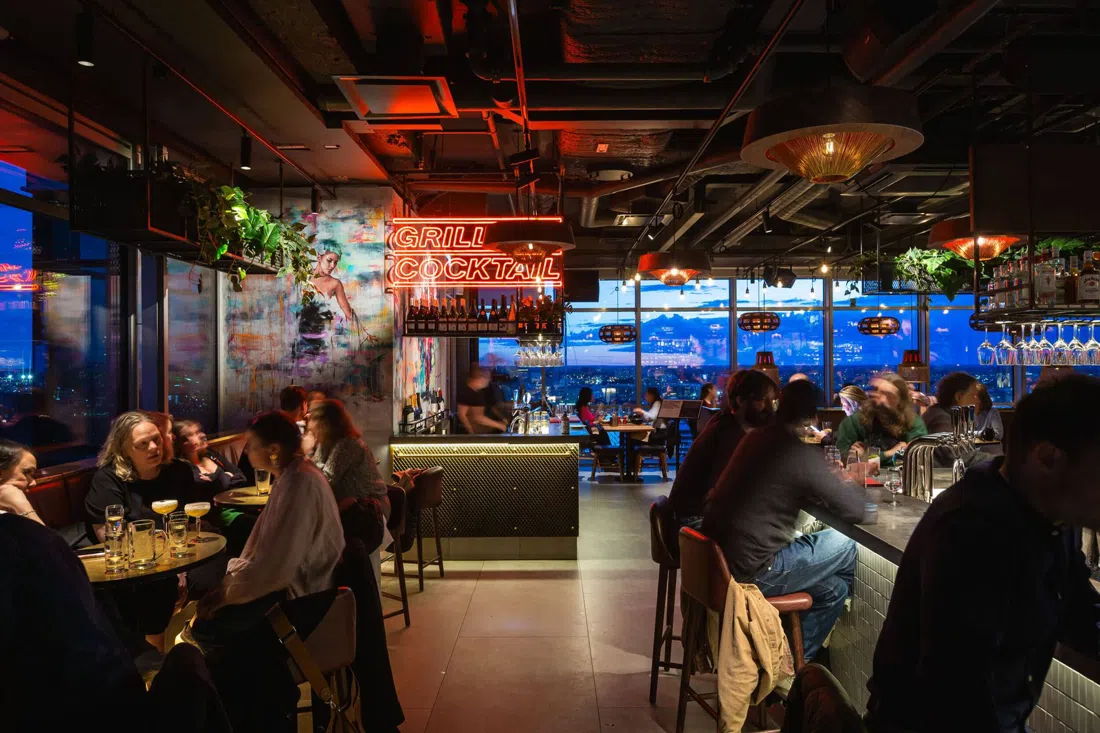
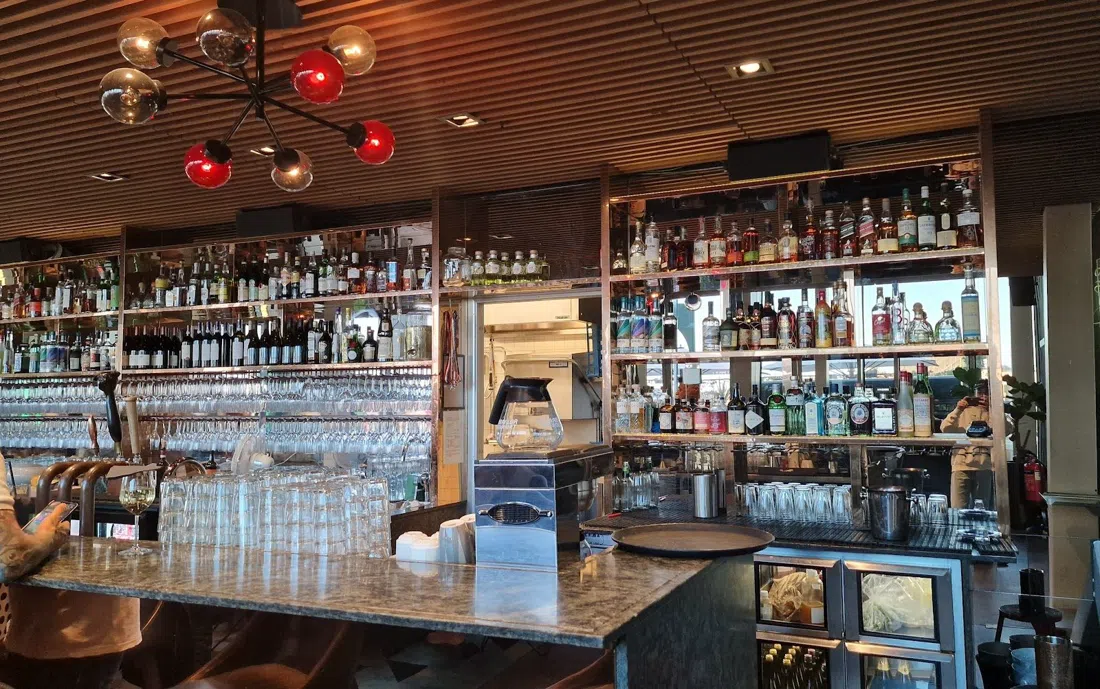
Capital (Norrmalm), the rooftop bar at the Scandic Continental hotel near Centralstationen, is the odd one out here because it runs year-round rather than shutting for winter; most of the roofs on this list only make financial sense in the long light. Capital in April is a perfectly good hotel bar; Capital in July, with the sky still blue at 10pm, is a different place altogether, and worth booking through Scandic Continental if you want a group table on a warm evening. Drinks run 150-300 SEK, noticeably cheaper than the dedicated rooftop venues nearby.
Dinner slides later when the sky won't cooperate
Nowhere shows the light's effect on the day's shape more clearly than dinner. Fotografiska Stockholm (Södermalm), the museum's rooftop restaurant on Stadsgårdshamnen, holds a Michelin Green Star and a terrace built for lingering over a tasting menu rather than clearing the table by nine. Book weekend slots at least 48 hours ahead: a tasting menu runs 600-900 SEK per person, and this is a sit-down, reserved evening rather than a walk-in option, better suited to couples or small groups than a large party.
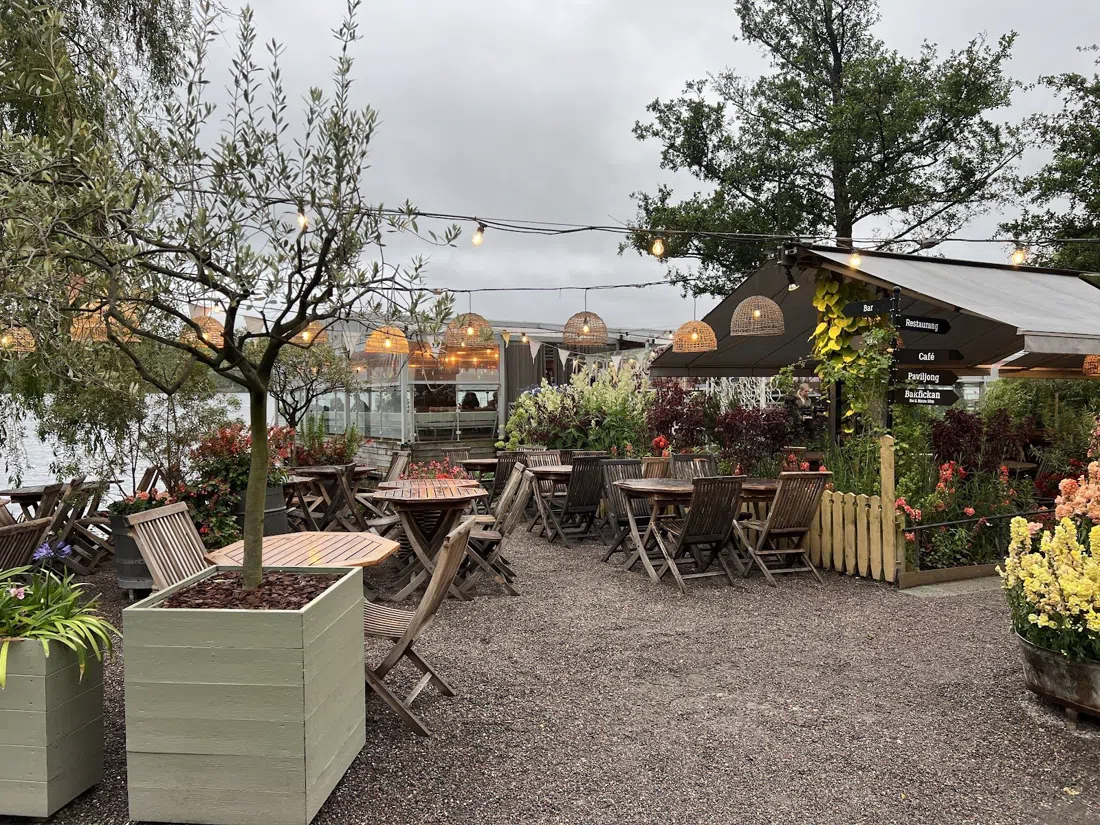
At the other end of the price scale, Mälarpaviljongen (Kungsholmen, on Norr Mälarstrand) is the 20-plus-year-old seasonal institution that captures "the whole city moves outside" feeling better than anywhere else on this list. It's summer-only, casual, and walk-in groups are fine; call ahead only if your party is large. Drinks run 100-250 SEK, mains from around 180 SEK, and the appeal is watching Stockholm eat dinner at ten o'clock in full daylight, boats drifting past on Mälaren the whole time.
Getting onto the water while the light holds
Stockholm's ferry network is the clearest single proof that the whole city reorders itself around the light. Waxholmsbolaget, the public archipelago ferry operator sailing mainly from Strömkajen in Norrmalm, expands its summer timetable: more routes, higher frequency, and a new hydrofoil service this year cutting crossing times to some islands. It's a scheduled public service: no booking needed, and a large group can simply board, with single tickets from roughly 60-160 SEK depending on the zone. If you want one piece of hard evidence that Stockholm's infrastructure itself bends around the season, this is it.
For something more structured, the Stockholm Archipelago cruise (Strömma), departing central Stockholm, runs evening sailings timed to catch the long, low light over the islands. Standard group tickets and private charters are both available, from 295-495 SEK: it's the operator-run version of the same instinct that sends locals onto the public ferries after work.
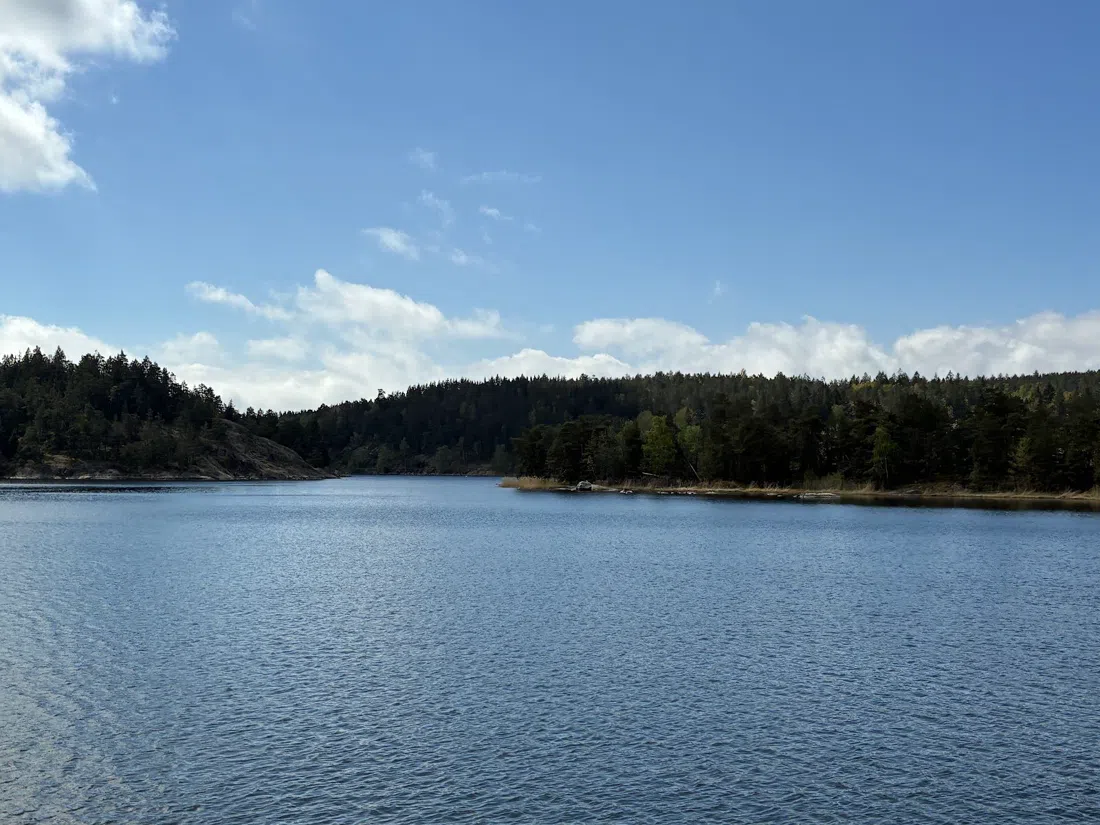
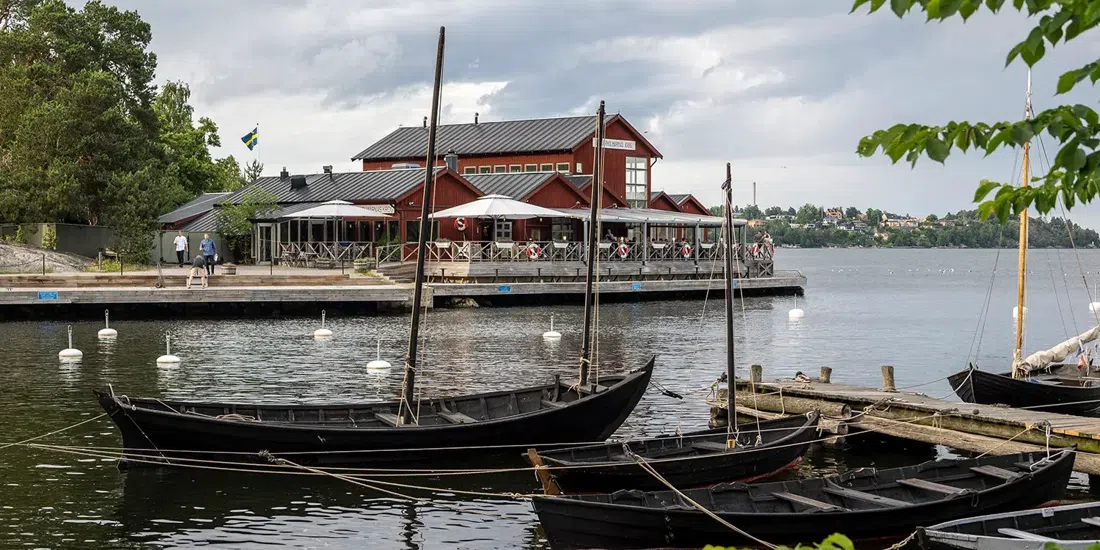
The easiest single outing from the city is Fjäderholmarna, the closest archipelago island, 25 minutes from Slussen on regular hourly ferries that take groups without booking. Its restaurants, Fjäderholmarnas Krog and Rökeriet, take group bookings, and the round-trip ferry costs 170 SEK before food or the island's craft stalls. It's the version of "go to the archipelago" you can do after work and still be home for a late dinner, because the light gives you the hours to do it.
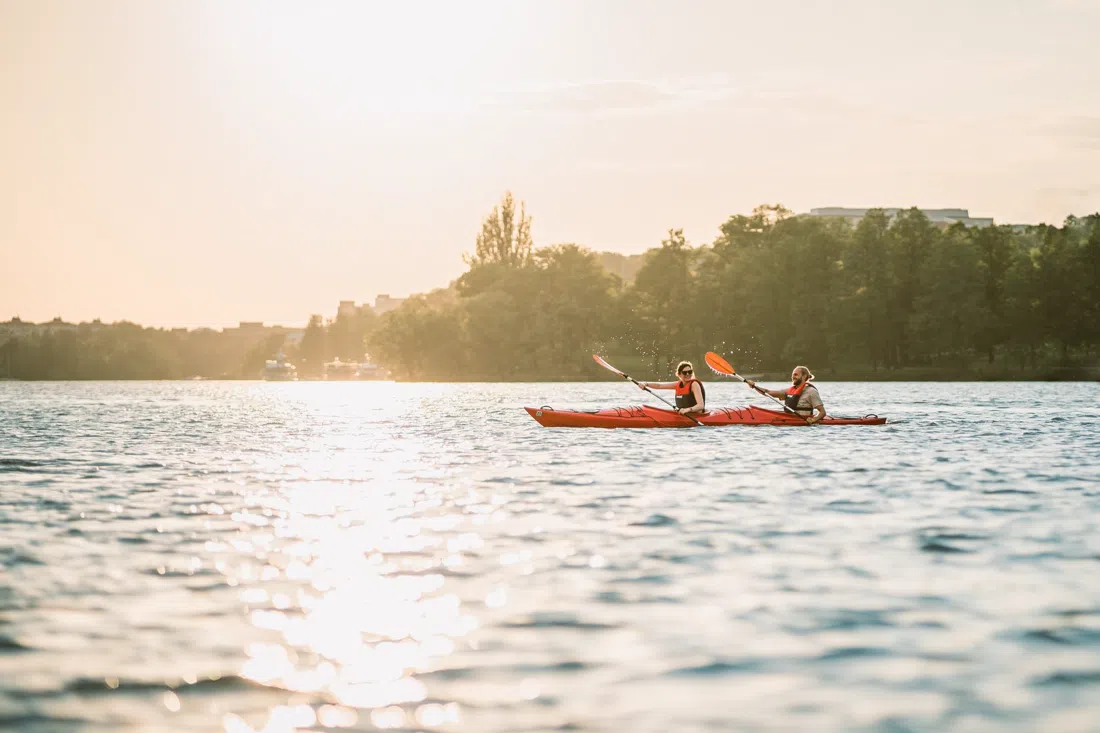
If you'd rather be on the water than looking at it, KAYAKOMAT, with self-service locations around the city including Djurgården, rents kayaks and paddleboards through an app: no staff, no scheduled tour, each person in a group books their own board for the same time slot at roughly 100-150 SEK an hour. It's a round-the-clock, self-service model, and it only works as a business because Stockholm's summer evenings stay light enough to paddle at 10pm without a headlamp.
The free hilltop and lakeside version of the same evening
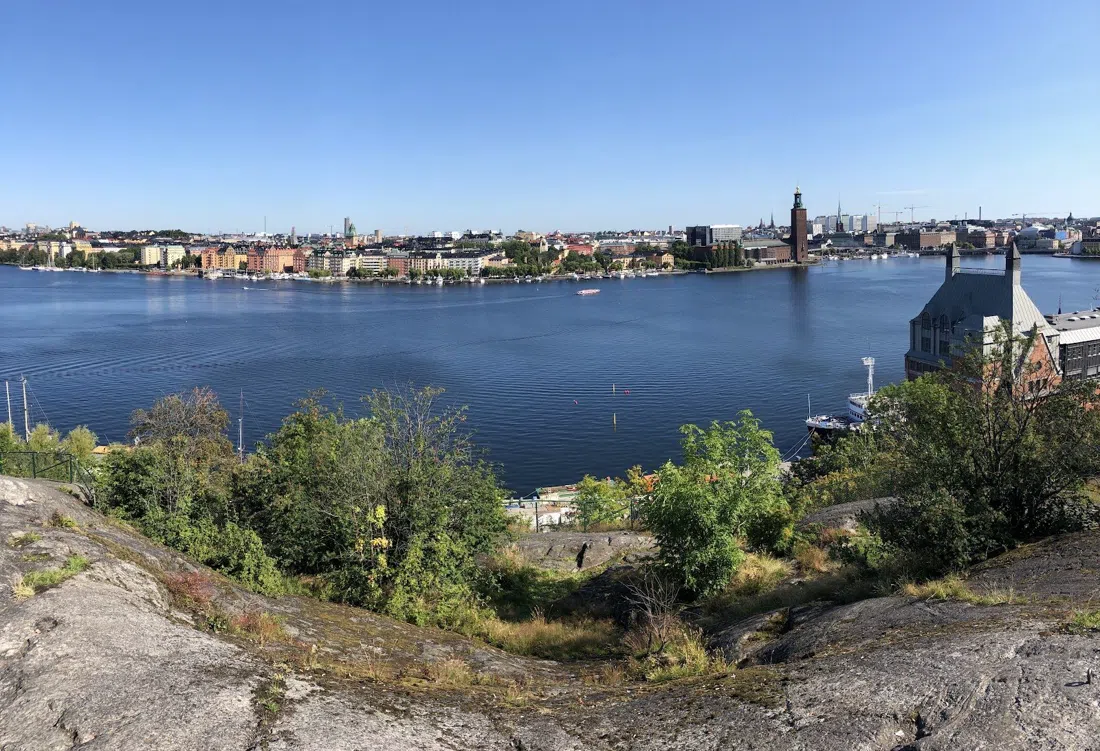
Not everything here costs money. Skinnarviksberget (Södermalm), the highest natural point in central Stockholm, is a public park with no booking and no door policy: informal group picnics are the norm on a warm evening, and it costs nothing. This is where the effect is easiest to see with your own eyes: locals arriving after work with a blanket and a bag from the nearest ICA, settling in to watch a sunset that takes its time over a sky that never quite commits to full dark.
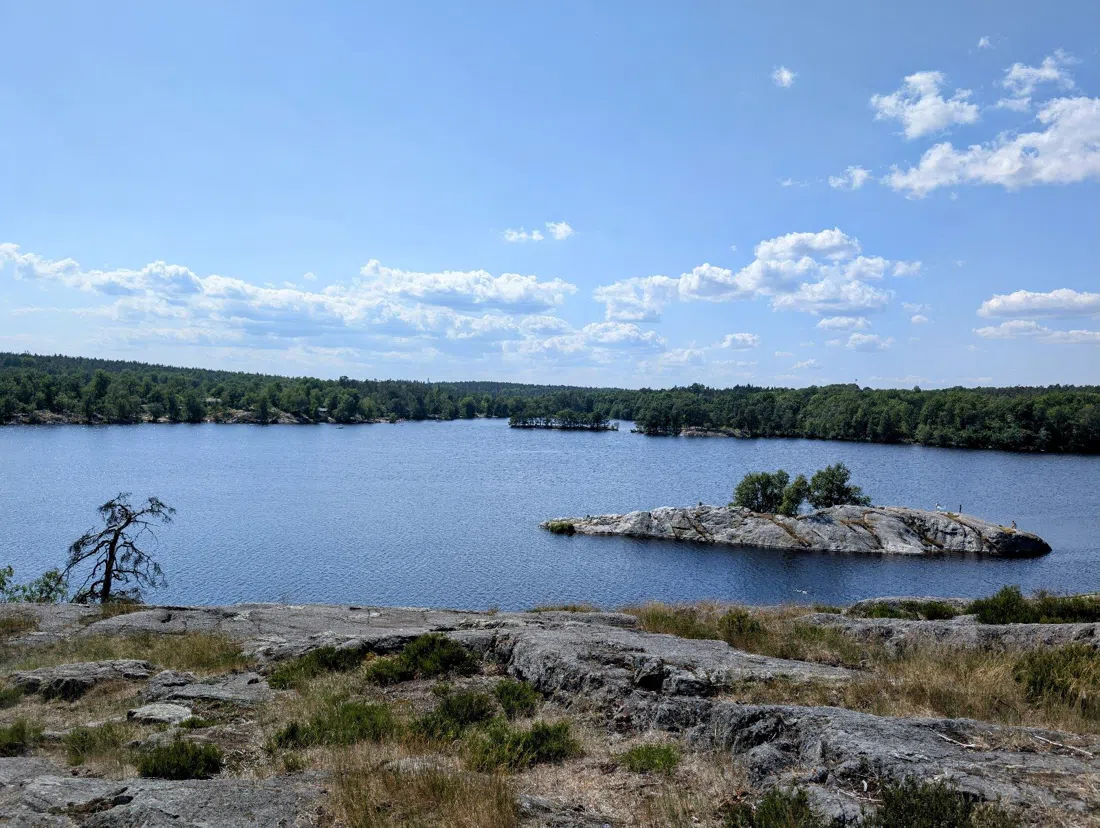
Hellasgården (Nacka), about 20 minutes from Slussen by bus, is the clearest example of outdoor life stretching into the evening instead of stopping at dusk. Lake swimming is free, sauna sessions run 100-150 SEK, and the site takes explicit group and conference bookings with reservable shelters and outdoor spaces. It's a different scene at 8pm in July than at 8pm in November: the same lake, but a city still willing to use it outdoors.
Nightlife and rides that run until the sky finally gives up
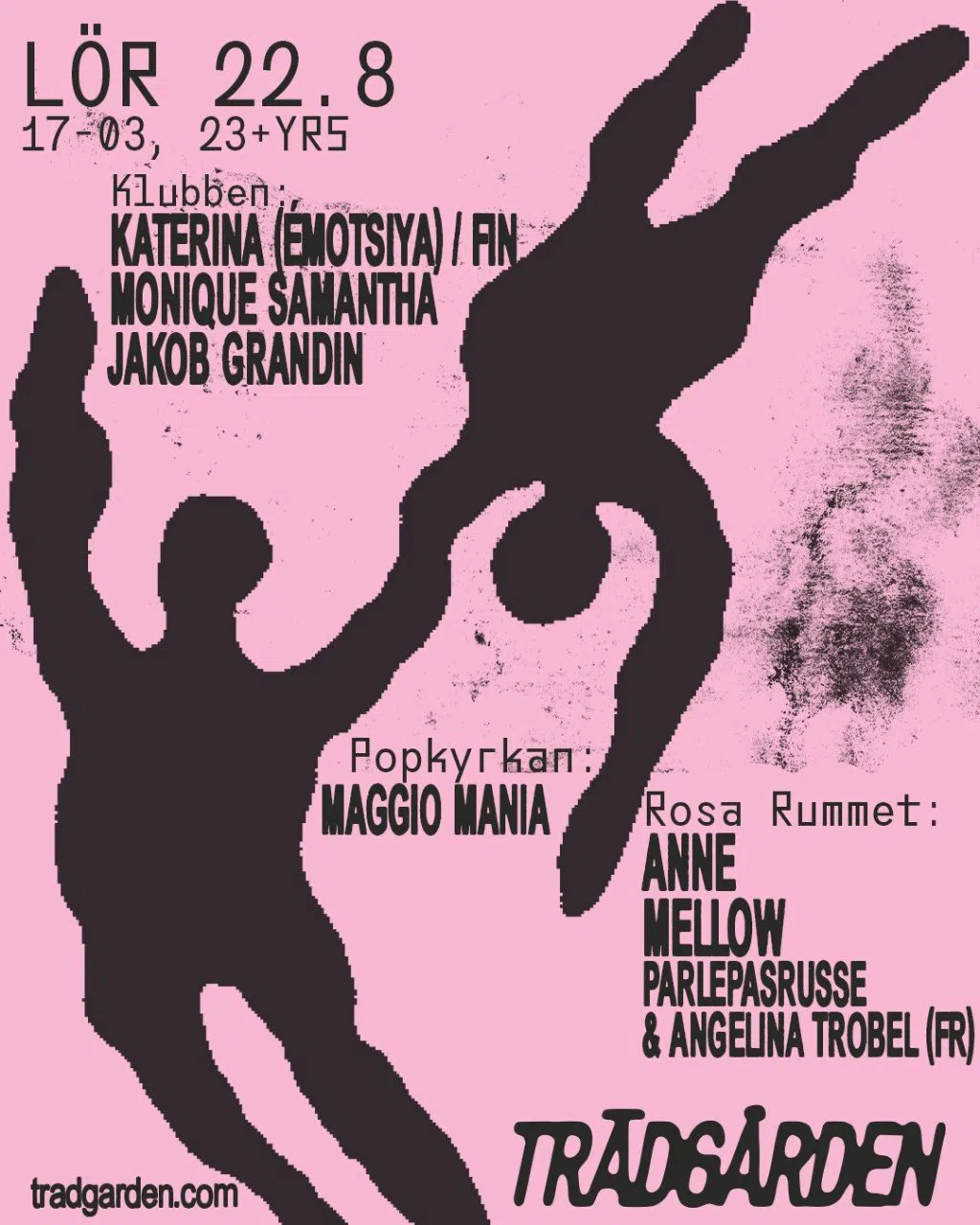
The most literal proof of the whole idea is Trädgården (Södermalm, under the Skanstull bridge), the outdoor summer club running 1 May to 19 September 2026, 17:00 to 03:00. It operates a guestlist system for groups and a 23+ door policy: 18+ is only possible with an approved guestlist submitted in advance, so this isn't a spontaneous stop for a mixed-age group. Entry runs 150-250 SEK, drinks 100-150 SEK. What earns it a place here is the hours more than the club itself: dancing at 1am under a sky still holding blue at its edges feels distinctly Stockholm.
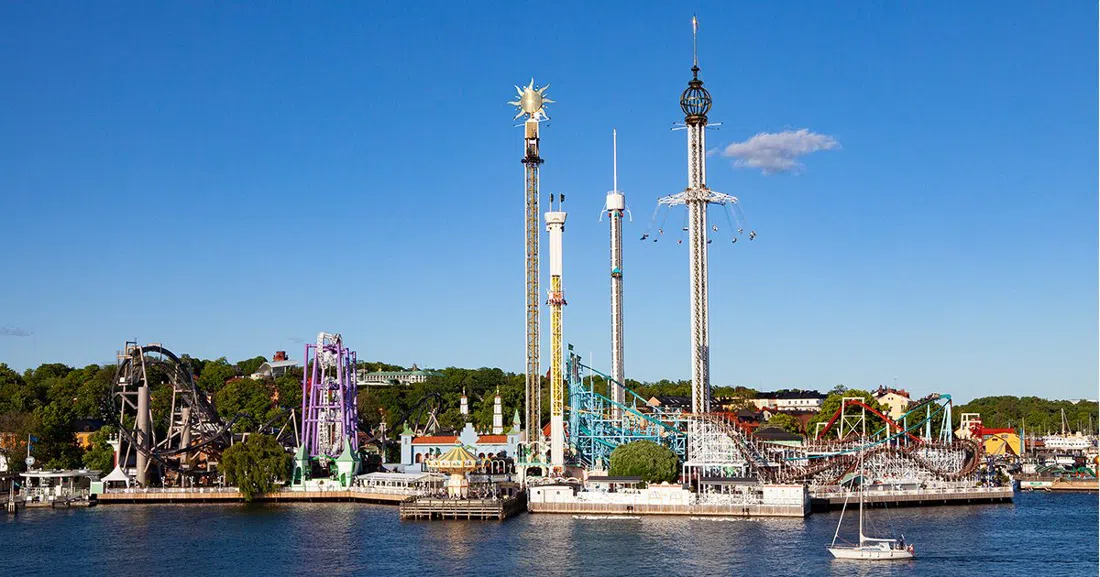
Gröna Lund (Djurgården), the amusement park, is the family-facing version of the same fact: on peak summer weekends it stays open until 11pm, purely because the light allows it. It's a hard seasonal operation, running end-April to end-September only, with group tickets and event bookings available. Entry is around 145 SEK plus per-ride charges, or an unlimited wristband for 445-495 SEK. Riding the Ferris wheel over the harbour at 10:30pm in full daylight is about as literal as this effect gets without leaving the city.
Planning around the light
Timing. The effect is strongest from roughly mid-May to late July, peaking around midsummer (19-20 June this year), and by late August the evenings are visibly shortening again. If the light itself is the point of your trip, don't leave it until September. Book Fotografiska and Himlen's private room ahead for weekends; almost everything else on this list can be walked into.
Transport. Waxholmsbolaget and the SL public transport network both run expanded summer schedules: check current timetables before building an evening around one specific ferry, since frequency shifts through the season. Slussen is the hub for most of the water-based options above; Hellasgården needs a bus from there, and everything else on this list is walkable or a short transit ride from the centre.
Cash. Stockholm is close to fully cardless. Cash is rarely accepted and sometimes actively not wanted, so don't plan an evening around carrying kronor.
Budget. A rooftop dinner with drinks runs 400-900 SEK per person depending on venue; a full evening combining a free viewpoint, a ferry, and a casual dinner can be done for well under 300 SEK before alcohol. Groups should call ahead for anywhere beyond a walk-in bar: Himlen's private room, Fotografiska's weekend slots, and Trädgården's guestlist all need lead time.
For somewhere to stay while you test all this yourself, start with the Stockholm hotel search; for the rest of the city beyond these long summer evenings, the Stockholm guide covers it.