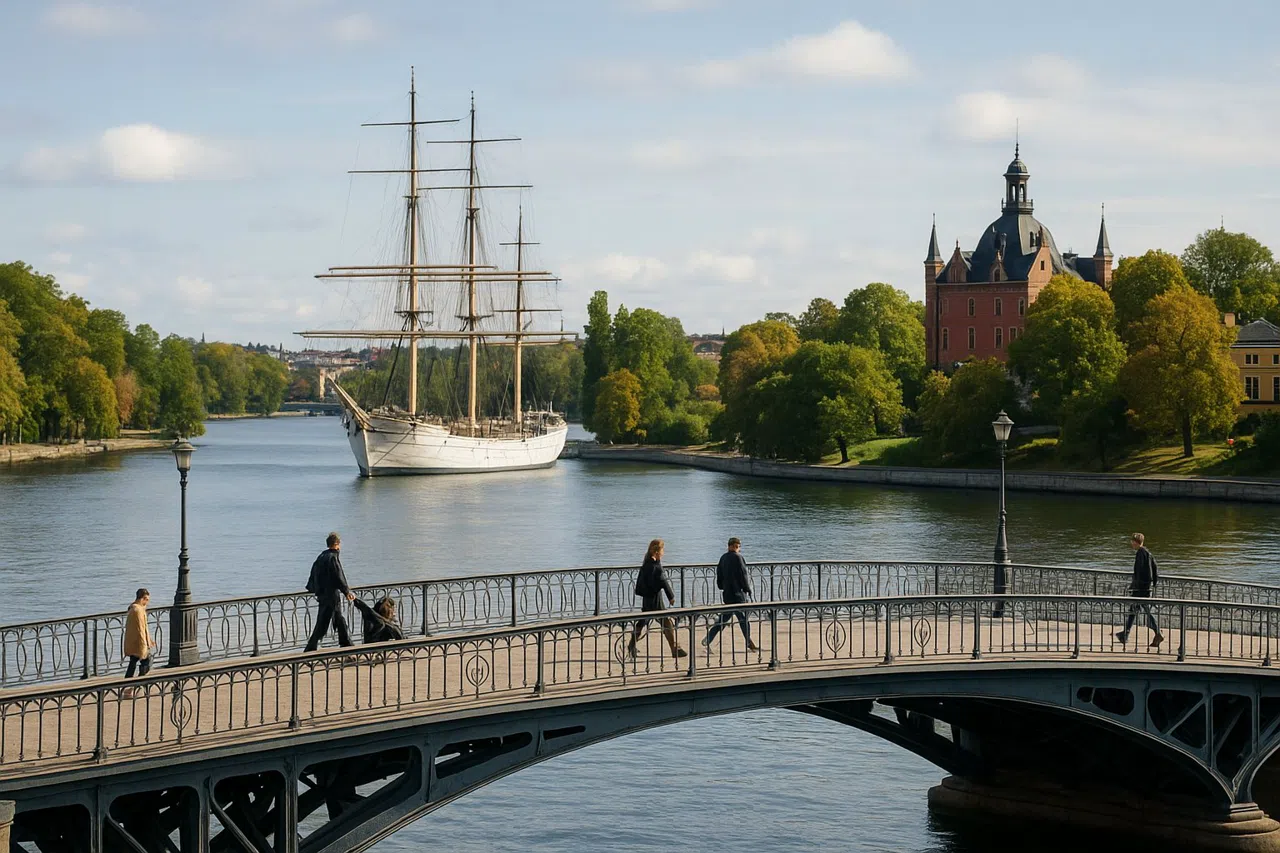
Cross the arched Skeppsholmsbron from Kungsträdgården and the city seems to lower its voice. The traffic noise drops away almost at once, and ahead lies an island that spent close to 300 years as the Swedish navy’s own territory before culture moved in, one building at a time. Skeppsholmen is small enough to walk end to end in twenty minutes, but it never feels like a shortcut or a leftover. It reads more like a compressed history of Stockholm’s public life: parade ground, gun shed, church, ship, museum, hostel. The military bones are still visible everywhere, yet the island’s present tense is unmistakably artistic, architectural and quietly residential.
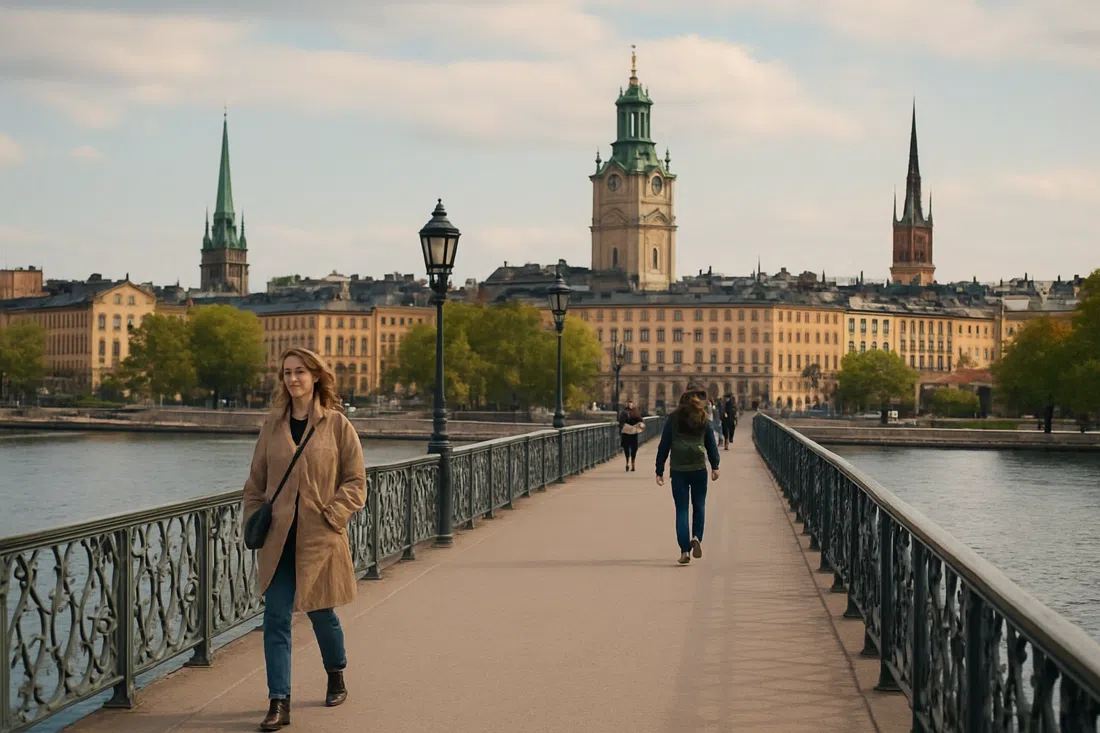
A navy island turned museum island
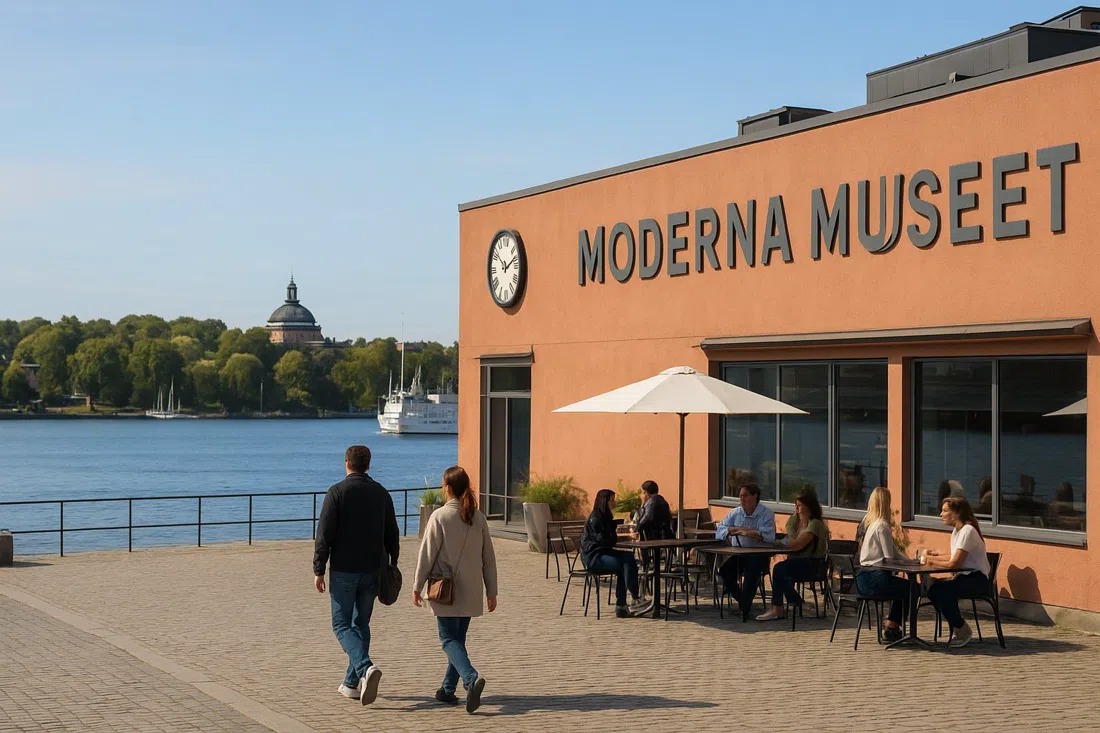
Skeppsholmen was the Swedish navy’s base from the late 1600s until the 1960s and 70s, and that long occupation still shapes how the island feels underfoot. The old artillery exercise ground, Exercisplan, now fronts Moderna Museet, Sweden’s national museum of modern and contemporary art, while ArkDes shares the same site with it in a former gunboat training shed and a newer wing by Rafael Moneo. It is one of those rare urban places where the architecture tells the story before the labels do: you are standing where drills and cannon practice once happened, but the loudest thing now may be the hiss of a ferry, or the murmur from a gallery cafe.
The pairing works because it makes a full afternoon out of a single patch of land. Moderna Museet holds more than 130,000 works, from Picasso and Dalí through to contemporary Nordic artists, and it does so with the sort of confidence that comes from being Sweden’s national museum of modern and contemporary art. ArkDes, meanwhile, is the country’s national centre for architecture and design, and its presence on the island feels especially apt. Skeppsholmen is a place where form and function are never far apart: a former artillery ground becomes a museum forecourt, a training shed becomes a gallery, and a naval island becomes a place to think about cities rather than defend them.
The domed building on the hill is another reminder that the island’s past has not been erased, only repurposed. Built between 1823 and 1842 by military architect Fredrik Blom as the navy’s own church, it was deconsecrated in the 1960s, left empty for decades, and eventually reopened as Eric Ericsonhallen, a concert and event hall named for the Swedish choral conductor. The silhouette is still unmistakable from the water, and the building’s arc from sacred to secular feels perfectly Skeppsholmen: not dramatic reinvention, but patient reuse.
Down at the edge of the island, af Chapman offers a different kind of maritime afterlife. The full-rigged steel ship was built in 1888, bought by the Swedish navy in 1923, and has been moored permanently on the island’s west shore since 1949 as one of the country’s best-known hostels. It is not a decorative ship in the tourist sense; it is a real hull, real rigging, real history. Seen from the quay, it still gives the island a working-harbour gravity, even though the cadets are long gone.
Things to do
Moderna Museet and ArkDes are the reason most people come, and they are best treated as a single cultural stop rather than separate errands. Both are free to enter, both sit within the same building complex on Exercisplan, and both reward lingering. One side offers modern and contemporary art; the other, architecture and design. ArkDes is also running a rotating collection exhibition through 2025-2026, with guided tours and summer activities for families, which gives the island a little more texture than the standard museum day. The real pleasure here is not just what hangs on the walls or sits in vitrines, but the way the buildings themselves frame the water and the city.
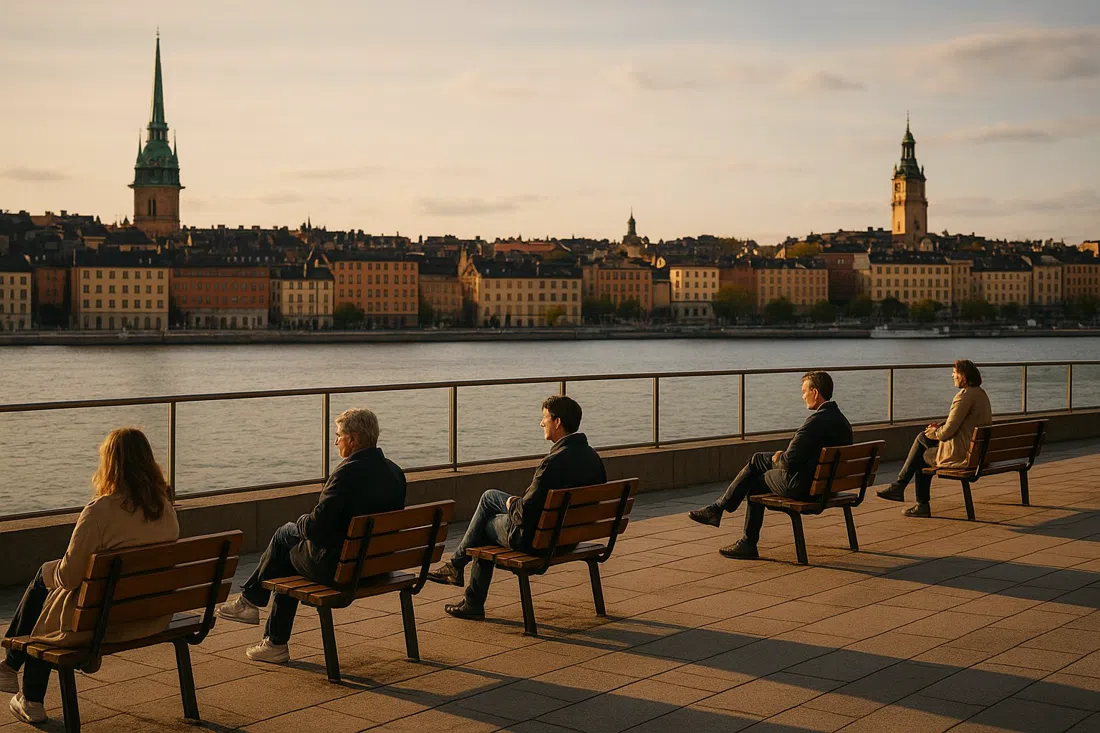
The terraces matter as much as the galleries. Even without stepping inside, the ArkDes terrace and the Moderna Museet terrace work as free, uncrowded viewpoints over the water, with Gamla Stan, Södermalm and Djurgården all in the picture. That view is one of Skeppsholmen’s quiet luxuries: north to Nybroviken and Strandvägen’s grand facades, south to Djurgården’s tree line and the water taxis working between them. It is a place to pause without feeling like you are missing something, which in central Stockholm is not a small gift.
Teater Galeasen adds a different pulse. Founded in 1983 and based in a former boat shed on Slupskjulsvägen, the company stages experimental and contemporary drama and has toured internationally. It is the sort of venue that suits the island’s character: serious, compact, and slightly off to one side of the obvious route. If a performance overlaps with your dates, it is worth making the evening around it.
For walkers, Skeppsholmen is best understood as a loop. The full circuit around the island and onward across the Kastellholmsbron footbridge to Kastellholmen takes under an hour at an easy pace, and the route strings together water views almost the entire way. The island is flat and easy, never strenuous, and the reward is the feeling of moving through layers of Stockholm history without the compression of the old town crowds.
On Kastellholmen, Kastellet is the short detour that gives the walk its final punctuation. The small red-brick citadel was completed in 1848, and its flag has flown continuously since the 1600s as a signal, still readable from the harbour, that the city hasn’t fallen to anyone. You cannot go up the tower, but the point is the exterior, the stance, the signal it sends across the water. It is one of those modest landmarks that becomes more memorable the longer you stand there.
Af Chapman is worth seeing even if you are not sleeping aboard. The ship’s profile from the quay is one of the island’s essential images: rigging against sky, hull against water, the old navy repurposed as a budget bed. It is central Stockholm at its most unlikely and most practical.
Eat and drink
There is no strip of restaurants here, and that is part of the island’s character. Eating on Skeppsholmen means choosing among a handful of specific places, most tied to the museums or the hotel, and most closed by early evening. It is not a neighbourhood built for grazing, and it never pretends otherwise.
At Moderna Museet, Restaurangen Moderna Museet is the most obvious lunch stop, but it is also the most rewarding if you want the island’s view to be part of the meal. Run by chef Malin Söderström, it does two changing lunch mains a day — one meat or fish, one vegetarian — plus sandwiches and baked goods. The room’s wall of panoramic windows looks out over the water toward Djurgården and Strandvägen, and the terrace opens in summer. You can enter the restaurant without a museum ticket, which makes it a pleasant standalone stop even if you are only crossing the island for a few hours.
Café Blom, in the same building complex, is the lighter, more casual option: coffee, pastries and lunches, with an outdoor gravel terrace. It is run separately by the Fiesta restaurant group and suits the island’s in-between moments, the kind of place you drift into after a gallery visit or before a walk around the shore.
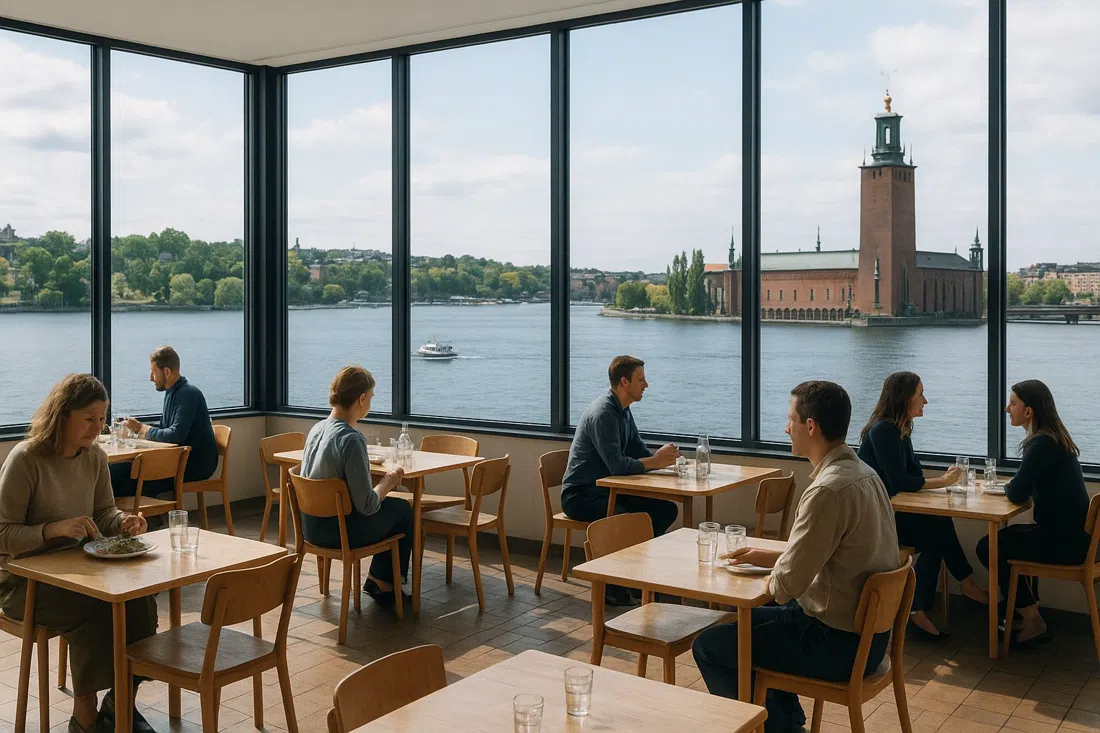
For a proper sit-down meal, Långa Raden is the restaurant inside Hotel Skeppsholmen. It sits in a park-like garden at the water’s edge in a building preserved since the 1690s, and the kitchen leans into modern Swedish cooking with seasonal ingredients. In summer, the terrace and lawn make it feel almost like a private garden room for the island, a calm counterpoint to the museum bustle across the path. It is one of the clearest examples of Skeppsholmen’s dual identity: historic shell, contemporary use, water always nearby.
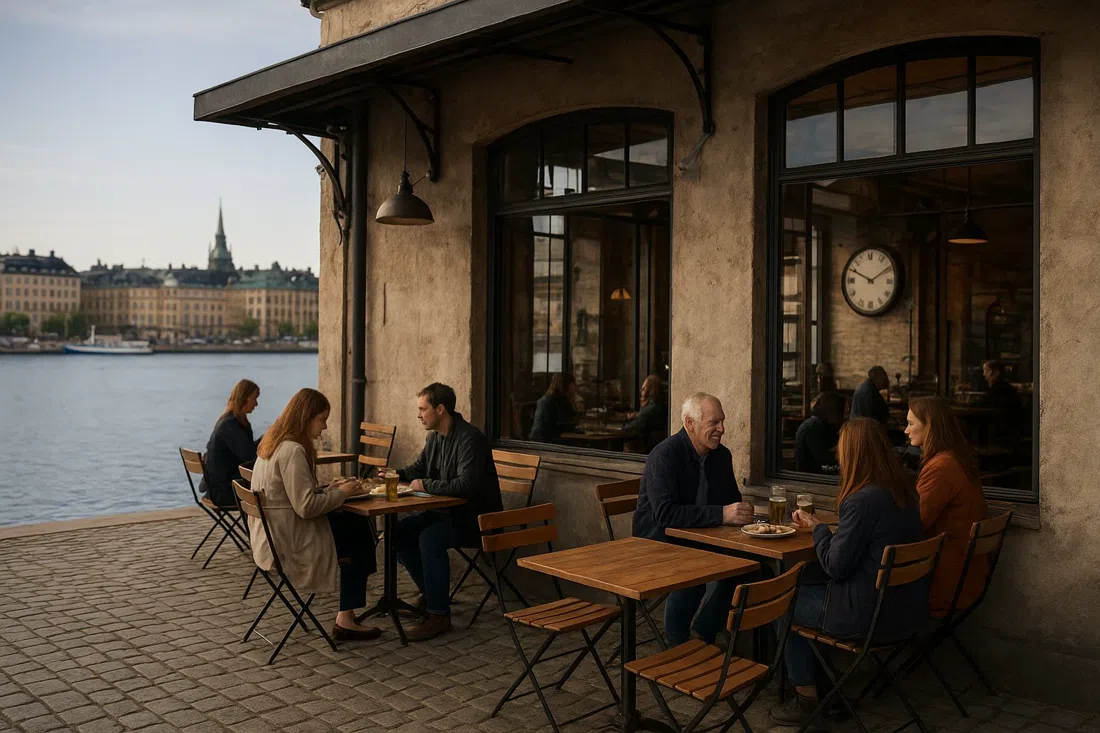
Down at Slupskjulsvägen, Torpedverkstan occupies a listed 1890 torpedo workshop on the quay, and the room still contains the original machinery. The menu is bistro-minded and broad enough to feel useful rather than precious: Scandinavian staples like toast Skagen sit alongside Mediterranean and Asian dishes, and the waterside terrace looks over Nybroviken. It is about a ten-minute walk from Kungsträdgården, and it doubles as the closest thing the island has to an evening bar. If you want to stretch the day into night without leaving the water’s edge, this is where it happens.
After dark
Be honest with yourself before booking a stay here for the nightlife: there isn’t any. Once Moderna Museet and ArkDes close in the late afternoon, the cafés shut with them, and the island empties quickly. What remains is Torpedverkstan’s bar down on the quay and the bar at Hotel Skeppsholmen, both low-key rather than lively. That is the whole point for some travellers. For others it will feel too quiet by half.
Eric Ericsonhallen occasionally changes the mood. The former navy church hosts concerts and cultural events through the year, mostly in summer, and it is worth checking listings if you want a one-off evening out on the island. But this is not a place that builds a scene after dark. If you want cocktail bars, live music venues or clubs, you walk back over Skeppsholmsbron to Kungsträdgården and Östermalm, which takes six to ten minutes and puts you back in the middle of the city’s evening life.
Most visitors use Skeppsholmen as a daytime island and then leave it to the dog walkers, hostel guests and people cutting through toward Djurgården once the light softens. The quiet can feel almost theatrical: water, lamps, the occasional ferry, and not much else.
Shopping
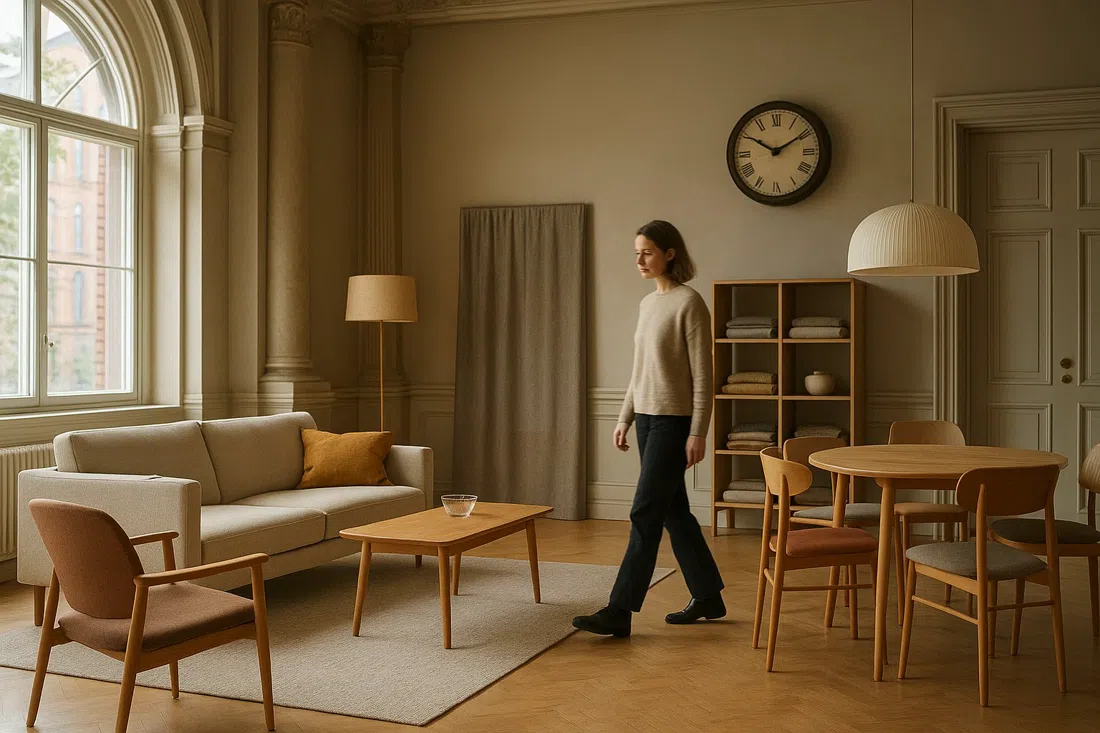
Skeppsholmen is not a shopping stop, and that is worth accepting before you arrive. But there are two specific reasons to browse if you happen to be on the island anyway. House of Gärsnäs, the Stockholm showroom for the southern Swedish furniture maker founded in 1893, has fitted out an entire floor of a Victorian-era chancellery building behind Moderna Museet. It is laid out like a lived-in interior — living room, dining room, kitchen, home office — and works as a showroom for furniture, rugs, textiles and lighting rather than a conventional retail floor. It has been open on the island since March 2022, and the setting gives the pieces a kind of domestic seriousness that a normal shop rarely manages.
The museum shops at Moderna Museet and ArkDes are the other browse-worthy stops, with art books, exhibition catalogues, posters and design objects. They are open through the museums’ normal daytime hours, which makes them useful on the way out, especially if you want a souvenir that feels connected to the island’s actual identity rather than just its postal code.
Where to stay in Skeppsholmen
There are exactly two places to sleep on the island itself, and they sit at opposite ends of the budget. Hotel Skeppsholmen occupies an 18th-century barracks building dating to 1699 and is run as a design-led hotel with around 78 rooms, its own restaurant, and a bar. It suits travellers who want a quiet, characterful base close to the centre without being in the middle of it. The trade-off is price: this is an upper-mid to high-end choice, not a casual one.
The other option is STF af Chapman & Skeppsholmen, split across the 1888 tall ship af Chapman and the adjoining Hantverkarhuset on shore, where reception, kitchen and common areas are housed. With 285 beds, dorms and some private rooms, it is one of the most central budget stays in Stockholm, a few minutes’ walk from the Royal Palace and Gamla Stan. The ship cabins come with thin walls and creaking floors, so light sleepers should ask for a room away from the busiest corridors.
Neither place puts you near restaurants or nightlife after dark, and that is the key to choosing Skeppsholmen as a base. Stay here if you want quiet, museums and water; look elsewhere if your ideal evening begins with stepping out into a dense street of bars and shops.
Getting around
Skeppsholmen has no metro station of its own. The nearest is Kungsträdgården on the Stockholm Metro blue line, about a six-minute walk away past the Grand Hôtel and Nationalmuseum across the Skeppsholmsbron footbridge. The bridge is effectively pedestrian in practice, with no vehicle traffic beyond buses and service vehicles, so the walk is easy and direct.
Bus route 65 crosses the bridge onto the island and stops directly outside Moderna Museet, which is useful if you are coming from Fridhemsplan, Sundbyberg or T-Centralen and do not want to walk the last stretch. In summer, passenger ferries call at Skeppsholmen from Nybroplan, Djurgården and Slussen, which is a pleasant way to arrive when the weather is good and the harbour is part of the appeal.
The island itself is fully walkable — end to end in about twenty minutes, or closer to forty if you include the loop out to Kastellholmen — and flat enough that it never feels demanding. Central Stockholm is close enough that the island works almost like a pause button: Kungsträdgården, Gamla Stan and Norrmalm are five to ten minutes away on foot or one bus stop away. For Arlanda Airport, the fastest route is to walk or take bus 65 to T-Centralen and pick up the Arlanda Express, which takes about 20 minutes to the airport. Budget roughly 45 to 60 minutes door to door, including the walk off the island.
Skeppsholmen is very safe and heavily used by locals walking dogs or cutting across to Djurgården during the day. It is genuinely quiet and near-empty after the museums close in the evening, which some solo travellers may find isolating rather than unsafe. The main paths are well lit, but this is not a busy, all-hours neighbourhood.
If you come here for the right reasons, the island gives back exactly what it promises: a dedicated museum afternoon, a quiet central hotel or hostel stay, and skyline walks without the Gamla Stan crowds. It is not for anyone who needs restaurants, shops or nightlife within a five-minute walk. It is for people who like their city breaks with space around the edges.