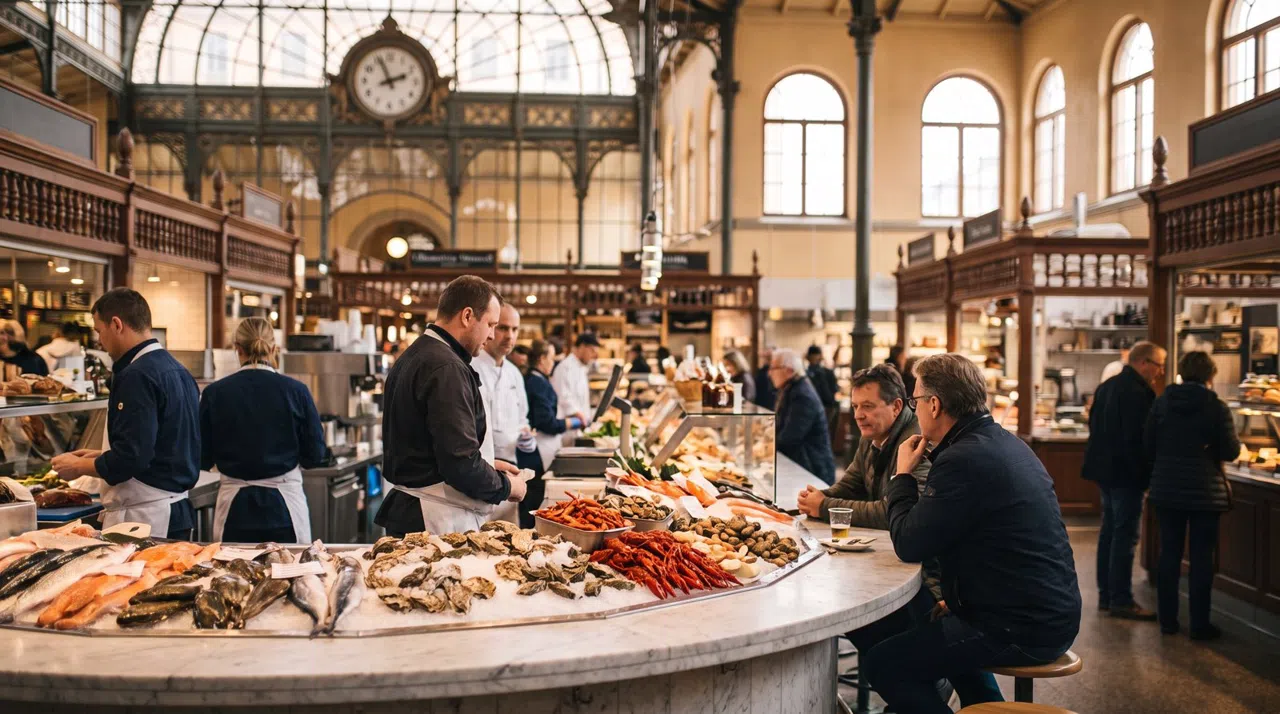
Östermalms Saluhall smells like a city deciding what dinner should be. Under the hall’s red-brick shell, reopened in 2020 after a top-to-bottom renovation, fishmongers call out the day’s catch, butchers keep their counters immaculate, and cheesemongers work behind glass as if the whole district had agreed to dress for supper. A few minutes away, the concrete Svampen kiosk at Stureplan still marks the square where Stockholmers have met for generations, and Strandvägen runs from there toward the water in one long line of 19th-century facades. Östermalm is Stockholm dressed for dinner, not for a hike — polished, expensive, and quietly sure of itself.
What Östermalm is known for
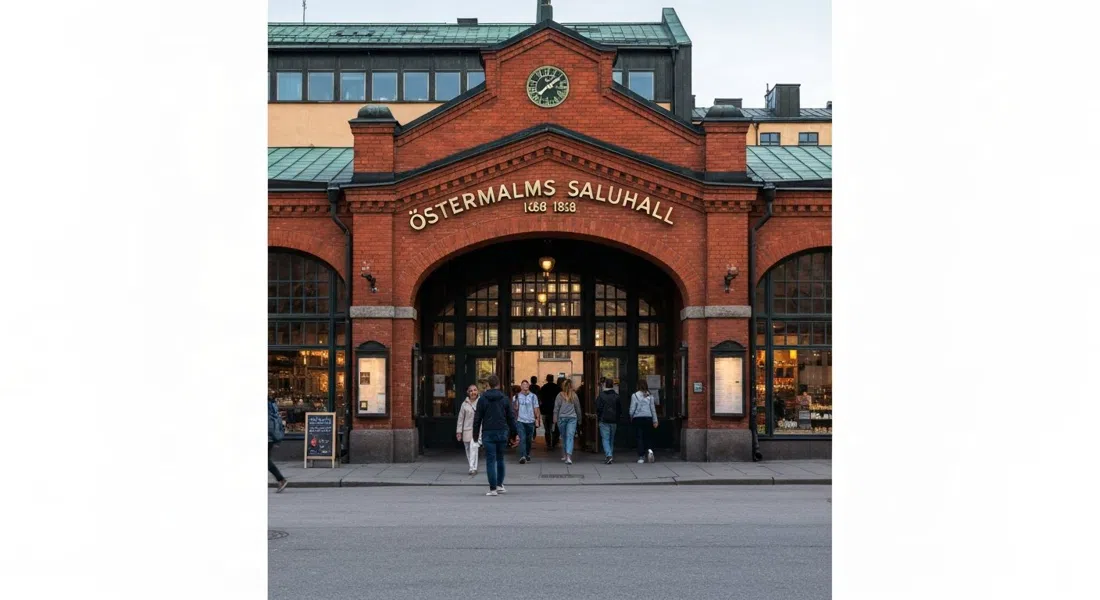
Östermalm has two fixed points, and they tell you almost everything you need to know about the neighbourhood. One is Östermalms Saluhall, the food hall that has been the area’s stomach since 1888. The other is Stureplan, the square anchored by the Svampen mushroom kiosk, a meeting point so embedded in the city’s memory that it barely needs introduction. Between them run Birger Jarlsgatan and Biblioteksgatan, where Stockholm’s most expensive retail real estate meets a district that never bothered to reinvent its own confidence.
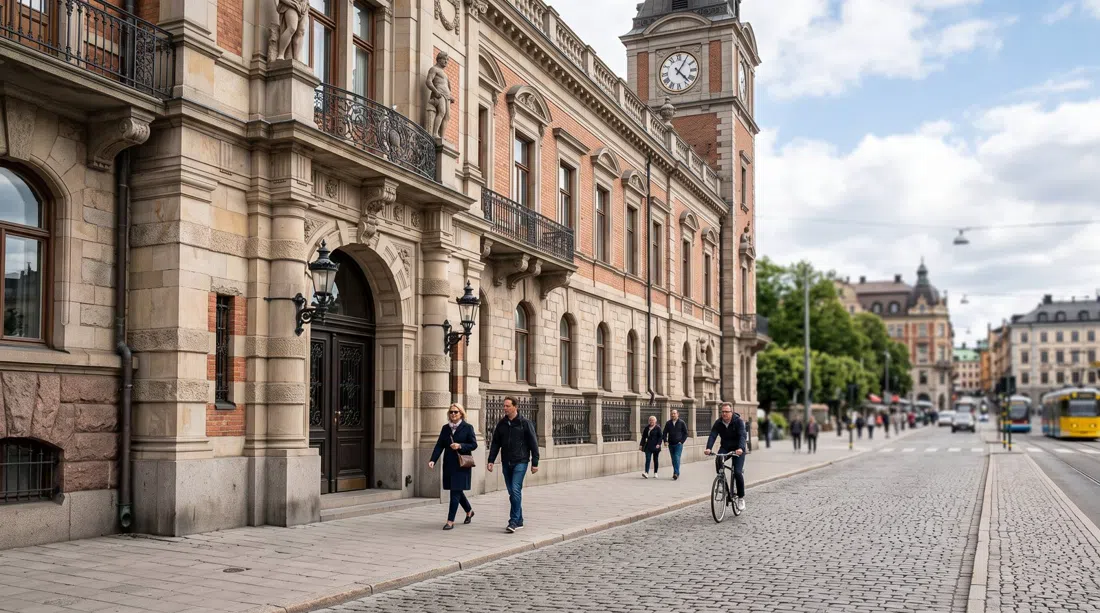
This is old-money Stockholm in built form. The streets are wide, the apartment blocks are dark stone with wrought-iron balconies, and the whole district was laid out in the late 1800s as the capital’s grandest address. It still reads that way before you read a single sign. The crowd is older, better dressed and more local than in the historic centre; this is where Stockholmers with means actually live, not a district assembled for tourists. Daytime life is brisk and practical around the Saluhall, then in the evening the neighbourhood slides from fika into cocktails at Stureplan without ever announcing the handover. Walk a few streets out, toward Karlaplan or along Strandvägen, and the tempo drops almost to residential silence, with joggers and prams outnumbering shoppers.
There’s no edge here, and that is part of the point. Östermalm doesn’t try to be rebellious or reinvented. It has confidence instead — the confidence of an area that has looked and felt roughly like this for over a century and sees no reason to change. It is low-rise and flat, which makes it one of the easiest central districts to walk end to end, and the streets have a clarity that suits the place: a neighbourhood of clean lines, polished surfaces and expensive restraint.
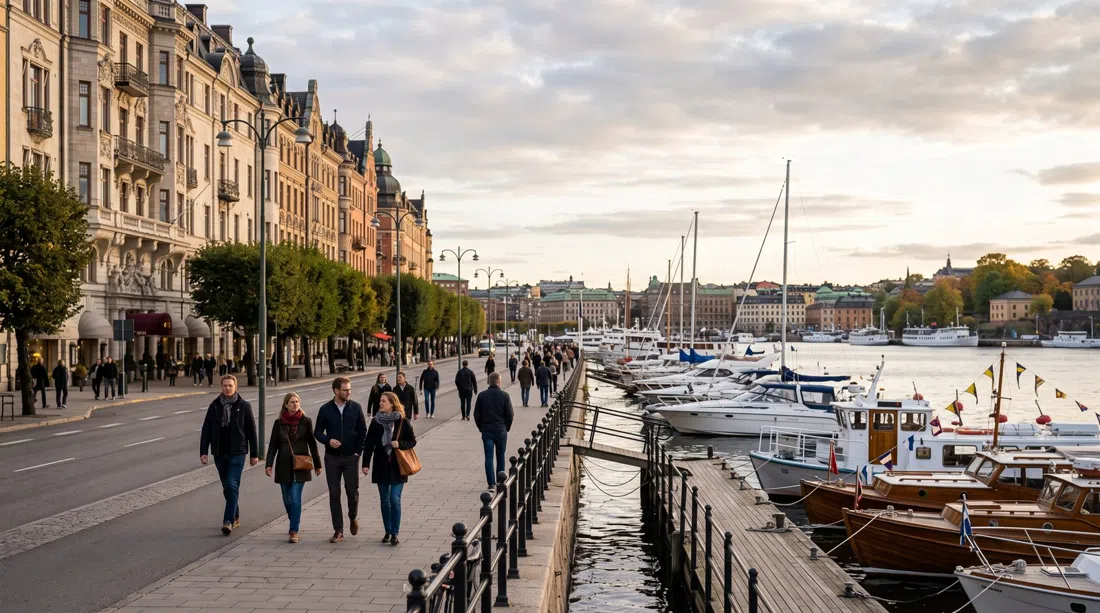
Strandvägen is the clearest expression of all of it. The harbour promenade runs along the water from Nybroplan towards Djurgården, lined with shipowners’ mansions and moored boats, and it is one of the few streets in the city that still looks essentially the way it did in old photographs.
Where to eat and drink
If Östermalm has a culinary thesis, it is that food should be handled properly. The Saluhall is the obvious place to start and the hardest to rush. Under one glass-and-iron roof, multi-generation family businesses sell forest mushrooms, herring, charcuterie and Swedish cheese beside a handful of counter restaurants. It is not a place to breeze through with a coffee in hand; it is somewhere to browse, decide, and then sit down hungry.
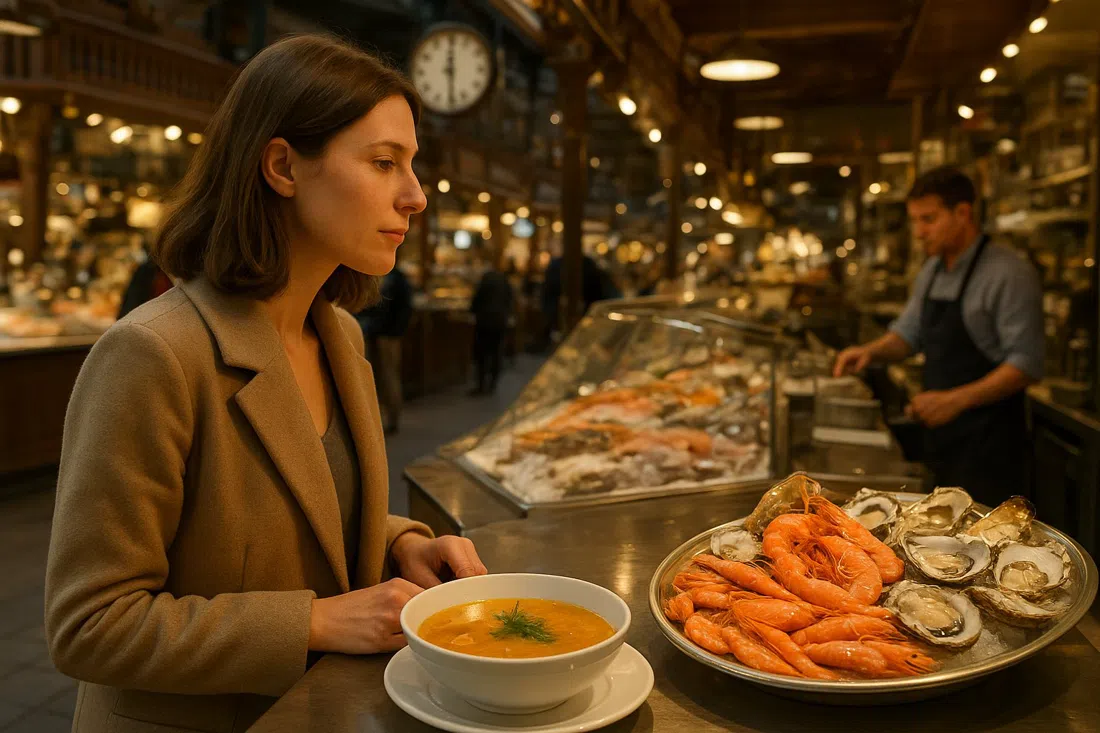
Lisa Elmqvist, at the far end of the hall, is the name to know if you want the hall at its most formal and most rooted in local tradition. The seafood counter has supplied the Swedish royal court, and the food is exactly what the setting promises: fish soup, a shellfish platter, herring on rye. It is worth queuing for at lunch rather than treating it as a dinner reservation.
A few streets over, PA&Co on Riddargatan has been Stockholm’s actors’-and-media-crowd canteen since the 1980s. It is a corner bistro, French-Swedish in spirit, and its burger has been widely praised enough to become part of the city’s dining folklore. PA&Co is the sort of place that feels useful in the best sense: reliable, central, and always slightly more animated than you expect from the street outside.
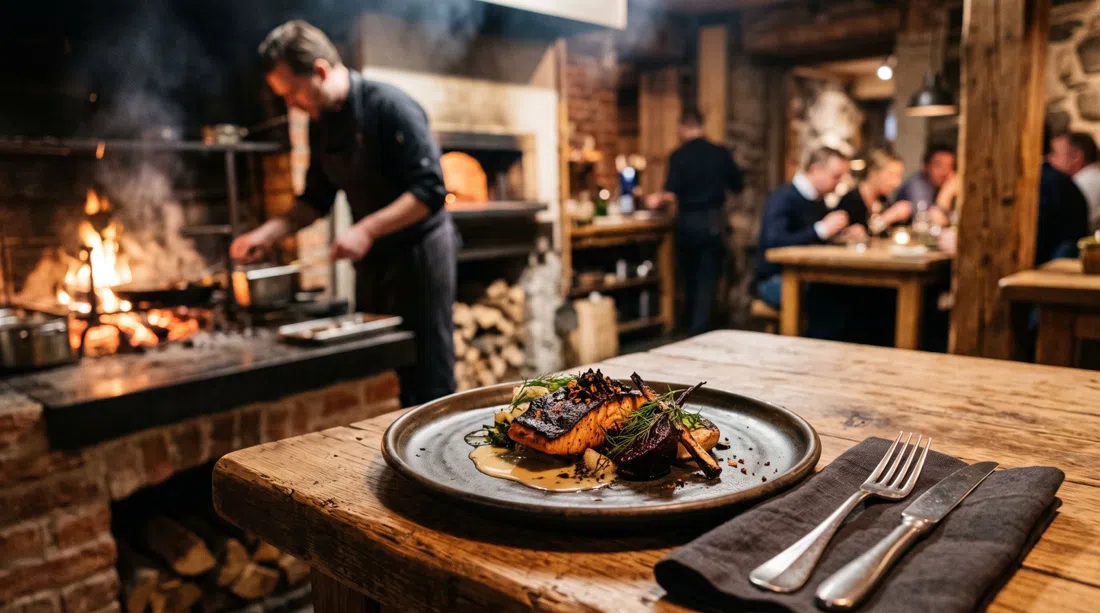
For a proper meal, Östermalm carries two Michelin stars that speak to two different kinds of precision. Ekstedt on Humlegårdsgatan is Niklas Ekstedt’s open-fire kitchen, where everything happens over flame and smoke and there is no electricity in the cooking. That is not a gimmick here; it is the entire grammar of the room. Ergo, on Artillerigatan, is more recent and more relaxed in tone, an informal tasting-menu room from a Frantzén-trained chef in the former Gastrologik space. Both sit at the top of the city’s price range, and both justify the climb by being exacting in different ways.
Sturehof, on Stureplan, offers the less ceremonious answer. It has run as an oyster bar and brasserie kitchen since 1897, and it remains one of the square’s most useful addresses because it stays open late enough to catch the after-dinner crowd. In a district where dinner can become a night out with very little friction, Sturehof is the kind of place you can begin with oysters and end with the city still moving around you.
Expect to pay accordingly. A Saluhall lunch runs higher than a Södermalm café, and a tasting menu at Ekstedt or Ergo sits at the top of Stockholm’s price range. Östermalm is not where you come to save money; it is where you come to understand how the city spends it.
Nightlife
Stureplan is Stockholm at its most self-consciously dressed up. The square is built around the Svampen kiosk where Birger Jarlsgatan meets Sturegatan, and the drinking here skews expensive and well turned-out rather than loud. You do not stumble into Stureplan so much as arrive with intent.
Riche, on Birger Jarlsgatan since 1893, is the anchor. By day it can be a fika stop; by night it becomes a packed, cosmopolitan bar with no obvious changeover, which is exactly why it works. It is as much a people-watching stop as a drinking one, the kind of room where the evening’s social weather is visible in the first ten minutes.
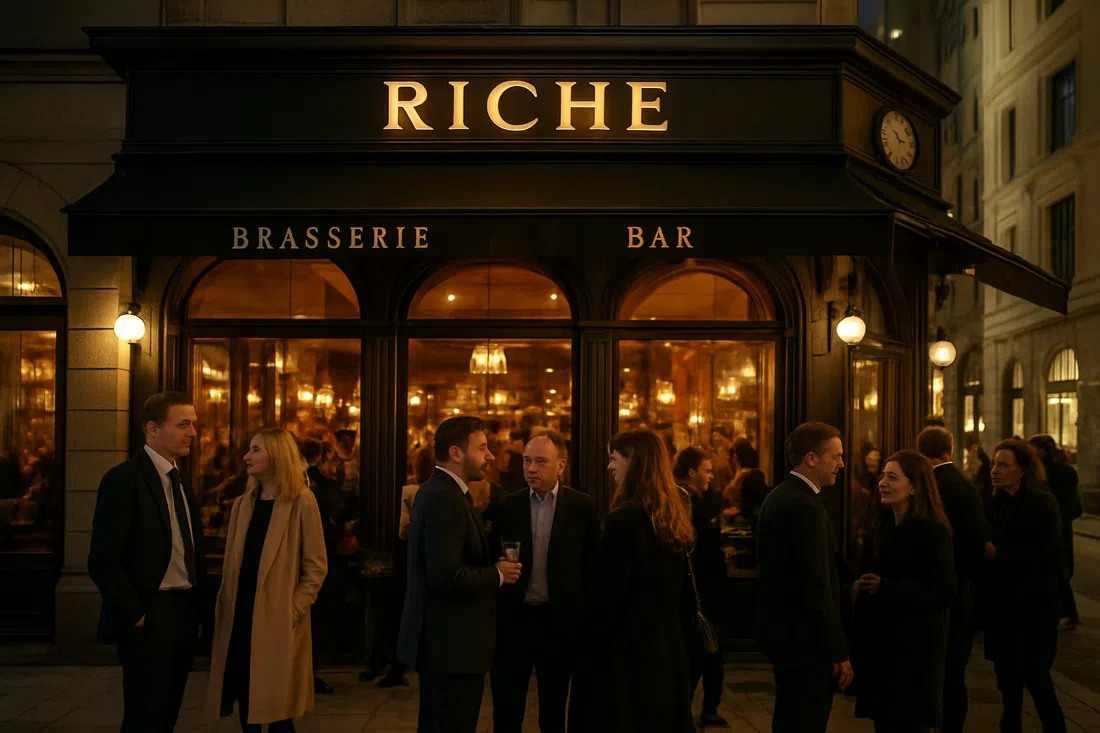
Next door, Sturehof keeps its Mellanbar and O-bar running past midnight, offering a less clubby alternative to the square’s nightclubs. That distinction matters here. Stureplan’s proper clubs get dressy and card-checked on weekend nights, and a midweek visit is a far easier way in than a Saturday. The baseline is smart-casual, and trainers can get you turned away at the door when the square is at full tilt.
The prices remind you that this is a square built for a couple of well-chosen drinks rather than a bar crawl. A cocktail at Riche or Sturehof runs upward of 150-200 SEK, which makes the evening feel selective by design. The crowd is older, better turned out and less interested in chaos than in visibility. Östermalm’s nightlife is not about excess; it is about polish, and the square knows it.
Things to do
Östermalms Saluhall is a destination rather than a stop. The right way to do it is to browse the counters before or after lunch, not squeeze it into a walk between appointments. The hall is part market, part civic ritual, and it gives the neighbourhood its most immediate sense of place: practical, elegant, and slightly ceremonial.
The Army Museum on Riddargatan is one of the district’s most useful counterpoints. Set in a former 17th-century artillery yard, it covers Swedish military history from the imperial wars to modern neutrality, and it is free to enter. The building’s setting alone already tells you something about the area’s old wealth and old institutions; the exhibits fill in the rest.
The Hallwyl Museum is even more specific. The preserved 1890s mansion near Nybroplan keeps a Countess’s home almost exactly as she left it, with original room sets rather than glass cases. It is one of the best ways to see how the district’s old money actually lived, and it makes a fine companion to the Saluhall’s public version of the same era.
Humlegården, a few minutes from Stureplan, gives the neighbourhood a green pause. Once a royal hop garden, it now holds Sweden’s National Library, and it works as a proper break from the traffic and the retail energy around it. Further north, Karlaplan does a similar job for the residential end of the district: a star-shaped, fountain-centred plaza that feels more like a local anchor than a destination.
Strandvägen is the walk to save for good weather. Start at Nybroplan and follow the harbour boulevard, with mansions on one side and moored boats on the other, until it crosses the bridge into Djurgården. It is one of Stockholm’s most satisfying straight lines, and in Östermalm it becomes almost a thesis statement: formal, waterfront, and unhurried.
Shopping
Biblioteksgatan is Östermalm’s retail spine, and it is the kind of street that makes shopping feel like a spectator sport. Between Stureplan and Norrmalmstorg, international names like Prada, Gucci and Chanel sit alongside Swedish labels including Acne Studios, Byredo and Hope. The street is walkable end to end in ten minutes, which is useful because the real pleasure is not speed but drift: window displays, café tables, and the steady theatre of people who have arrived already dressed for the day they want.
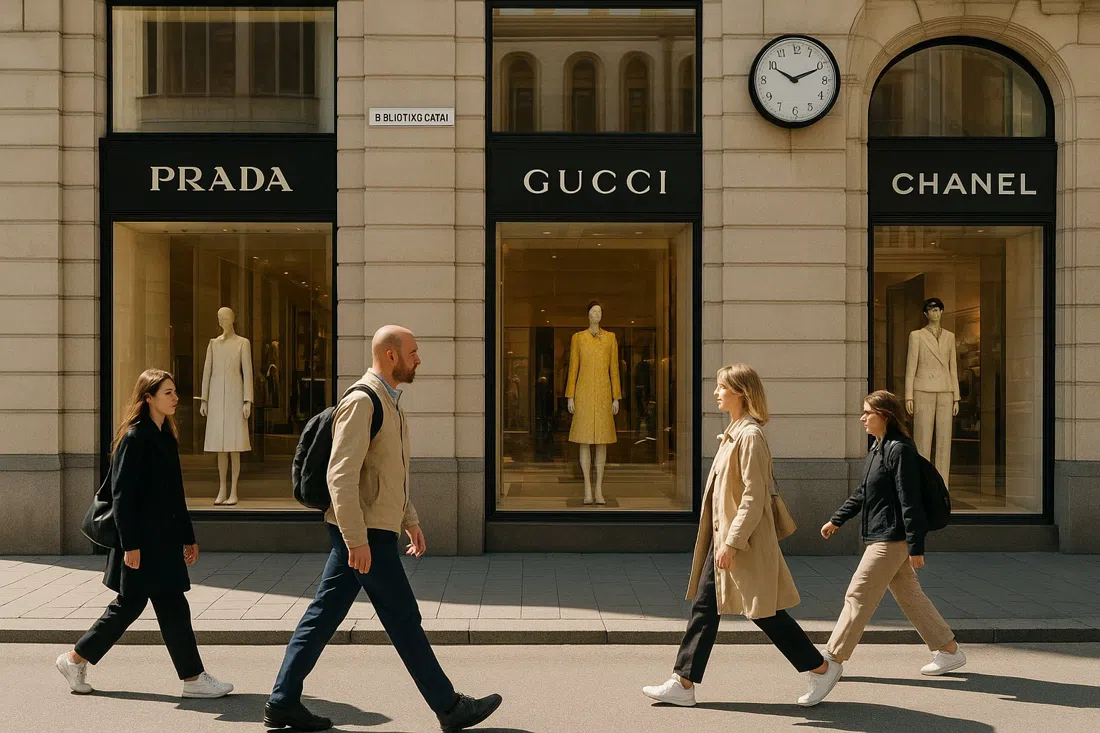
This is flagship-level retail throughout, and there is no pretending otherwise. The appeal is less about finding a bargain than about browsing Swedish design labels you will not find as easily outside the country. The district’s shopping is as polished as its streets: marble counters, measured service, and prices that make the point quickly.
For something less rarefied, the streets around the Saluhall reward a slower wander between Nybrogatan and Sibyllegatan. Smaller design and homeware shops sit there without making much noise about it, which suits a neighbourhood that prefers understatement to display. Most stores keep standard Swedish retail hours, roughly 10am to 6-7pm on weekdays and shorter on Saturdays, and almost everything closes on Sundays. In Östermalm, shopping is a daytime discipline.
Where to stay in Östermalm
Villa Dagmar, an 1870s Art Nouveau townhouse next door to the Saluhall, is the district’s most talked-about recent opening. The rooms are built around a glass-roofed courtyard styled after an Italian piazza, and the hotel has a restaurant and spa attached. It is a neat encapsulation of the neighbourhood’s taste: historic shell, polished interior, no desire to shout.
Hotel Diplomat sits on Strandvägen itself, in a waterfront Art Nouveau building with harbour views and the kind of old-Stockholm formality that suits a business trip or an anniversary more than a stag weekend. Both hotels put you within walking distance of the Saluhall, Stureplan and the museums, which is Östermalm’s real advantage as a base. Everything is close, flat and well lit at night.
The trade-off is price. This is not a budget district, and you should expect to pay a premium over Södermalm or Vasastan for the same room size. What you get in return is a quieter night, a more elegant street presence, and the ease of being able to move between dinner, drinks, shopping and museums without needing to think much about transport.
Getting around
Östermalmstorg is the district’s own stop on the red line, one stop from T-Centralen, and it puts you directly under the Saluhall and Biblioteksgatan. Karlaplan, a few stops further out on the same line, serves the quieter residential streets and the plaza of the same name. The district is flat and compact enough to walk end to end — Stureplan to Karlaplan is about 20 minutes on foot — and Strandvägen’s waterfront pavement is one of the more pleasant walking routes in the city.
From Stockholm Central, the Arlanda Express runs to the airport in 18 minutes with departures every 12-15 minutes. From Östermalm itself, budget extra time to reach Central first, either by metro or by the roughly 15-20 minute walk down through Norrmalm. Buses along Valhallavägen and Karlavägen cover the parts of the district the metro misses, which is useful for reaching the northern edge near Gärdet.
The real luxury here is not speed but simplicity. Östermalm is central without feeling compressed, polished without feeling theatrical, and connected without ever seeming frantic. That is why it suits travellers who want a quiet, well-connected base near the centre without being in the tourist core. It is Stockholm at its most composed, and it knows exactly what it is.