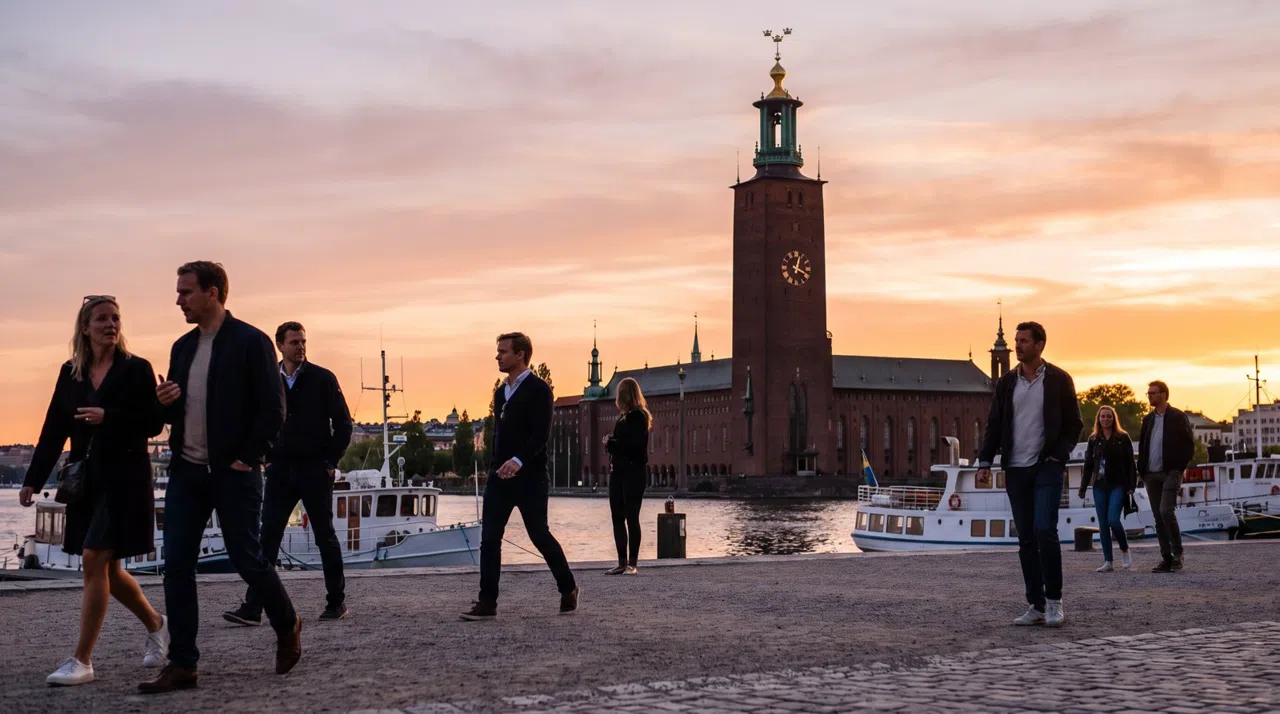
Kungsholmen begins, fittingly, with water. Stand on the eastern tip and Stockholm City Hall rises in red brick and copper-green certainty above Riddarfjärden, its tower doing what the island itself does so well: drawing the eye without asking for applause. The crowds that spill through Gamla Stan rarely make it this far, and that is the point. On Kungsholmen, the city feels lived in rather than staged — prams on wide pavements, runners circling the shoreline, people buying bread on the way home, civil servants and families and the occasional swimmer heading for the lake with a towel over one shoulder. It is the island Stockholm keeps for itself, and it wears that privacy lightly.
What Kungsholmen is known for
Kungsholmen’s defining landmark is impossible to miss and, curiously, easy to ignore once you are on the island: Stockholm City Hall, or Stadshuset, on the eastern point. It is the building that hosts the Nobel Prize banquet every December in the Blue Hall, a municipal monument with a ceremonial life that far outweighs the island’s tourist traffic. If you come between May and September, you can climb the tower — roughly 365 steps, with a lift to the halfway-point museum before the final steep stair to the top — for a view over the Old Town and Lake Mälaren that most visitors never get around to paying for. Tickets are sold in timed batches, released a week ahead, with same-day sales from 08:30 at the courtyard office, which means the experience still feels slightly secret even though the building is one of the city’s great symbols.
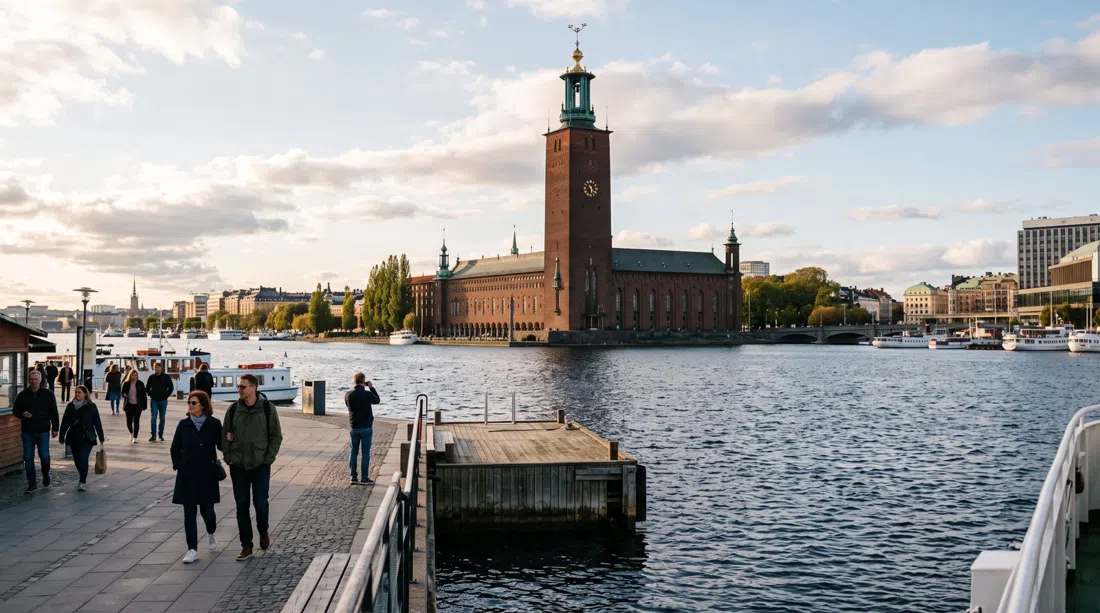
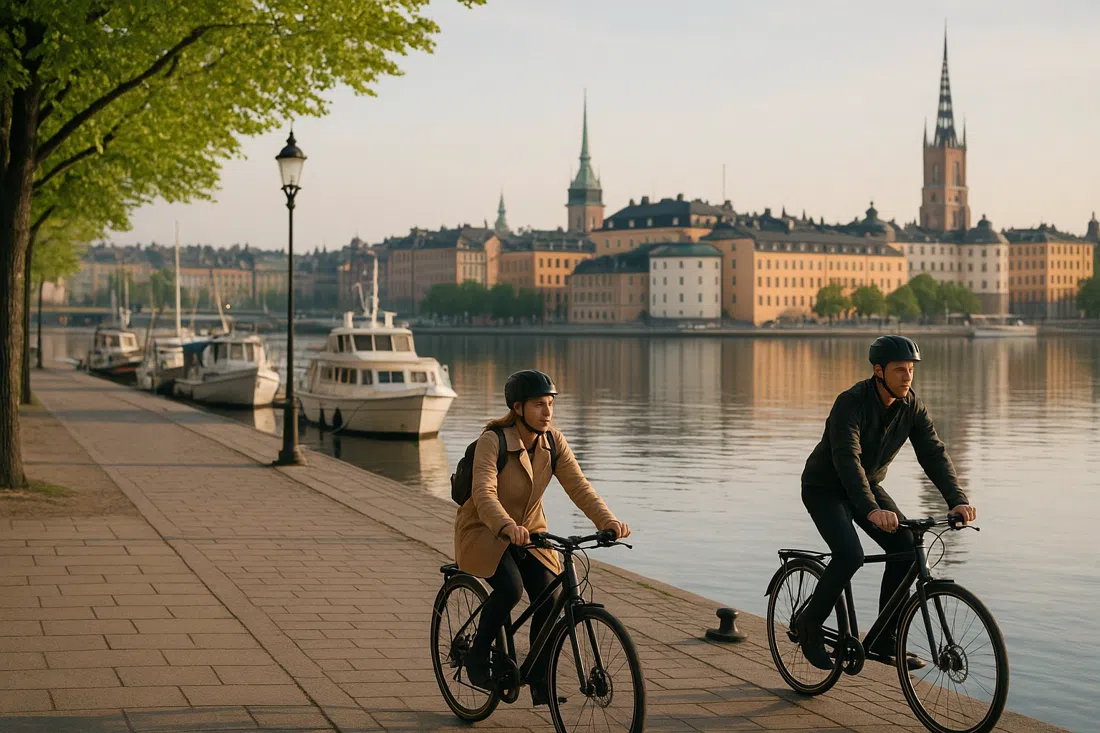
But if Stadshuset gives Kungsholmen its silhouette, water gives it its character. The island is ringed by shoreline, and the long sweep of Norr Mälarstrand on the northern side is the clearest expression of that: a walking-and-cycling promenade backed by gardens, moored boats and the occasional floating café, with the Old Town skyline across the bay as a constant backdrop. On the south side, Riddarfjärden offers a quieter version of the same idea. The effect is not dramatic in the way Stockholm’s postcard views can be dramatic; it is better than that. It is domestic, repeatable, part of the daily rhythm. Locals run here in the morning, walk dogs in the evening, sit on the rocks with a coffee, and treat the water not as scenery but as infrastructure for the good life.
Kungsholmen was the last of Stockholm’s central islands to gentrify, and even now it carries a municipal, working character. Much of the city administration and several ministries sit here, which helps explain why the island reads less like a curated visitor district and more like a place where people have errands, school runs and lunch breaks. That practical streak is part of the appeal. There is no elaborate performance of urban cool, no parade of marquee attractions beyond Stadshuset. Instead, the island leans on its parks, its shoreline and the ordinary competence of a neighbourhood that knows exactly what it is.
Where to eat and drink on Kungsholmen
Kungsholmen’s food life runs along Hantverkargatan and Fleminggatan, with a quieter constellation of addresses around Rådhusparken. It is not a destination strip in the tourist sense, but it is a very good place to eat if you like restaurants that serve the people who live nearby. The mood is less “book the experience” than “this is where we go on a Tuesday.”
AG, on Kronobergsgatan in a former silversmith’s workshop, is the island’s most obvious splurge and its most serious meat address. This is a high-end steakhouse with genuine Kobe beef on the menu and a porterhouse that locals talk about with the kind of reverence usually reserved for family recipes. There is also a separate tapas bar, which makes the place more flexible than the headline suggests: you can come for a full, expensive meal, or slip in for something lighter and less formal. The room’s old-workshop setting gives the whole operation a satisfying sense of place, as if the building remembers being useful and approves of the current arrangement.
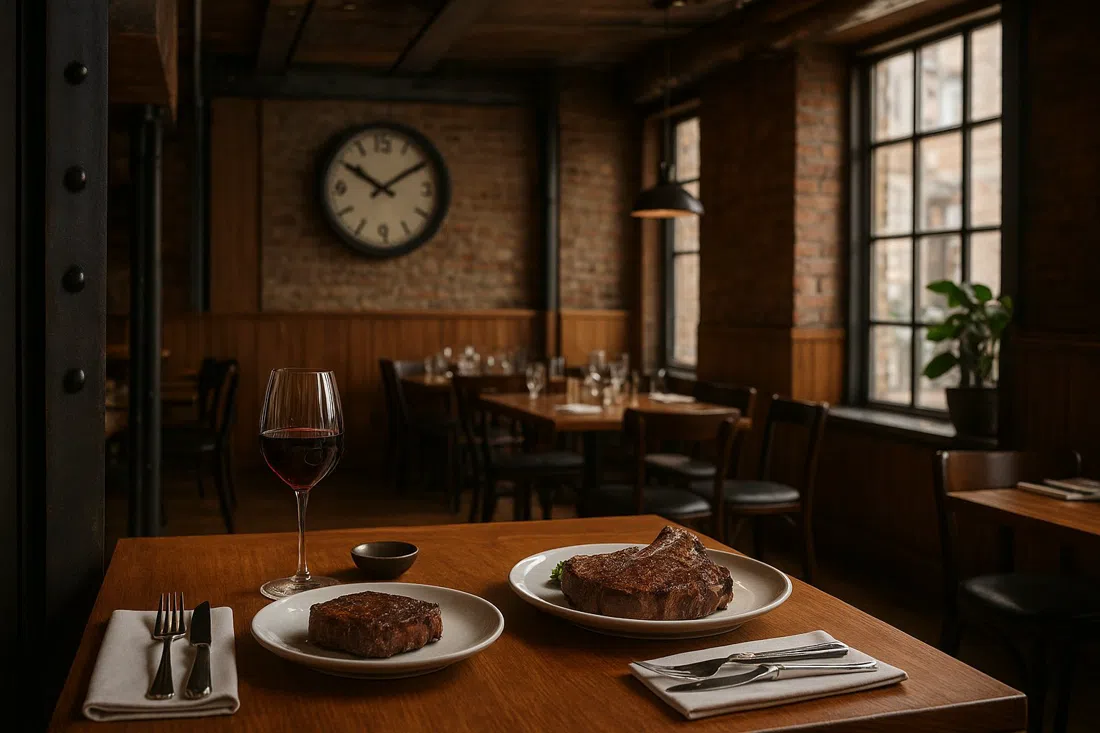
A few streets away, Agnes on Norra Agnegatan takes a different route, one that feels southern European without trying to leave Stockholm behind. The menu is built around small plates — tapas, oysters and tartare — and the wine list leans toward France, Italy and Spain. It is the sort of place where staff matter, because the pairing conversation is part of the pleasure. If AG is about weight and appetite, Agnes is about balance and pace, the pleasure of ordering one more thing because the bottle made sense and the room encouraged it.
Next door in spirit is Kryp In Kungsholmen, tucked beside Rådhusparken across two cosy floors with exposed brick and trailing plants softening the edges. The cooking is European, but the ingredients are Swedish, and the seasonal three-course set menu gives the place a reassuringly local rhythm. It feels like the kind of restaurant a neighbourhood needs: warm enough for winter, intimate enough for a date, practical enough for a dinner that simply needs to be good.
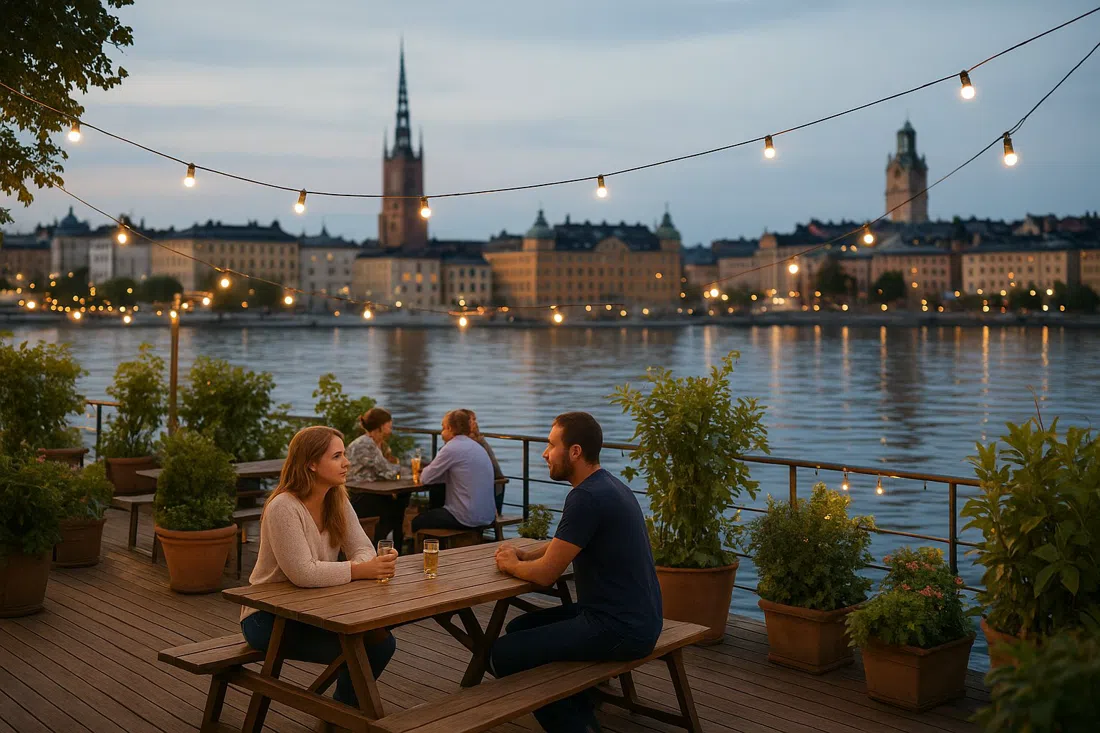
Then there is Mälarpaviljongen, which is less a restaurant than a seasonal mood. Moored on a pontoon on Norr Mälarstrand, it opens only in summer and turns the water into part of the dining room. The setting is Bali-inspired and plant-filled, the menu changes with the season, and the whole place runs daily from 11am to 1am while it is open. It is as much about the view over Riddarfjärden as the food, and that is not a weakness here; it is the point. On a warm evening, with the deck lit and the water reflecting the sky, it feels like the island has briefly decided to be a holiday.
Nightlife on Kungsholmen
Kungsholmen is not a club island, and nobody pretends it is. After dark, the scene is smaller, more local, and much more in keeping with the neighbourhood’s daytime calm. Lemon Bar, open here since 1994, is the closest thing to an institution. Early on, it is cocktails and Japanese starters; later, it shifts into a sing-along, chart-hits crowd that draws loyal regulars rather than tourists. It is the kind of place that survives because it understands its audience, and because its audience knows exactly what mood they want when they walk in.
AG’s tapas bar doubles as a quieter cocktail stop, with a short list built around spritzes, G&Ts and seasonal ingredients. It is not trying to be a late-night spectacle; it is trying to be a good room for a drink, which on Kungsholmen is a more honest ambition. In summer, of course, the island’s nightlife changes shape. Mälarpaviljongen becomes the default warm-weather hangout, open until 1am from May to September, all fairy lights and water reflections rather than a dance floor. That seasonal shift matters. It tells you that Kungsholmen’s social life is tied to the weather and the shoreline, not to a permanent nightlife circuit.
Outside summer, expect the island to go quiet early. After 11pm, most people are heading home rather than out. For some travellers, that will be a drawback. For others, it is the whole attraction.
Things to do on Kungsholmen
If you only do one thing here, make it the Stadshuset tower climb — but only if you are visiting between May and September, and only if you book ahead. The timed slots are limited, sunny days sell out, and the reward is a view that explains the city’s geography better than any map could. The climb itself, with its lift halfway and the final stair run to the top, gives the panorama a small sense of earned drama. Below, the city spreads around the water; across it, the Old Town sits where it always sits, the postcard version of Stockholm now visible from one of its quieter islands.
Afterwards, walk. Norr Mälarstrand is the island’s great democratic gesture, a full-length waterfront promenade where the pace slows and the city becomes legible in fragments: moored boats, gardens, joggers, cyclists, the occasional café, the skyline across the bay. It is not a route you rush. It is a route you repeat.
At the western end sits Rålambshovsparken, which by most measures is Stockholm’s most-used park. That sounds bureaucratic until you see what it contains: football pitches, boule courts, a skate park, an amphitheatre and an outdoor gym, plus a summer programme that includes free open-air cinema screenings and the city’s National Day celebrations on 6 June. It is a park that works hard, and that is why people use it. Families spread out on the grass, teenagers drift through on bikes, runners cut across the edges, and the whole place feels like a civic commons rather than a designed attraction.
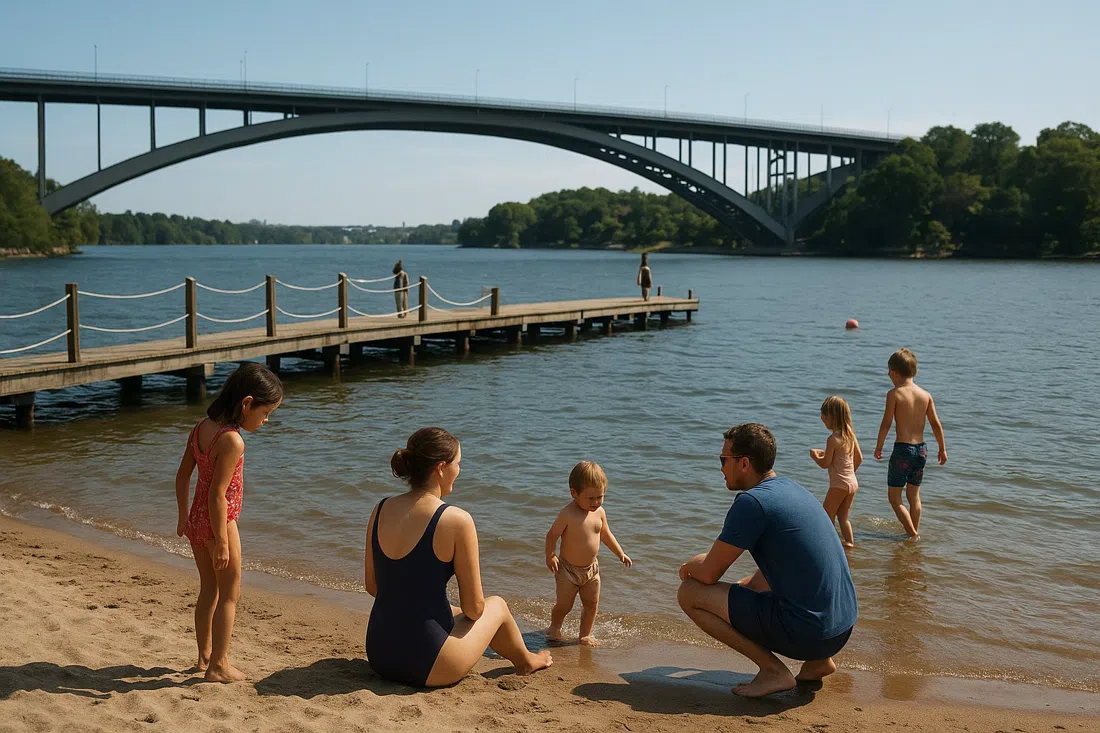
Just south of the park, near Västerbron bridge, Smedsuddsbadet gives Kungsholmen something rare in a central city: a genuine swimming beach. The shore is sandy, the bathing jetty is shallow and rope-marked, and the water is popular with families for precisely that reason. There is a kiosk on site, and kayak rental nearby at Kafé Kajak. It is also only about fifteen minutes on foot from Thorildsplan metro, which means you can leave the city centre and be in the water quickly enough to feel slightly smug about it.
For a quieter pause, head inland to Kronobergsparken, a hilltop park in the centre of the island laid out in the 1890s. Winding paths, big lawns and old trees give it a softer, older feel than the shoreline parks, and the playground and outdoor gym make it useful as well as pretty. Locals tend to treat it as a lunchtime park rather than a destination for an entire afternoon, which feels right. It is a place to sit, breathe, and remember that the island is more than its waterfront.
Shopping on Kungsholmen
Kungsholmen is not where you come to browse for sport. Its shopping is practical, neighbourhood-based and refreshingly unshowy. The centre of gravity is Västermalmsgallerian by Fridhemsplan metro, a shopping centre opened in 2002 in a renovated 1970s building. Inside its 10,000 square metres are around 45 shops across fashion, homeware and food, with chains such as Åhléns anchoring the mix. It does the job a local mall should do: it absorbs errands, weather and boredom without demanding that you make a day of it.
Around it, Fridhemsplan and the streets running off it — especially Fleminggatan — hold the kind of independent boutiques, vintage and second-hand shops, bike repair shops and jewellers that make a residential district feel complete. This is not a place for souvenir hunting. It is where you go if you forgot something, need something fixed, or want to browse in the loose, unhurried way people browse when they live nearby.
Where to stay in Kungsholmen
The obvious base is around Fridhemsplan, where the island’s main interchange, Västermalmsgallerian, supermarkets and the Hantverkargatan/Fleminggatan restaurant strip all sit within a few minutes’ walk. It is the practical choice, and in Stockholm practical often means convenient in the best possible way. Ruby Hotels is opening its first Scandinavian property here in spring 2026, with a rooftop restaurant, which confirms what the area already suggests: this is a transport hub that knows how to host.
A quieter option is to look toward Norr Mälarstrand and the streets nearer City Hall. There are fewer hotel beds here, more residential calm, and the waterfront promenade on your doorstep. That usually comes at a modest premium over Fridhemsplan, but the trade-off is obvious: more water, less transit bustle, and a better sense of living on the island rather than just sleeping on it.
Either way, Kungsholmen places you about ten to fifteen minutes by metro, or around a twenty-five-minute walk, from T-Centralen and the Old Town. That distance is the whole argument for staying here. You give up the fantasy of stepping straight into Gamla Stan from your door, and you gain a calmer base with a lake on your doorstep. For stays of more than a couple of nights, that quiet starts to feel like a luxury.
Getting around from Kungsholmen
Fridhemsplan is the island’s transport spine, where the Green and Blue metro lines cross and where almost anywhere in the city becomes one change away. It is roughly ten minutes to T-Centralen in the heart of town, which means Kungsholmen is more connected than its calm mood might suggest. Rådhuset on the Blue Line sits closer to City Hall and the eastern tip, while Thorildsplan on the Green Line serves Smedsuddsbadet and the southwest corner.
The island itself is flat and easy to walk. Norr Mälarstrand alone makes for a pleasant thirty-to-forty-minute walk end to end, and buses run along Fleminggatan and Drottningholmsvägen for places the metro does not reach directly. For the airport, the simplest route is to change at T-Centralen or Cityterminalen onto the Arlanda Express or the airport bus, Flygbussarna. Outside rush hour, the journey from door to check-in is comfortably under an hour.
Kungsholmen rewards the traveller who is happy to be slightly removed from the obvious centre. It is not trying to impress you with density or nightlife or a parade of famous sights. It offers something rarer in central Stockholm: a place where the city settles into itself, where the water is part of daily life, and where the best thing to do is often the simplest one — walk, swim, sit, eat, repeat.