
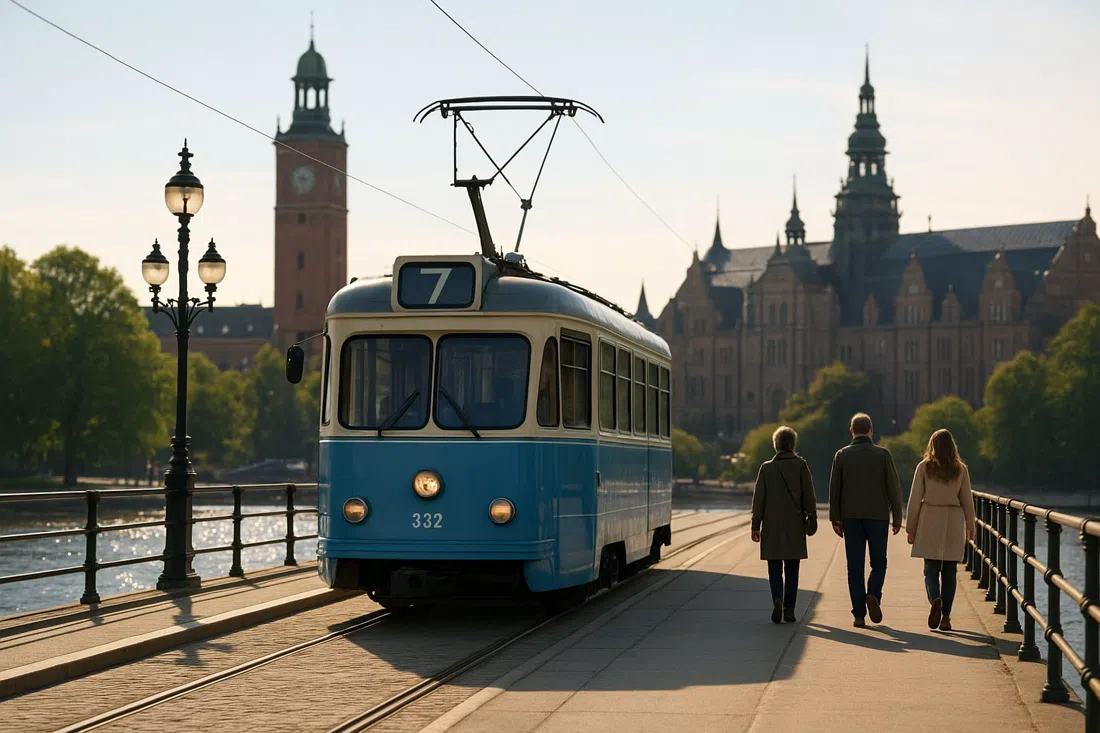
The first thing you notice on Djurgården is how quickly the city gives way to grass. One minute you are on Djurgårdsbron; the next, tram bells are clattering past school groups, prams and day-trippers heading for the Vasa Museum, and the island’s long, green hush is already wrapping itself around the road. This is Stockholm’s museum island, but it never feels paved over by culture. It still reads like a royal hunting ground: oak avenues, open lawns, water on both sides, and a strange, pleasing calm for a place where a 17th-century warship, a 19th-century village, a Nordic zoo and a working funfair all sit within a short walk of one another.
What Djurgården is known for
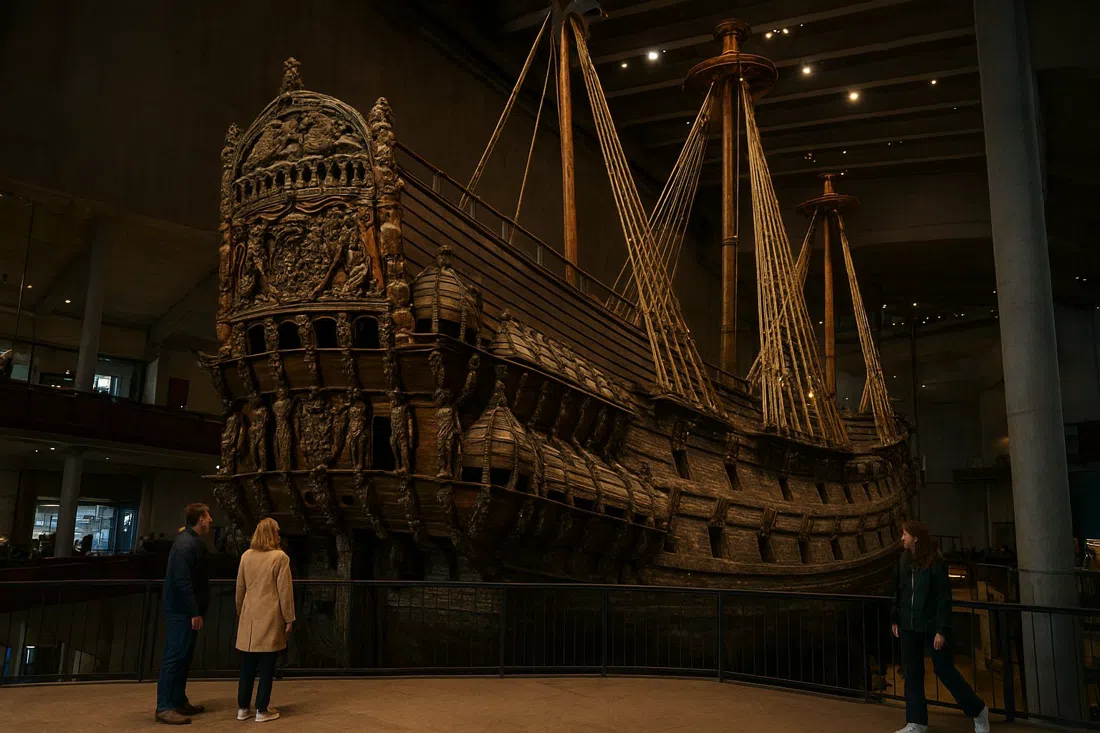
Djurgården’s story is really a story of proximity. The island’s fame rests on a handful of institutions that are close enough to feel like one great cultural campus, yet different enough to give the day a rhythm. Start with the Vasa Museum, where the Vasa stands in dry dock like a miracle that should not exist. The warship capsized in Stockholm harbour in 1628 after sailing less than a nautical mile, and the vessel on display today is close to 98% original timber, raised from the seabed in 1961. It is the most-visited museum in Scandinavia, and the adult ticket runs around 230 SEK, which feels almost modest once you are standing beneath its towering hull and carved stern.
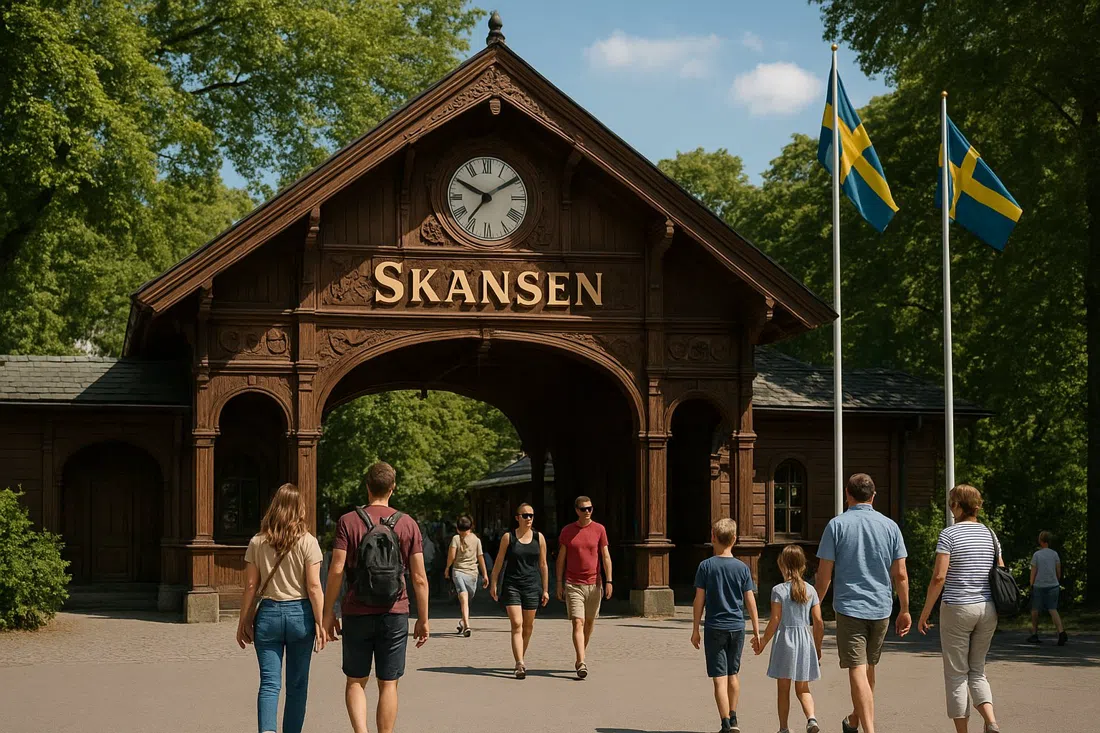
Next door, Skansen opens the island out into another century. Founded in 1891 as the world’s first open-air museum, it gathers relocated wooden farmhouses and town buildings from across Sweden, then folds in a Nordic zoo with bears, wolves, moose and lynx. There is even a funicular, the Skansen Linbana, linking the lower and upper sections, which means the climb becomes part of the experience rather than a chore. Families drift between the buildings and animal enclosures, pausing for craft demonstrations that run through the day. It is not a theme park pretending to be history; it is history, with the occasional bear.
ABBA The Museum changes the mood again, but not the geography. It sits inside the Backstage Hotel building on Djurgårdsvägen, built around the band’s original instruments, costumes and Polar Studios memorabilia. A few steps away, Nordiska museet rises in its cathedral-like 1907 building at Djurgårdsvägen 6-16, looking almost ceremonial in the parkland setting. It covers five centuries of Swedish everyday life and is open daily from 10am to 5pm year-round. Junibacken, meanwhile, is where younger children slip into Astrid Lindgren’s world, with a train ride through scenes from Pippi Longstocking and Emil of Lönneberga. And then, as if the island needed a final flourish, Gröna Lund closes the loop. Stockholm’s amusement park has been here since 1883, and its 30-plus rides, spread across two stages, also host the Grönan Live concert series in summer.
The trick is not to try to “do” all of it. Most people pair two or three of these anchors into a single day and let the island do the rest. Djurgården rewards that kind of selective wandering. It is less a neighbourhood to conquer than a place to move through slowly, with grass underfoot and the water always visible between the trees.
Where to eat and drink
Djurgården does not behave like a district with a restaurant scene. It eats around its gardens and waterfront, and it does so early. That is part of the charm and part of the limitation. You come here for lunch, for fika, for an early dinner after the museums, not for a long night of table-hopping.
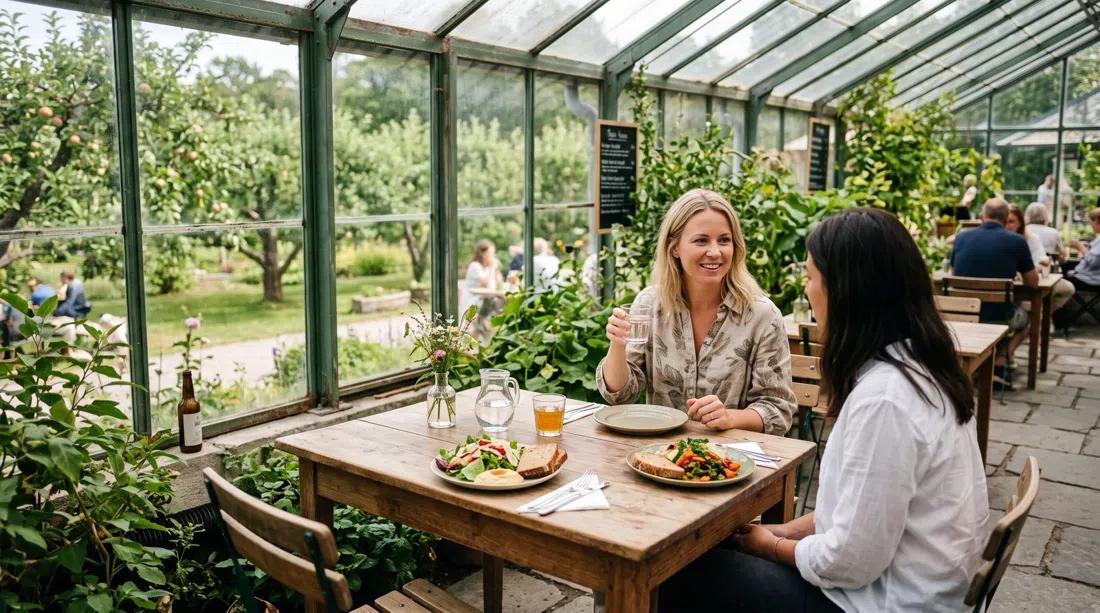
Rosendals Trädgård is the island’s most seductive lunch stop, because it feels grown rather than opened. The biodynamic garden and orchard west of Rosendal Palace runs a lunch café from 11am to 2.30pm, serving salads, soups and pastries baked on site from produce grown in the garden itself. You can sit in the greenhouse or out on the orchard grass, and the whole place has the relaxed confidence of somewhere that does not need to persuade you. It is free to enter, and it may be the closest thing Djurgården has to a destination brunch, even if the timing is more midday than lazy morning.
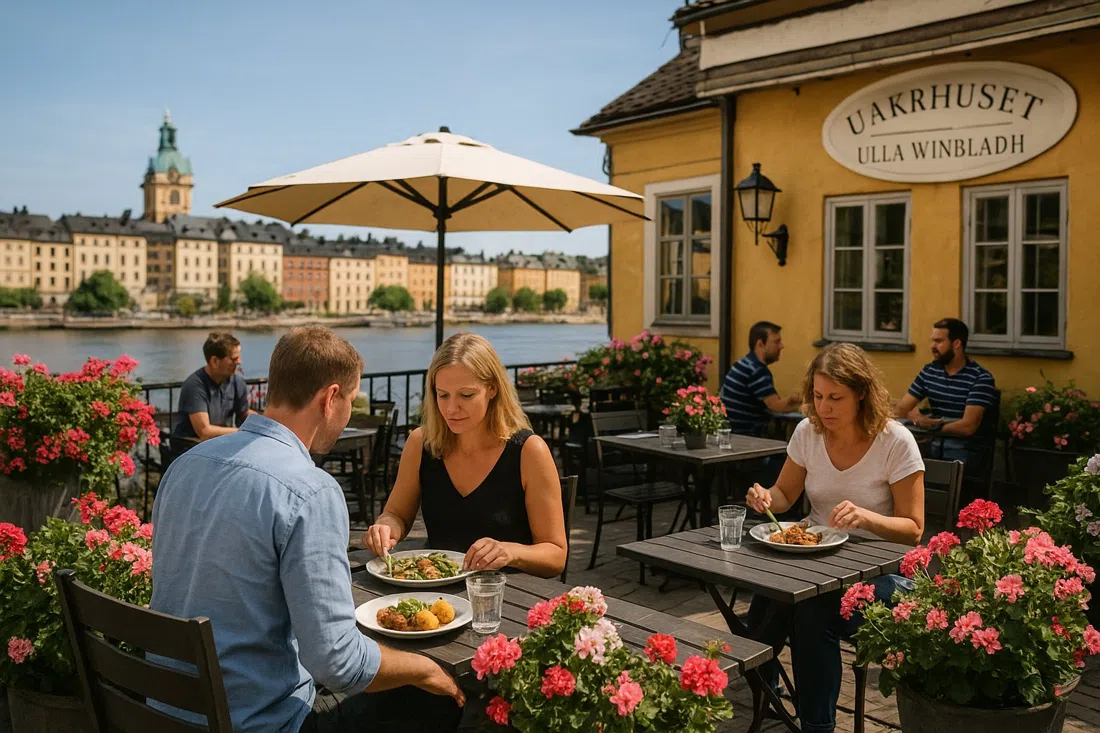
Wärdshuset Ulla Winbladh, on Rosendalsvägen beside Skansen, has a different kind of appeal: old-world comfort with a sense of occasion. It occupies a former steam bakery built for the 1897 Stockholm World's Fair and serves traditional Swedish home cooking — pickled herring, meatballs — on a flower-filled terrace in summer. It is the sort of place that lets you linger over lunch while the island hums quietly around you.
Djurgårdsbrunns Värdshus, dating to 1743, reopened in 2025 under the founders of the Fabrique bakery chain. The menu leans toward wood-fired pizza and simple Italian plates in the evening, with a daytime café offering sandwiches and soft ice cream. It is closed Mondays, and like much on Djurgården, it asks you to arrive in daylight and leave before the island goes still.
Blå Porten, next to Liljevalchs behind its distinctive blue iron gate, is another of those places that feels inseparable from its setting. It is a self-serve café built around a courtyard garden and fountain, mixing Swedish home cooking with Mediterranean-leaning plates. The draw is not culinary drama; it is the soft geometry of the courtyard, the gate, the garden, the sense that lunch is taking place in a pocket of calm rather than in a city café.
Going out
Djurgården is not a nightlife neighbourhood, and that is not a flaw so much as a design decision. The island empties out after the last tram and ferry runs, and the restaurants here close by 10 or 11pm at the latest. If you want bars, stay somewhere else and come here for the day. The island’s evening life is mostly the sound of the water, the occasional tram bell, and, in summer, the distant scream of a rollercoaster crossing the strait.
The exception is Gröna Lund, which becomes a genuine evening venue when the Grönan Live concert series is running. Its Stora Scen hosts headline acts, while the smaller Lilla Scen gives the park a second pulse. Because the concerts unfold inside the amusement park, the whole place changes character after dark: rides, music, lights, the smell of the waterfront, and a crowd that is there on purpose rather than by accident. It is the one time Djurgården justifies staying out late.
Outside of that, the sensible move is to head back to Södermalm, Östermalm or Gamla Stan once the museums shut. Djurgården is a daytime island, and it is better for it.
Things to do / what to see
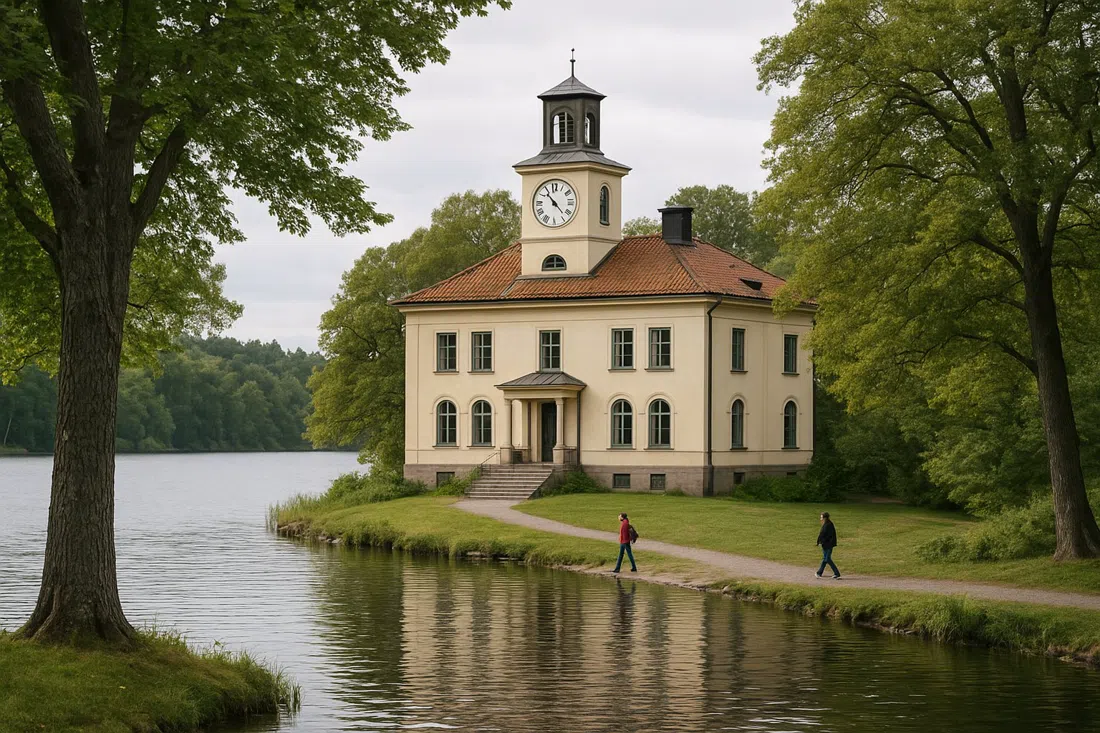
The island’s quieter pleasures begin once you step away from the obvious museum circuit. Thielska Galleriet, out on the Blockhusudden point, is the kind of place that rewards the visitor who is willing to keep walking when everyone else turns back. It was financier Ernest Thiel’s former villa, and it now holds works by Edvard Munch, Anders Zorn, Carl Larsson and Bruno Liljefors in a lakeside setting far from the tram crowds. The mood is contemplative, almost private, and that distance from the main drag is exactly what gives it power.
Liljevalchs, next to Blå Porten, has been staging contemporary art and craft exhibitions since 1916 and hosts the annual Vårsalongen, the open-submission Spring Salon. It is one of the island’s most reliable places to catch the present tense of Swedish art, and its position beside the café makes it easy to fold into a slower afternoon.
For time on the water, Sjöcaféet by Djurgårdsbron and Djurgårdsboden near Skansen’s main entrance both rent kayaks, canoes and pedal boats for exploring Djurgårdsbrunnsviken, plus bikes if you want to cover the island’s paths faster than walking. That matters here, because Djurgården is long. The core museum cluster is compact, but the farther reaches — Rosendal, Djurgårdsbrunn and Blockhusudden — ask for a little more commitment. A bike turns the island from a cluster of attractions into a landscape.
Skansen’s own funicular, the Skansen Linbana, is worth riding just for the harbour views on the climb between its lower and upper terraces. It is not merely practical; it is a small moving viewpoint, a reminder that even on an island built for strolling, the best perspective sometimes comes from being carried uphill.
Families often build the day in a familiar sequence: the Vasa in the morning, lunch at Rosendals or Ulla Winbladh, then Skansen’s animals or Gröna Lund’s rides in the afternoon. A quieter version swaps the rides for Thielska Galleriet and a walk around Djurgårdsbrunnsviken, where the water and lawns do the slow work of the day.
Shopping
Djurgården is not a shopping destination and does not pretend otherwise. What shopping exists here is attached to the museums and gardens, which makes it feel more like an extension of the visit than a separate errand.
Nordiska museet’s shop is a particularly good stop because it does not require an entrance ticket. It sells Nordic crafts, vintage-inspired homeware, and Swedish jams and mustards, and it is a more thoughtful place to pick up a gift than most airport souvenir counters. Rosendals Trädgård runs two small shops alongside its café: the farm shop sells produce, jams and oils grown in the garden, plus kitchenware and gardening books, while the plant shop sells seedlings and cut flowers from its biodynamic beds, with scissors and baskets available if you want to cut your own bouquet from the field. ABBA The Museum’s shop, inside the same building as the Backstage Hotel, covers the expected records and merchandise for anyone finishing the exhibition.
The common thread is simple: buy something here because you are already here, not because you came to shop.
Where to stay in Djurgården
Djurgården is primarily a day-trip island, and the hotel options reflect that. Most visitors base themselves in Norrmalm, Östermalm or Södermalm and ride in by tram or ferry. But if you want to wake up next to the museums, the island does offer two genuine choices.
Backstage Hotel, formerly Pop House Hotel and rebranded after a 2022 renovation, occupies the same Djurgårdsvägen building as ABBA The Museum. It has 57 rooms and a music-and-scenic-art design theme, which makes it the obvious choice if your idea of a good Stockholm stay is stepping straight into the Vasa/Skansen/ABBA cluster and then retreating to a quiet evening.
Hotel Hasselbacken sits closer to Skansen and Gröna Lund, a short walk from both, and suits a similar brief with a more traditional, garden-hotel feel. Either hotel puts you a five-minute tram ride from Nybroplan and the city centre, which matters because there is nowhere much to go out on the island once dinner is done.
For most travellers, though, Djurgården works best as an excursion rather than a base. If nightlife or restaurant choice matters, stay elsewhere and let the island be what it is: calm, green, and gloriously finished by evening.
Getting around
Tram line 7 is the classic route in. It runs from Sergels Torg and T-Centralen via the Strandvägen waterfront, stopping directly at the Vasa Museum, ABBA The Museum, Skansen and Gröna Lund every 8-15 minutes. It is the easiest way to understand the island in one sweep.
Bus 67 connects from Odenplan via Karlaplan metro, with stops at Nordiska museet/Vasamuseet/Junibacken and at Liljevalchs/Gröna Lund, then continues out to the quieter Blockhusudden end of the island near Thielska Galleriet. Ferry line 82 is the scenic option, running roughly every 15 minutes between Slussen, Skeppsholmen and Djurgården’s Allmänna Gränd stop, about 400 metres from Skansen’s entrance.
On foot, it is roughly a 20-25 minute walk from Nybroplan in central Stockholm across Djurgårdsbron onto the island, and the museum cluster itself — Vasa to Skansen to Gröna Lund — is walkable in under 15 minutes end to end. If you want to go farther, rent a bike from Djurgårdsboden and cover the island out past Rosendal to Blockhusudden far faster than walking. Arlanda Airport is about 45 minutes away by car or by the Arlanda Express plus a tram transfer, and there is no direct rail link, so it pays to budget the connection time.
Djurgården is easy to reach, easy to read, and just difficult enough to leave once you have settled into its pace. That is its gift: not the thrill of discovery, but the pleasure of a day that keeps unfolding in green, watery chapters.